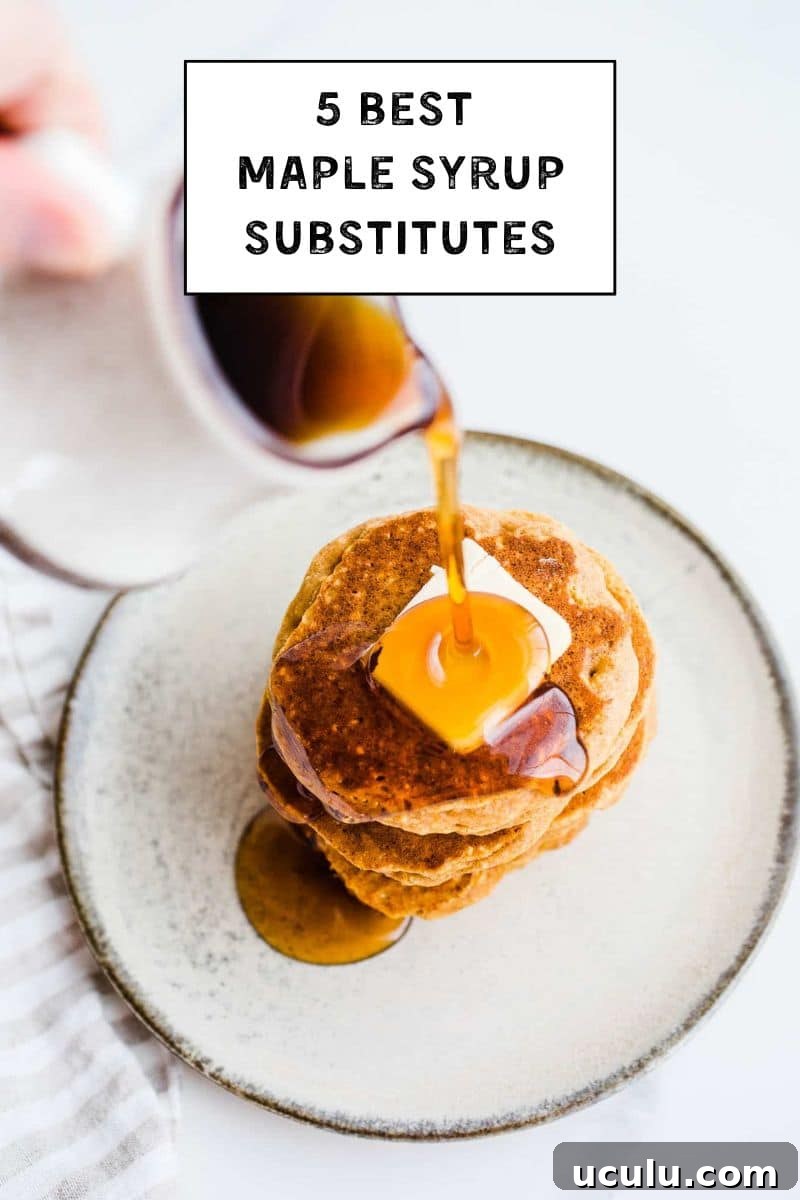
Looking for a healthier alternative to maple syrup? This guide presents practical substitutes — including honey, agave nectar, coconut nectar, brown rice syrup, and date syrup — with tips on how to swap them in recipes while preserving flavor and texture.
[feast_advanced_jump_to]
What is maple syrup?
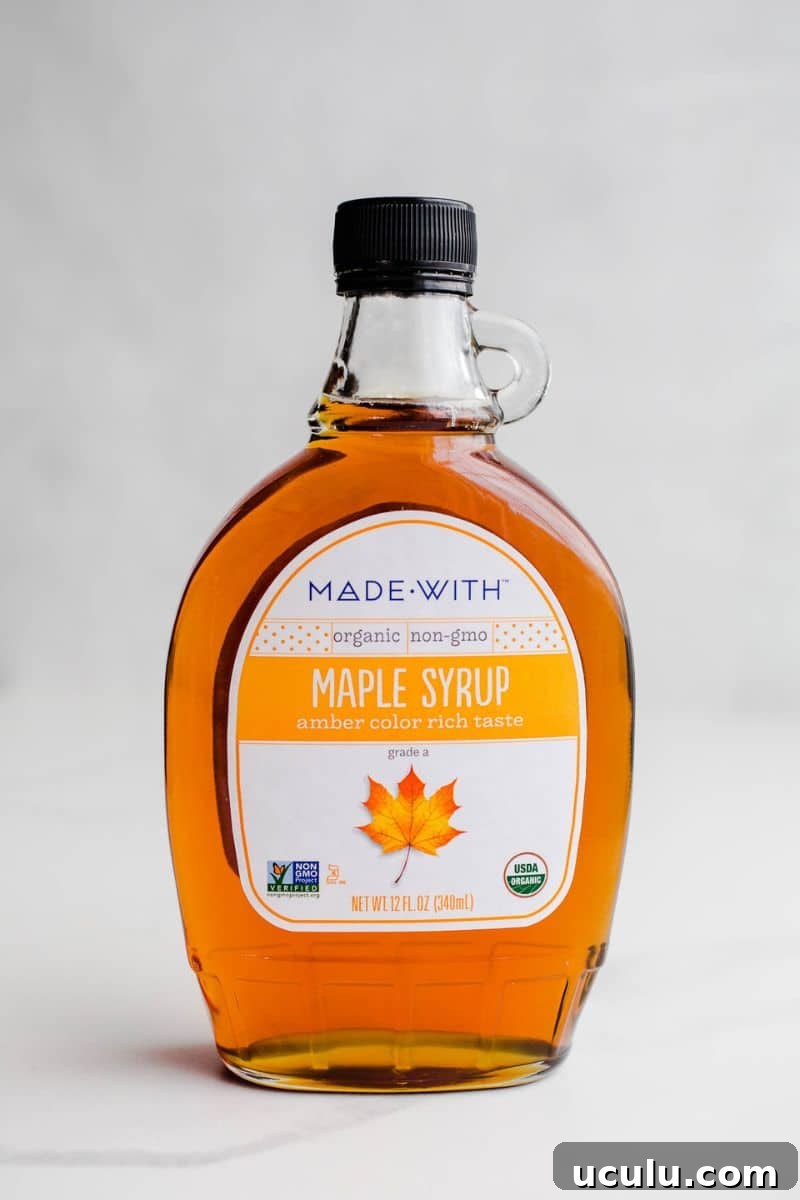
Pure maple syrup is a natural sweetener made by boiling sap collected from maple trees until the sugars concentrate into a thick, pourable syrup. Commonly used as a topping for pancakes, waffles, and French toast, it’s also incorporated into baked goods, glazes, marinades, and dressings.
Maple syrup production is concentrated in northeastern United States and eastern Canada, where maple trees are plentiful. Sap is tapped from the tree, gathered, and reduced by evaporation. The final color and flavor vary based on tree species, season, and processing method.
Pure maple syrup contains minerals such as potassium, calcium, manganese, and zinc, along with small amounts of amino acids, which differentiate it from refined sugar.
Types
In the United States and Canada, Grade A maple syrup is classified into four color/flavor classes. The darker the syrup, the stronger and more pronounced the maple flavor:
Golden – Light color, delicate and subtle maple flavor.
Amber – A bit darker with a fuller maple taste.
Dark – Richer amber color and a more intense flavor.
Very Dark – Deepest color with a bold, distinct maple profile.
Uses
Pure maple syrup is a versatile sweetener and can be a better choice than refined sugar in many recipes. Common uses include:
- Topping for pancakes, waffles, baked oatmeal, and French toast.
- Sweetener for oatmeal and other hot cereals.
- Ingredient in baked goods — muffins, cakes, bars, blondies, and cookies — where it replaces part or all of the sugar and adds moisture and flavor.
- Glaze for meats like ham, pork, and salmon.
- Flavoring for coffee, tea, and specialty beverages.
- Component in marinades, barbecue sauces, and salad dressings.
- Drizzle for roasted vegetables and fruit to add caramelized sweetness to carrots, sweet potatoes, Brussels sprouts, and citrus.
- Sweetener for homemade ice cream and other frozen desserts.
What is a good substitute for maple syrup?
If you’re out of maple syrup or want a different nutritional profile or flavor, several natural alternatives work well in cooking and baking. Below are practical substitutes along with substitution ratios and brief notes on flavor and use.
1. Honey
Honey is a widely available natural sweetener with a similar viscosity to maple syrup but often a stronger flavor profile. It performs well in baking, on breakfast dishes, and as a sweetener for beverages. Keep in mind baked goods brown faster when made with honey.
Substitution: For every 1 cup maple syrup, use ¾ to 1 cup honey. Reduce other liquids in the recipe slightly if needed.
2. Agave nectar
Agave nectar (agave syrup) is derived from the agave plant and has a smooth, pourable consistency similar to maple syrup. It’s slightly sweeter and often used by those seeking a lower glycemic option than cane sugar. Agave works well in beverages, dressings, and many baking applications.
Substitution: Use a 1:1 ratio — one tablespoon of maple syrup can be replaced by one tablespoon of agave nectar.
3. Coconut nectar
Coconut nectar, made from the sap of coconut palm flowers, is a low-glycemic sweetener with mild caramel and subtle coconut notes. It’s a popular choice for paleo and whole-food diets. Because it browns differently than maple, you may need to tweak baking time or temperature.
Substitution: Use a 1:1 ratio. For every 1 cup of maple syrup, use 1 cup of coconut nectar.
4. Brown rice syrup
Brown rice syrup is made from fermented brown rice and yields a thick, mildly sweet syrup with a nutty note and darker hue. It’s less sweet than maple, so it changes the overall sweetness level and can slightly alter flavor. It works well in granola, energy bars, and recipes where a mild sweetness is desired.
Substitution: For every 1 cup of maple syrup, use 1¼ cups of brown rice syrup to achieve similar sweetness.
5. Date syrup
Date syrup is produced from concentrated date purée and offers a thick texture and rich caramel-like flavor. It brings fiber, potassium, and antioxidants and is an excellent choice for baked goods, smoothies, and drizzling over breakfast items.
Substitution: Use a 1:1 ratio. For every 1 cup of maple syrup, use 1 cup of date syrup.
FAQs
Yes. Pure maple syrup is made from tree sap and does not contain animal-derived ingredients, so it is considered vegan.
Pure maple syrup can be stored in a cool, dry place unopened. After opening, refrigeration is recommended in warm or humid climates to prevent mold; at room temperature it will keep for several months, and refrigerated it will last longer.
Keto-friendly alternatives include sugar-free maple-flavored syrups made with low- or zero-calorie sweeteners such as erythritol, monk fruit, or stevia. These mimic the flavor of maple syrup while keeping net carbs low.
Conclusion
Several natural substitutes can stand in for maple syrup, each with distinct sweetness, flavor notes, and baking behavior. Honey and agave are close in consistency and sweetness; coconut nectar and date syrup add unique flavor tones, while brown rice syrup gives a milder, nuttier sweetness. Choose the substitute that matches your recipe’s flavor profile and adjust ratios and baking times as needed.
When replacing maple syrup, reduce other liquids slightly if using a thicker sweetener and taste as you go to maintain the intended balance of flavors.
More gluten-free ingredient guides
- Best Cassava Flour Substitutes
- Is Vanilla Extract Gluten-Free?
- Best Millet Flour Substitutes
- Stocking a Gluten-Free Dairy-Free Pantry (And Shopping List)