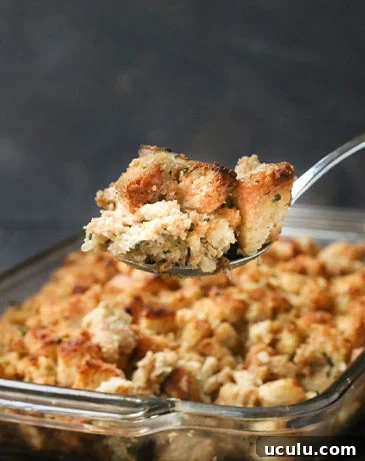
Classic Herb Stuffing captures the familiar holiday flavors everyone enjoys. This version starts with fresh, hearty white bread and blends fresh and dried herbs—parsley, sage, marjoram and thyme. Baking the stuffing in a separate dish keeps it moist while the top becomes beautifully golden and crisp.
I grew up with two types of stuffing depending on who was cooking Thanksgiving dinner. One was the straightforward, classic herb stuffing featured here, which I always loved.
My mother also made a sausage, chestnut and oyster stuffing. As a child I was happy with the sausage and chestnuts but unsure about the oysters. I also remember her crowned roast of pork filled with apple stuffing—I’m a big fan of sweet-and-savory combinations, so fruit in stuffing often wins me over.
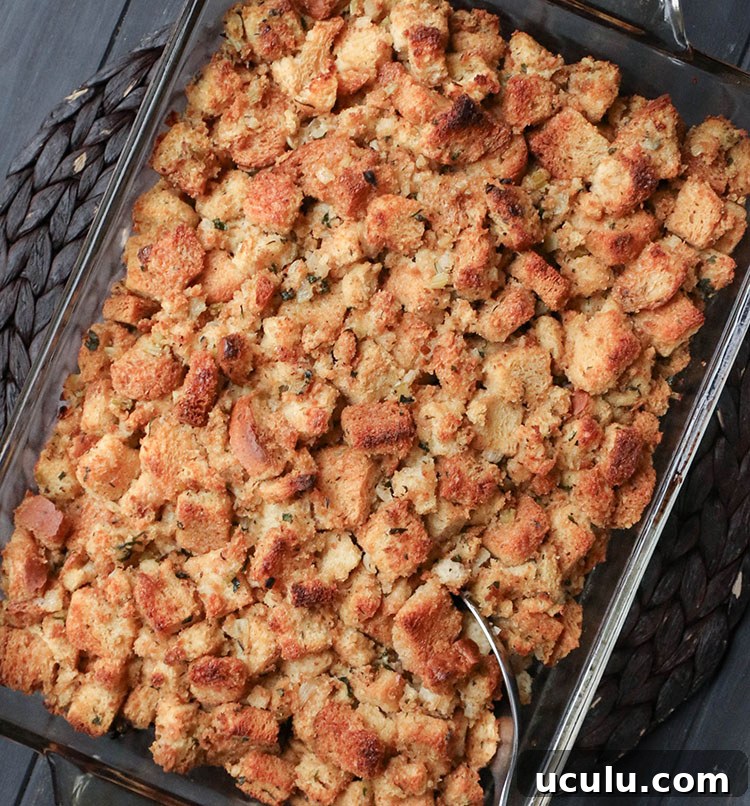
I’ve also made other favorites over the years—Sausage, Fig & Cranberry Stuffing and Pineapple Stuffing—both crowd-pleasers. But sometimes you need a reliable classic: no fruit, no nuts, no meat. For guests who prefer the plain version, I often prepare two types of stuffing so everyone has an option.
When I commit to a classic stuffing, I like to make my own bread cubes and seasonings. That way I can control the texture, size and flavor.
What kind of bread works well for stuffing?
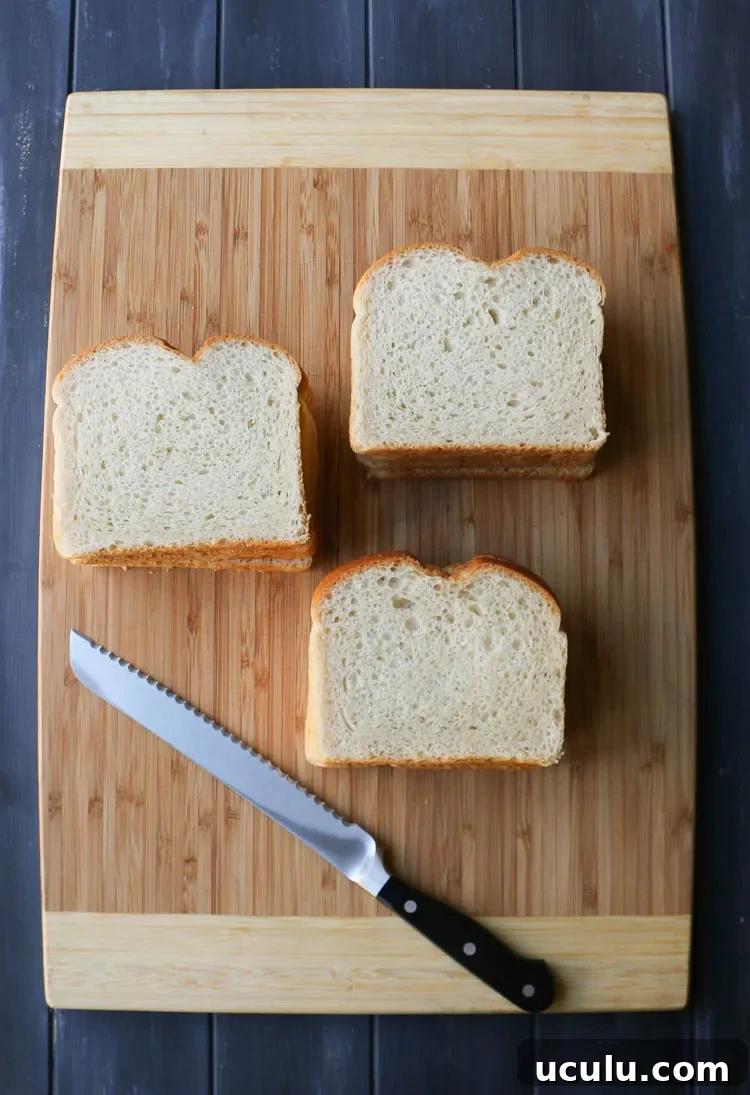
The best choice for a classic stuffing is a hearty white sandwich bread—something denser than the light, airy commercial loaves. Examples include country-style or farmhouse white breads. For this recipe I used Trader Joe’s Canadian White because I like its ingredient list, but any sturdy white loaf will do.
What does “hearty” white bread mean?
A hearty white bread is denser and holds together when combined with wet ingredients. Fluffy sandwich breads can fall apart when stirred with broth, eggs and butter. Choose a bread with integrity so your cubes stay intact during mixing and baking.
How much bread will I need?
This recipe uses about 2 pounds of bread. Many hearty white loaves are 24 ounces, so plan to buy two loaves and use roughly one and a third. When dried, a 24-ounce loaf yields about 15 ounces of bread cubes, and each dried slice amounts to just under an ounce. Expect to cut about 21–22 slices to reach 21 ounces of dried cubes.
How to dry out bread cubes for stuffing
Cut the bread into roughly 1-inch squares for a chunkier bite, or 1/2-inch pieces for a more classic texture. If using unsliced bread, you can tear or cut it to size. Try to keep pieces reasonably uniform so they toast evenly.
Spread the cubes on sheet pans and bake at 325°F, stirring once halfway through. If your oven runs hot, 300°F may be better. Bake until the cubes are fully dried but not overly browned. Let them cool completely before storing or using.
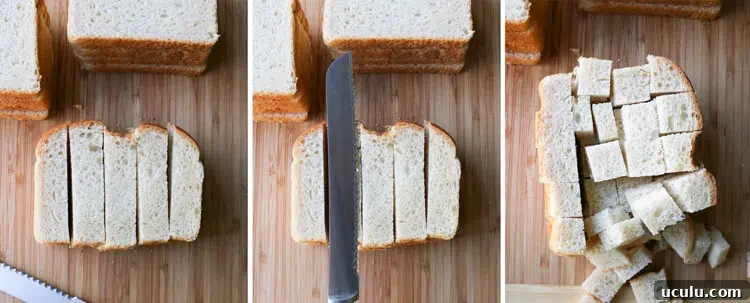
You can make the bread cubes several days ahead and keep them in an airtight container once fully cooled. Avoid storing warm cubes, which will soften.
Can I use other kinds of bread?
Yes. Artisan or crusty breads create a more rustic stuffing, but they may absorb liquid differently. If you use heavier or crusty breads, consider adding a bit more broth so the final dish stays moist. If you prefer not to tweak amounts, stick with a hearty white bread.
Preparing the wet ingredients
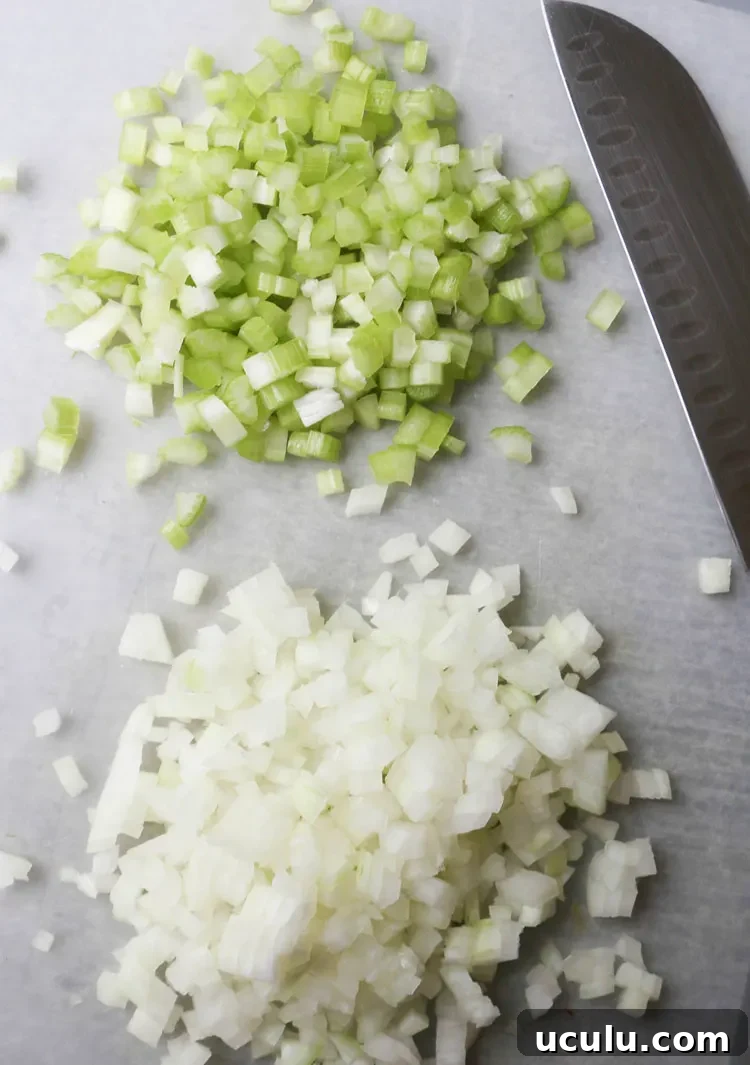
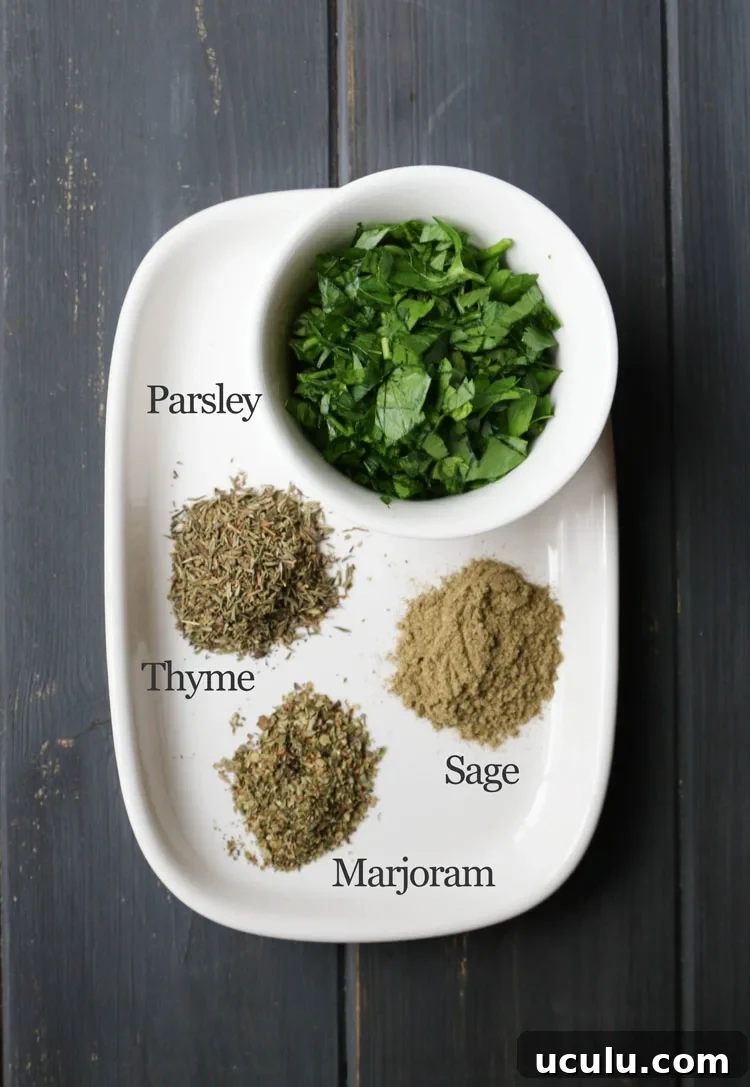
Start by finely chopping onion and celery. Sauté them in butter for 8–10 minutes until softened—this is when the kitchen starts to smell like the holidays. Add the fresh parsley, dried herbs, salt and pepper and cook briefly until fragrant.
Use a very large mixing bowl
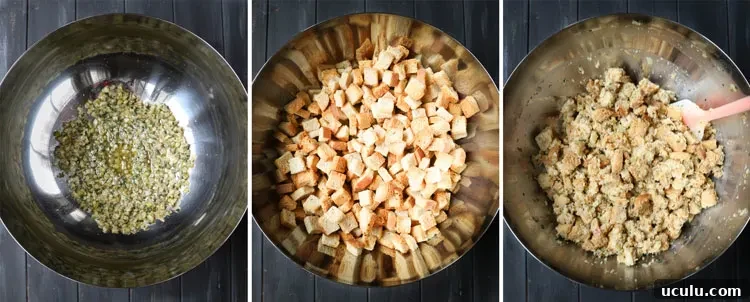
Transfer the vegetable mixture into a very large bowl so you have room to combine all the bread cubes, eggs and broth without crushing the pieces. If you don’t have a large mixing bowl, a large serving bowl or roasting pan works well.
Add the toasted bread cubes, pour beaten eggs over them and stir gently. Then add the chicken broth in stages—a cup at a time—stirring gently between additions to bring drier pieces to the top. Avoid over-stirring to prevent the cubes from breaking down. Let the mixture rest for about 10 minutes to allow the bread to absorb the liquids evenly.
Adjust broth for wetter or drier stuffing
The base recipe calls for 3 1/2 cups low-sodium chicken broth, which yields a nicely moist stuffing. For an extra-moist result, you can increase to 4 cups. The additional liquid helps keep the interior moist while allowing the top to crisp if you bake it a bit longer.
If you prefer stuffing that soaks up lots of gravy, stick with the 3 1/2 cups. The extra half cup is a small adjustment that depends on personal preference and the type of bread cubes you use.
Control the salt
This recipe uses unsalted butter and low-sodium chicken broth so you can control seasoning. If you use salted butter or full-sodium broth, reduce or omit any added salt to taste. If substituting table salt for kosher salt, reduce the amount slightly.
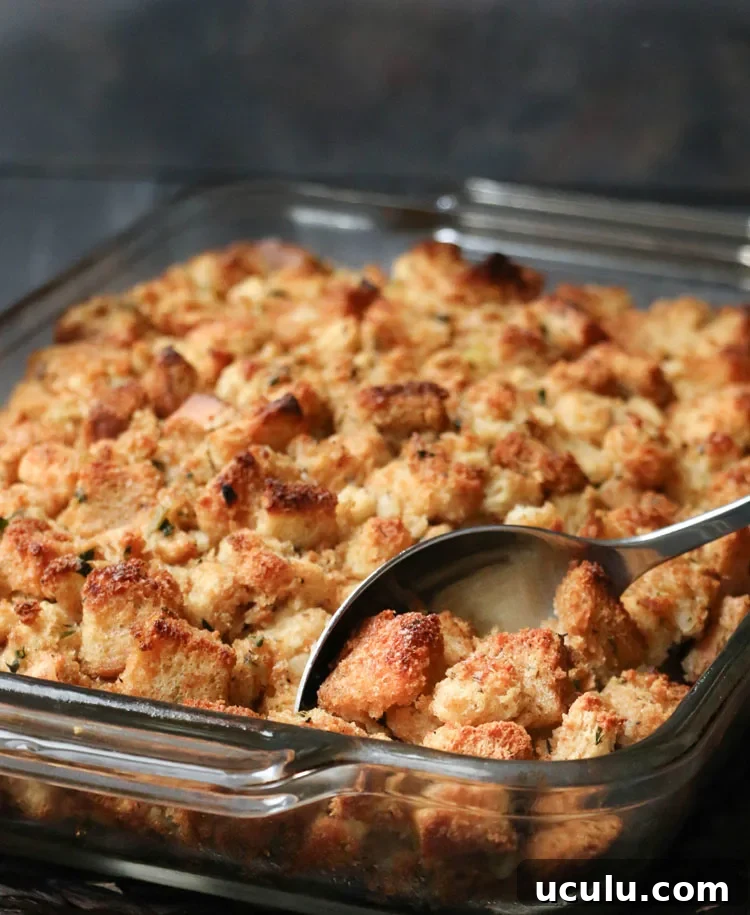
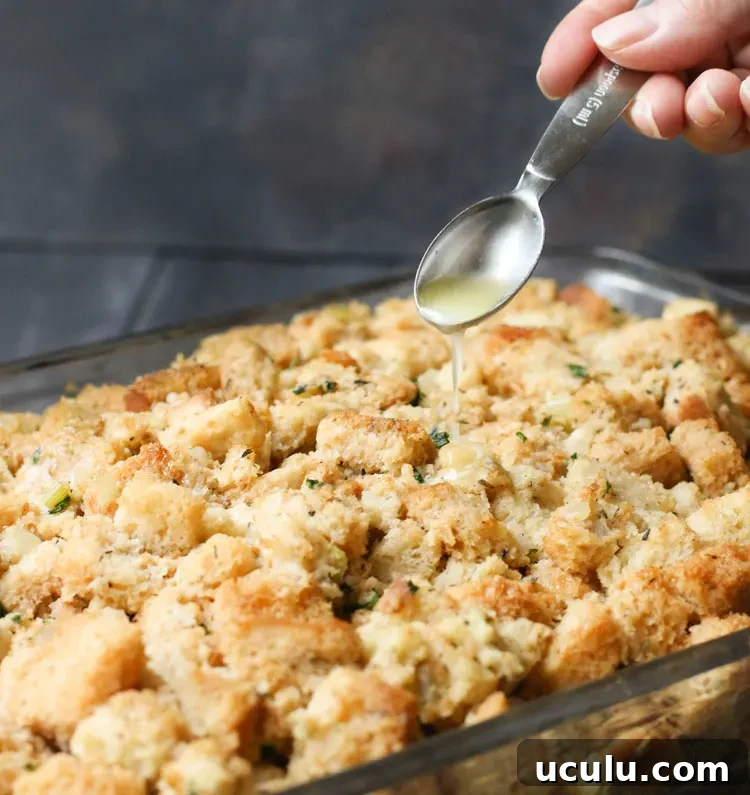
After the mixture has rested, transfer it to a buttered 13×9″ baking dish. You don’t need to pack it tightly—just press lightly to keep it together. Drizzle a few tablespoons of melted butter on top to encourage browning and add flavor.
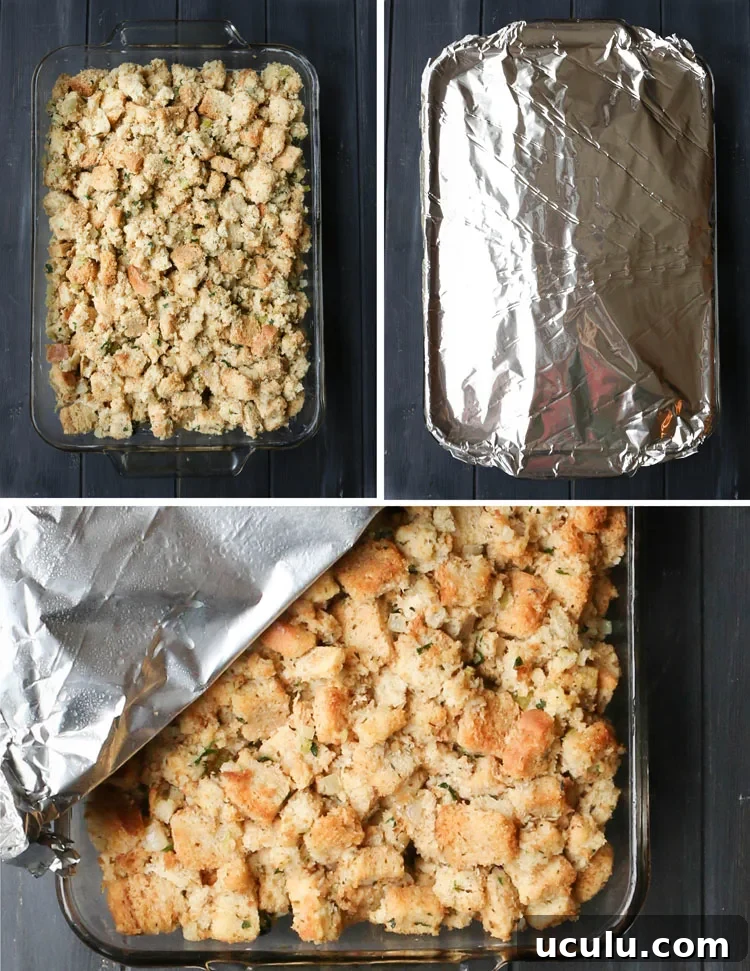
Baking: covered, then uncovered
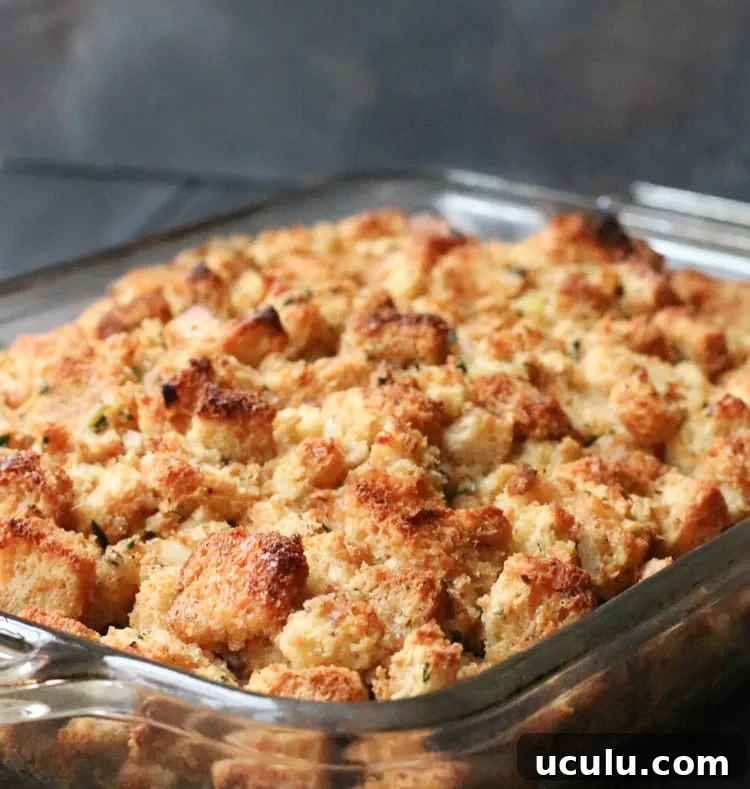
Bake the stuffing covered first to heat it through without drying it out. Then remove the foil and bake long enough to brown and crisp the top. That contrast of moist interior and toasty top is the hallmark of a great stuffing.
Leftovers reheat well. If you plan to reheat multiple times, a slightly moister stuffing holds up better. I’ve even reheated leftover stuffing in a toaster oven until the top turned deeply golden—surprisingly delicious.
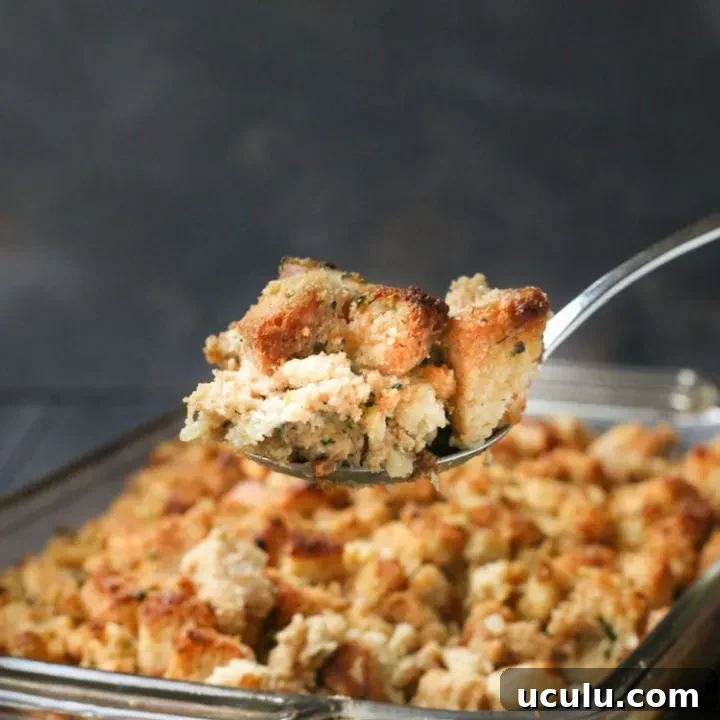
That’s it—flavorful classic herb stuffing made from scratch, with options to prep components ahead of time. For smaller gatherings, you can halve the recipe, though I often make a full batch so there are leftovers for dishes like a leftover stuffing breakfast skillet.
Classic Herb Stuffing
8-10 Servings
20 minutes
55 minutes
50 minutes
2 hours 5 minutes
Classic Herb Stuffing has the traditional flavors of the holidays that everyone loves. This recipe starts with fresh bread and includes both fresh and dried herbs like parsley, sage, marjoram and thyme. Baking the stuffing in a separate dish maintains the moisture while allowing the top to get golden and toasty.
Ingredients
For the bread cubes:
- 2 pounds hearty white sandwich bread
For the seasoned butter mixture:
- 6 tablespoons unsalted butter, plus additional for buttering baking pan
- 1 1/4 cups finely chopped onion
- 3/4 cup finely chopped celery
- 1/4 cup minced fresh parsley leaves (flat-leaf parsley preferred)
- 1 teaspoon dried sage
- 1 teaspoon dried thyme
- 1/2 teaspoon dried marjoram
- 1 teaspoon kosher salt (or to taste)
- 1 teaspoon ground pepper (or to taste)
- 2 eggs, lightly beaten
- 3 1/2 cups low-sodium chicken stock
For the topping:
- 3 tablespoons unsalted butter, melted
Instructions
Prepare the bread cubes:
- Preheat oven to 325°F.
- Cut sliced bread into 1/2″–1″ squares. Spread cubes evenly on two ungreased sheet pans and bake for 25 minutes. Stir and bake another 20–25 minutes until lightly golden and fully dried.
- Remove from oven and cool completely.
Prepare the stuffing:
- Preheat oven to 350°F. Butter a 13×9″ baking dish and set aside.
- Melt 6 tablespoons butter in a large skillet over medium-high heat. Add celery and onion and sauté 8–10 minutes until softened.
- Add parsley, dried herbs, salt and pepper; cook briefly until fragrant.
- Scrape the mixture into a very large mixing bowl, spreading it along the bottom and sides.
- Add the toasted bread cubes and pour the beaten eggs over them. Stir gently to combine.
- Add the broth about 1 cup at a time, stirring gently after each addition so drier cubes are brought to the top. Repeat until all broth is incorporated.
- Let the mixture sit for 10 minutes to absorb the liquid, then transfer to the prepared baking dish.
- Drizzle the 3 tablespoons melted butter over the top. Cover with foil and bake 25 minutes. Remove the foil and bake an additional 25–30 minutes until golden brown. Allow to rest 10 minutes before serving.
Notes
*You can make toasted bread cubes a few days ahead—cool completely and store in an airtight container.
*If your oven runs hot, reduce the temperature to 300°F when drying the bread.
*You’ll need about 21 ounces of dried bread cubes. If you don’t have a scale, expect each slice of fresh hearty white bread to yield about one ounce of dried cubes—approximately 21–22 slices.
*If using alternative breads (artisan, crusty, whole grain), you may need to increase the broth slightly to maintain moisture.
*For moister stuffing, add up to an additional 1/2 cup broth. For stuffing meant to absorb lots of gravy, stick with 3 1/2 cups.
*Adjust salt if using salted butter or full-sodium broth. If substituting table salt for kosher salt, reduce to about 3/4 teaspoon.
*Use a very large mixing bowl to make combining easier. If you don’t have one, a large roasting pan will work.
*To prevent foil from sticking, spray it lightly with cooking spray before covering the stuffing.
Recipe adapted from Cook’s Illustrated Traditional Bread Stuffing.