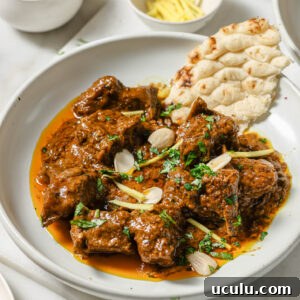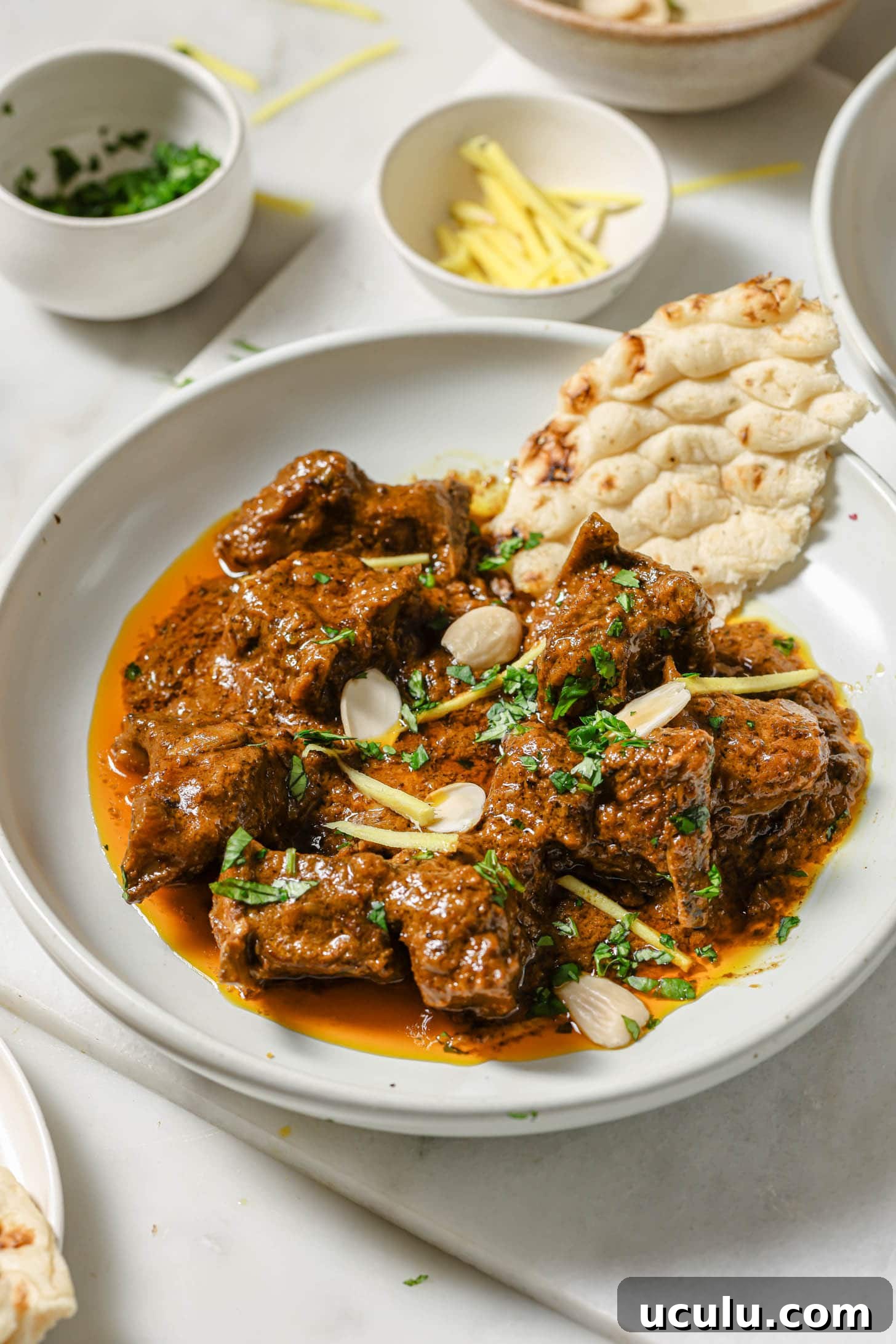
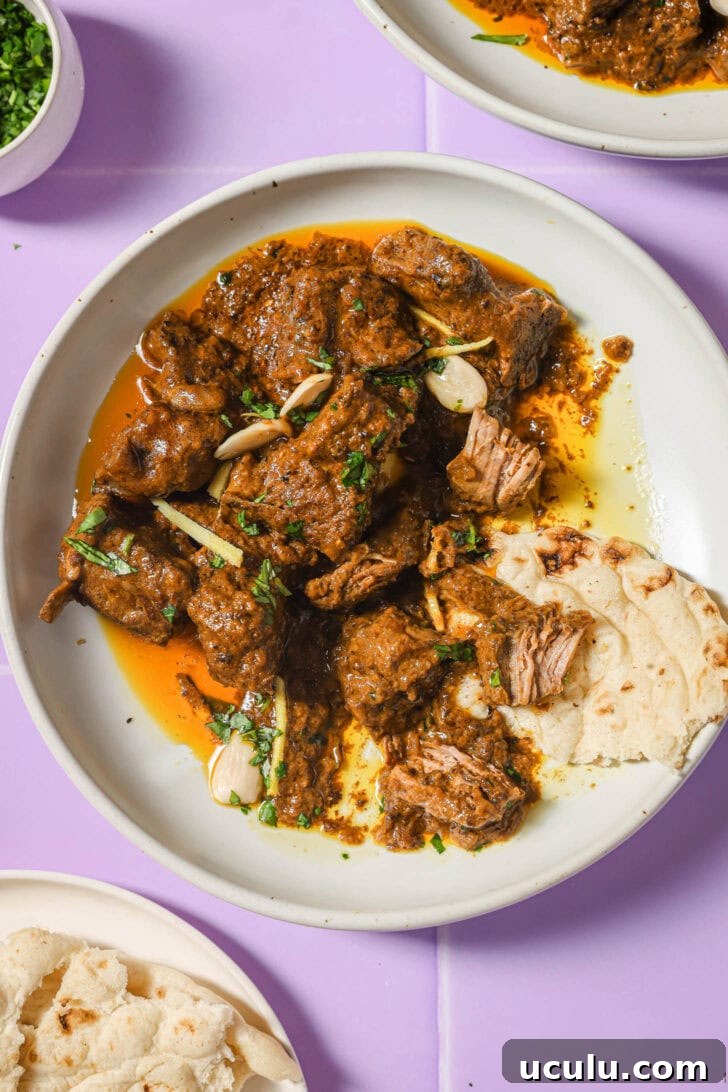
An easy Mutton/Lamb Korma that lets you simplify with store-bought pre-fried onions or use freshly fried onions for a richer sauce. This version delivers tender meat, a luxurious, restaurant-style sauce, and authentic korma flavors while only requiring about 15 minutes of active prep. It works with lamb or goat and can be cooked on the stovetop or in an Instant Pot. The recipe includes substitutions for harder-to-find spices so it’s accessible without compromising the characteristic korma aroma and taste.
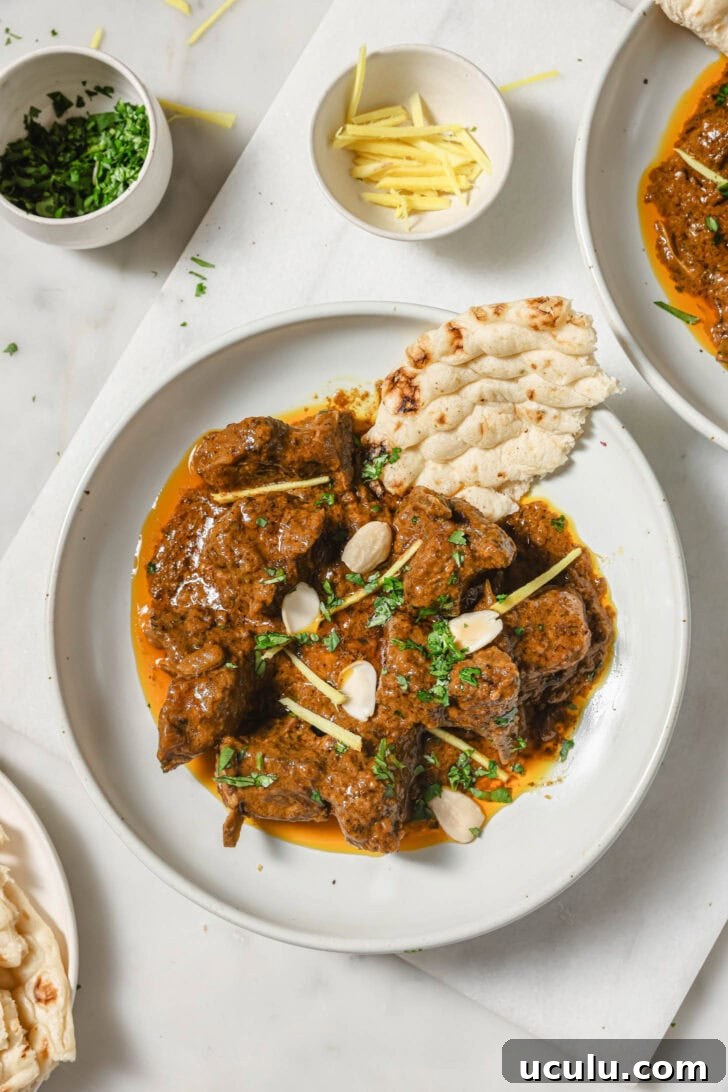
Mutton/Goat or Lamb Korma
This recipe focuses on the spice balance that makes a true korma. It’s adapted from a caterer’s method to deliver a lush, celebratory dish without complicated steps. Prep takes about 15 minutes, then simmer on the stovetop for about 1 hour 25 minutes (or pressure-cook for 25 minutes in an Instant Pot). A simple homemade korma masala, cream, and kewra finish the dish and give it its signature perfume.
Ingredients
Notes on key ingredients and options to tailor the korma:
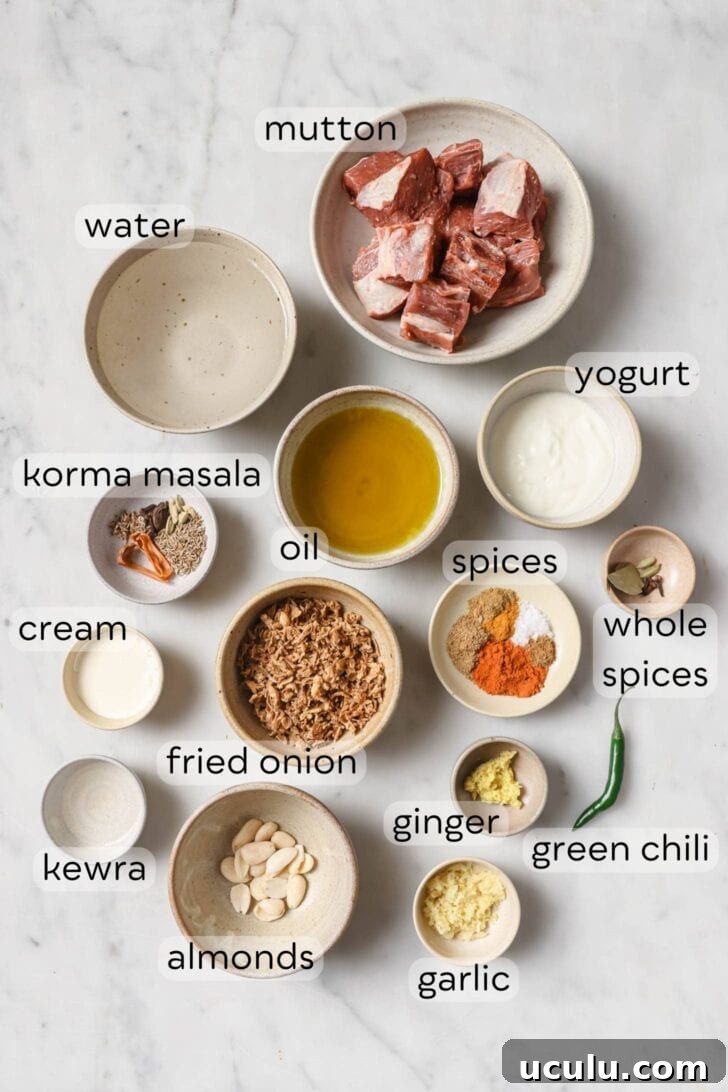
For the Korma
- Neutral oil: Traditional, wedding-style korma has a visible layer of oil on top. For that look and mouthfeel use 1/2 cup. If you prefer less, 1/3 cup works fine.
- Meat: Bone-in goat or lamb leg is ideal, cut into 1–2″ pieces. Mixed pieces are fine too. If purchased from a halal butcher, rinse and pat the pieces dry to reduce splatter when browning.
- Fried onions: Fried onions add body and mild sweetness. Fresh onions fried until golden give the best texture, but store-bought pre-fried onions (without flour coating) are a convenient substitute.
- Plain whole-milk yogurt: Use whisked, room-temperature yogurt; Greek yogurt is an acceptable alternative.
Korma Masala Spices
These whole spices are toasted and ground to produce the sweet, floral, and slightly savory notes that define korma. Grind them in a spice grinder or mortar and pestle.
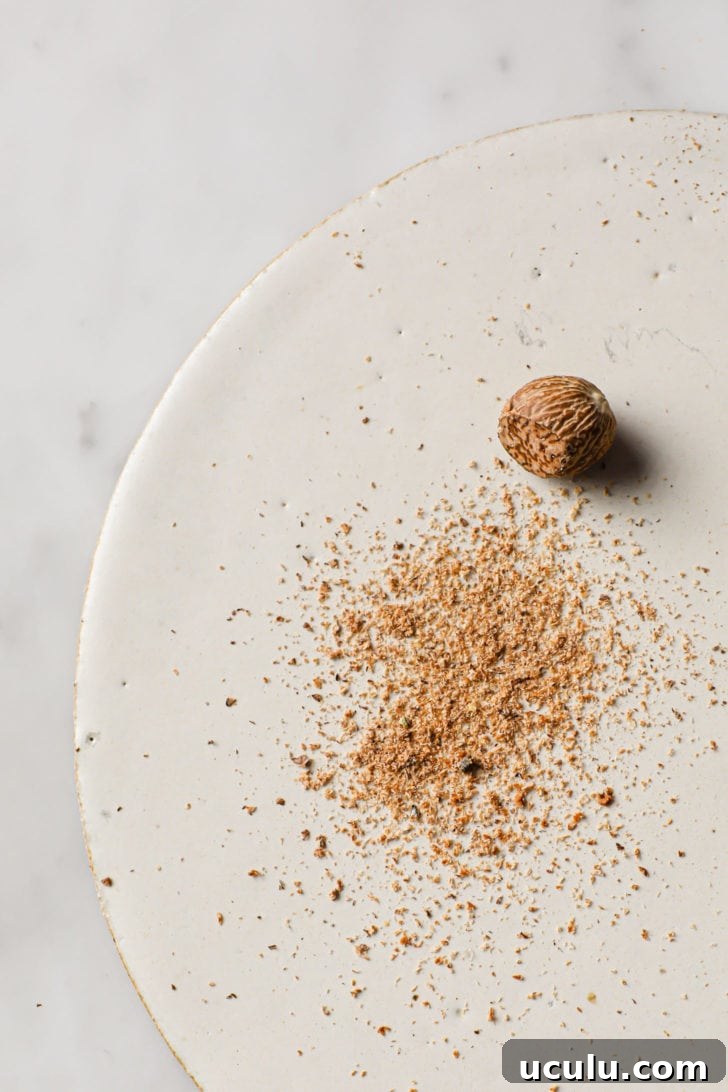
- Whole cloves
- Nutmeg: A small cracked piece of the pod or 1/8 tsp ground nutmeg. Nutmeg adds a warm, sweet note—use sparingly to avoid bitterness.
- Mace (javitri): The dried outer covering of nutmeg; it’s floral and milder. Use 1–2 blades (~1–2″). If unavailable, substitute a pinch of ground mace or cinnamon.
- Black cardamom: Gives a smoky depth; omit or replace with 1/8 tsp garam masala if you don’t have it.
- Green cardamom pods
- Cumin seeds: Preferably toasted for extra aroma.
Finishing ingredients
- Heavy whipping cream: Adds richness and helps mellow spices. Increase to taste for a creamier result.
- Kewra water: Floral kewra water or a small amount of kewra essence gives the characteristic aroma. Start conservatively; rose water can be used as a mild substitute.
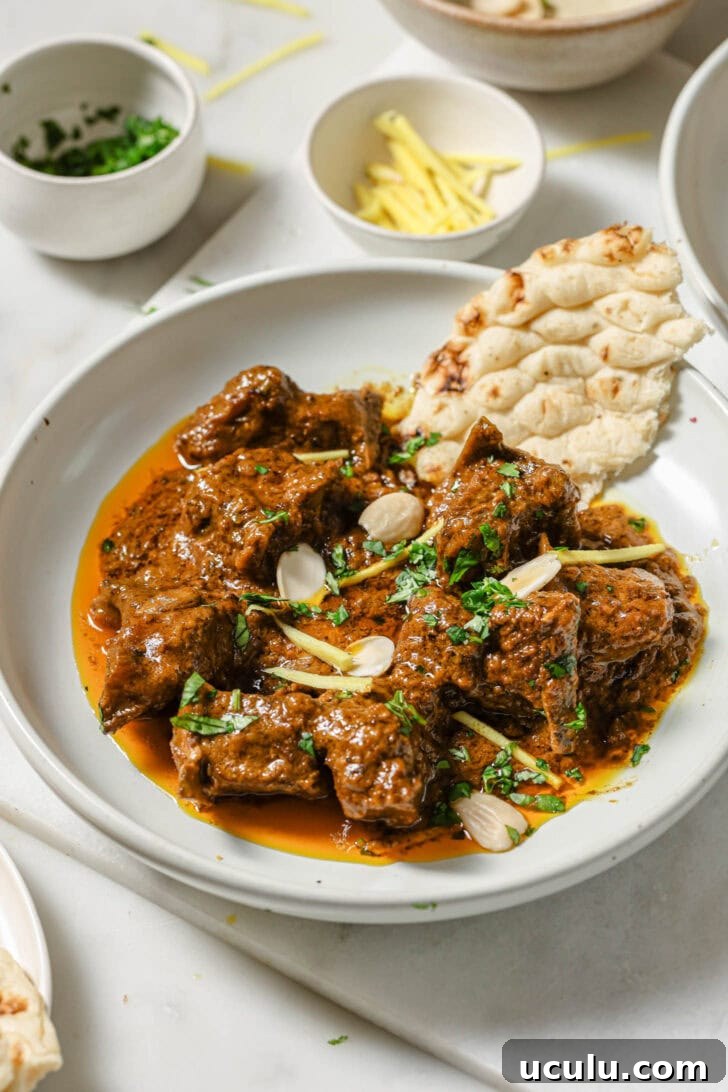
- Blanched almonds: For garnish and texture. You can also incorporate cashew paste into the sauce for extra creaminess (see notes).
- Julienned ginger: For a bright, fresh garnish that offsets the rich sauce.
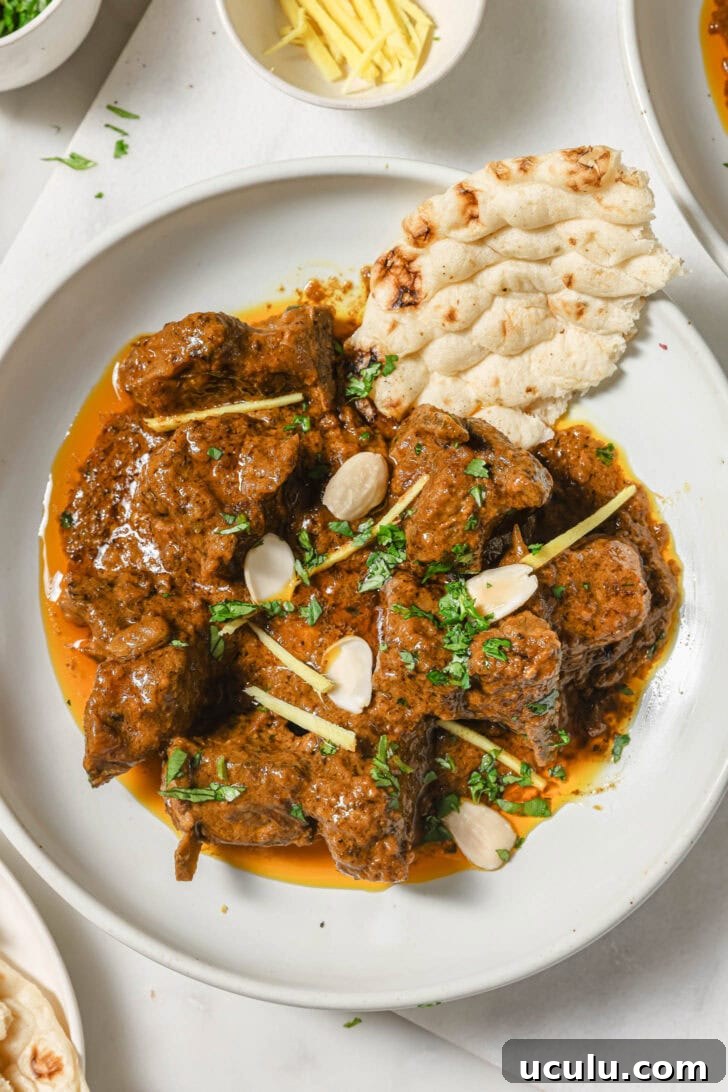
How to make Mutton Korma
- Heat the oil in a large heavy-bottomed pan over medium-high heat. Add bay leaf, whole cloves, and green cardamom pods. When they crackle, add the meat and sauté for about 5 minutes until it changes color and surface moisture evaporates. This browning (bhunai) builds flavor.
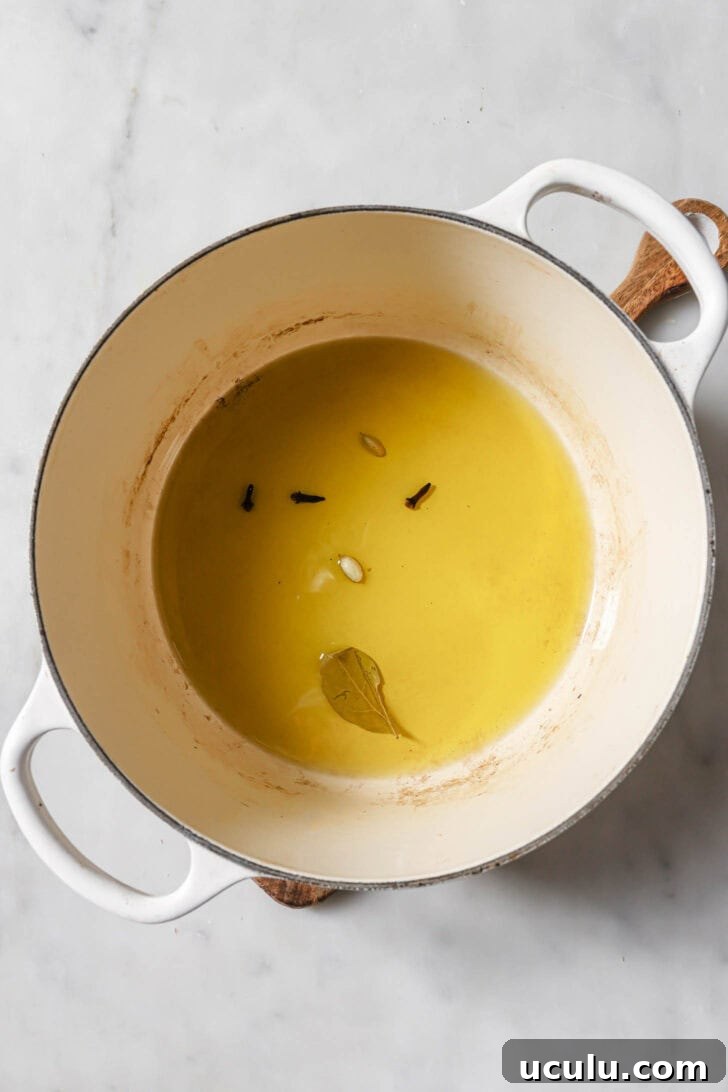
- Add garlic, ginger, and green chili. Sauté 2–3 minutes until aromatic and the meat begins to brown. Deglaze with 1–2 tbsp water if pieces stick to the pan.
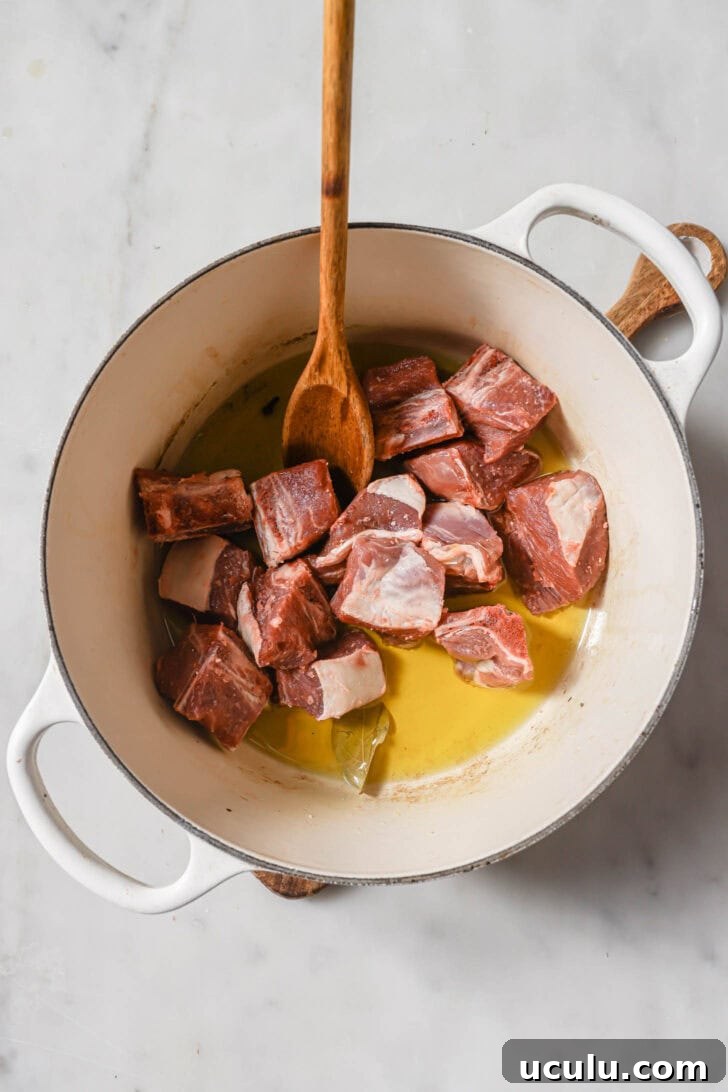
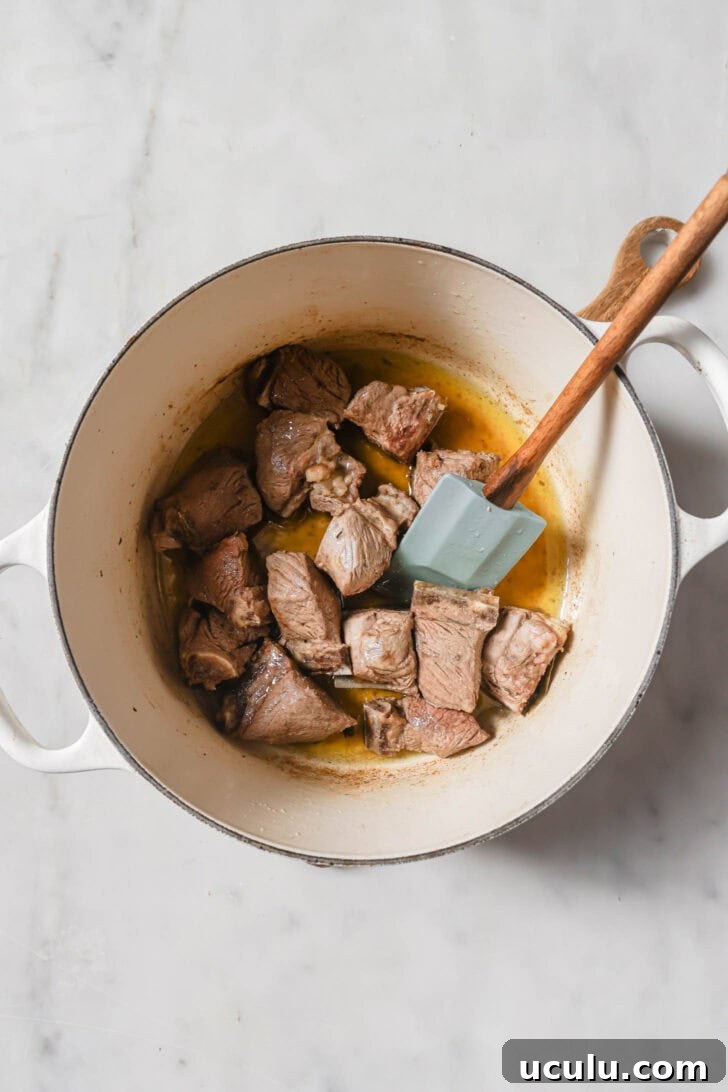
- Lower heat and add ground spices: Kashmiri chili powder (for color), coriander powder, red chili powder, cumin powder, turmeric, and garam masala, plus salt. Sauté 2–3 minutes to bloom the spices.
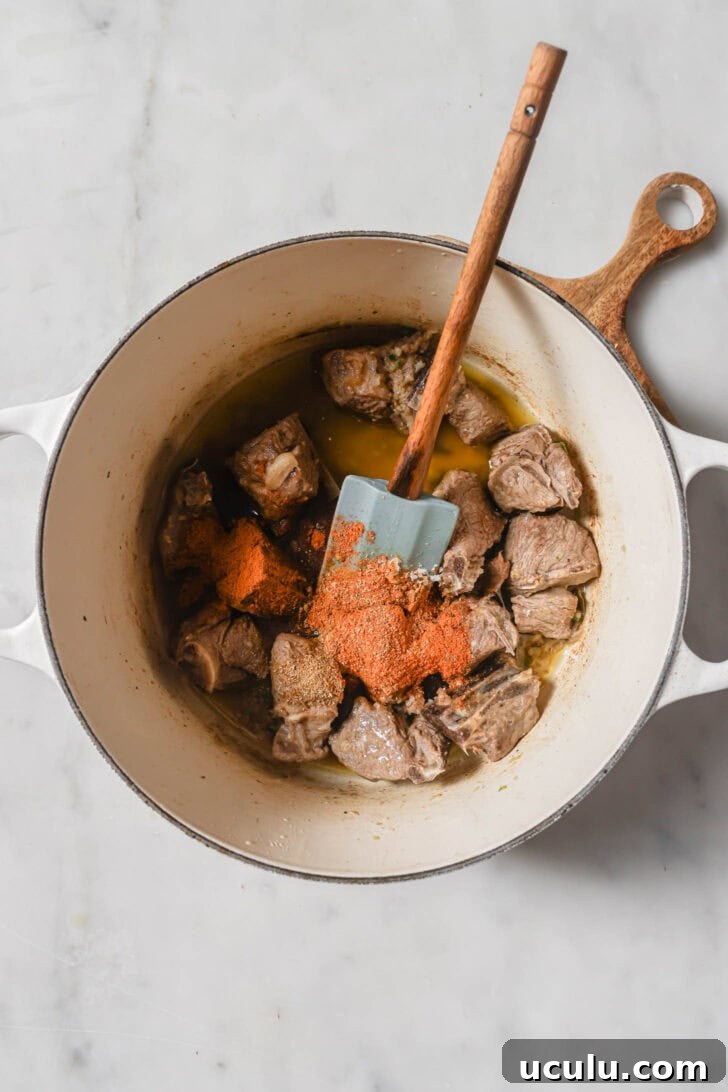
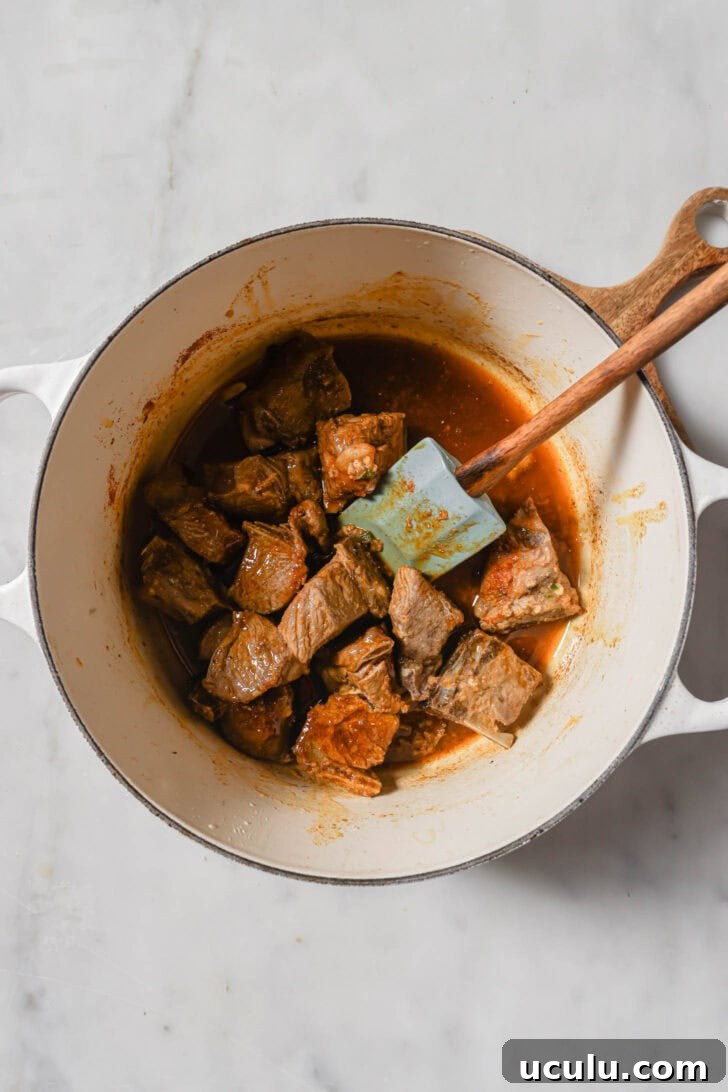
- Stir in the yogurt and fried onions. If using fresh fried onions, blend them with the yogurt first for a smooth sauce. Continue stirring on low heat to incorporate.
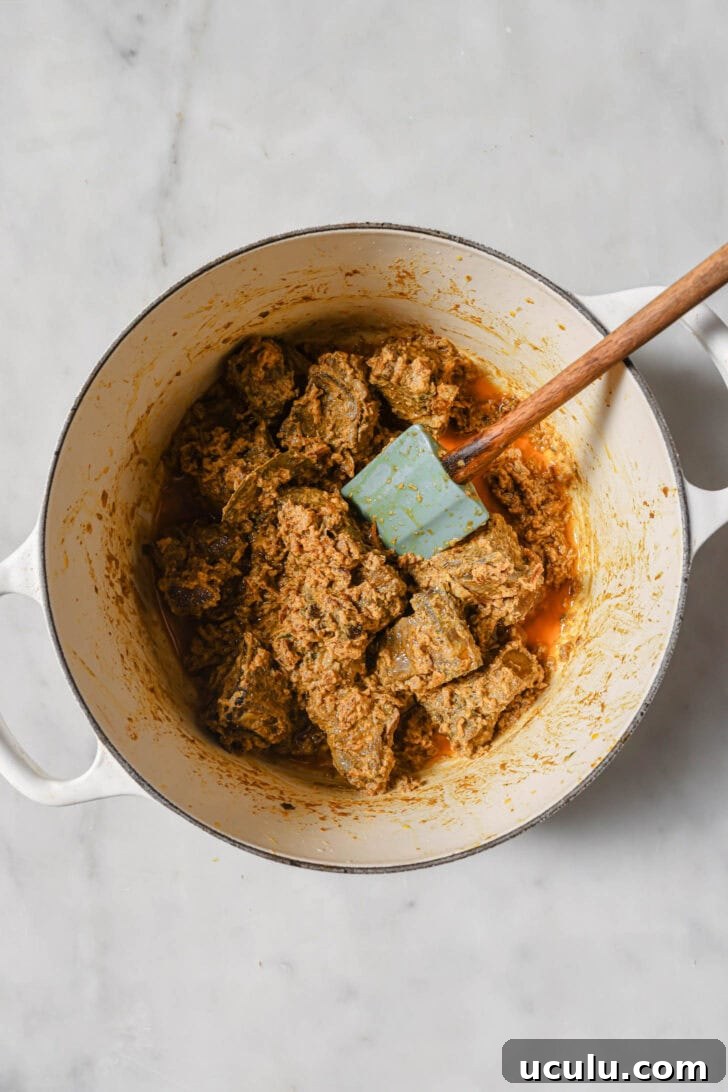
- Add measured boiling water, raise heat briefly to bring to a light boil, then reduce to a gentle simmer and cover. Cook until the meat is fork-tender—about 1 hour 25 minutes on the stovetop depending on cut and size. Smaller pieces and younger meat will need less time; if in doubt, cook longer rather than shorter.
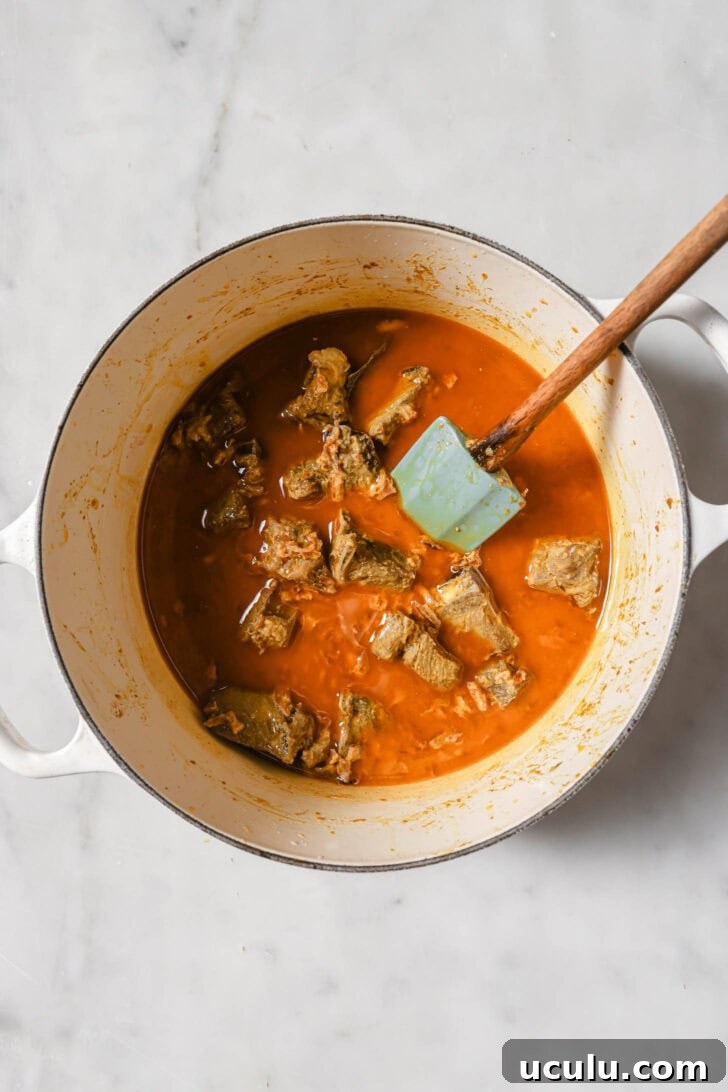
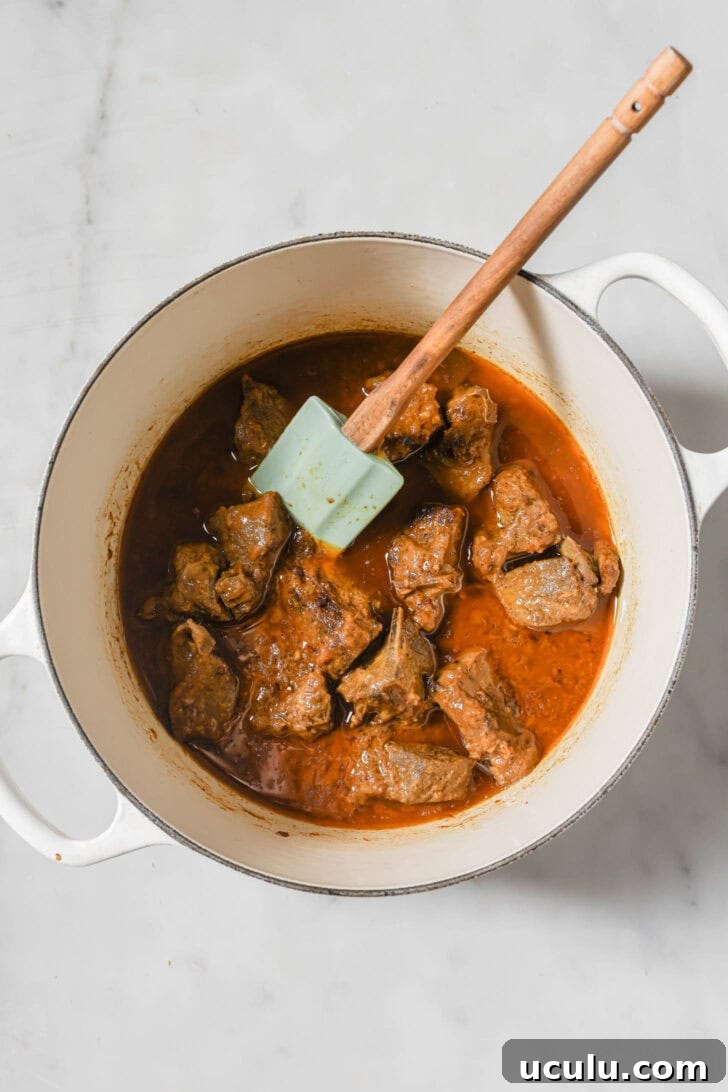
- While the meat simmers, grind the whole spices listed under “Korma Masala” into a fine powder. This yields about 2 tsp of the finishing masala.
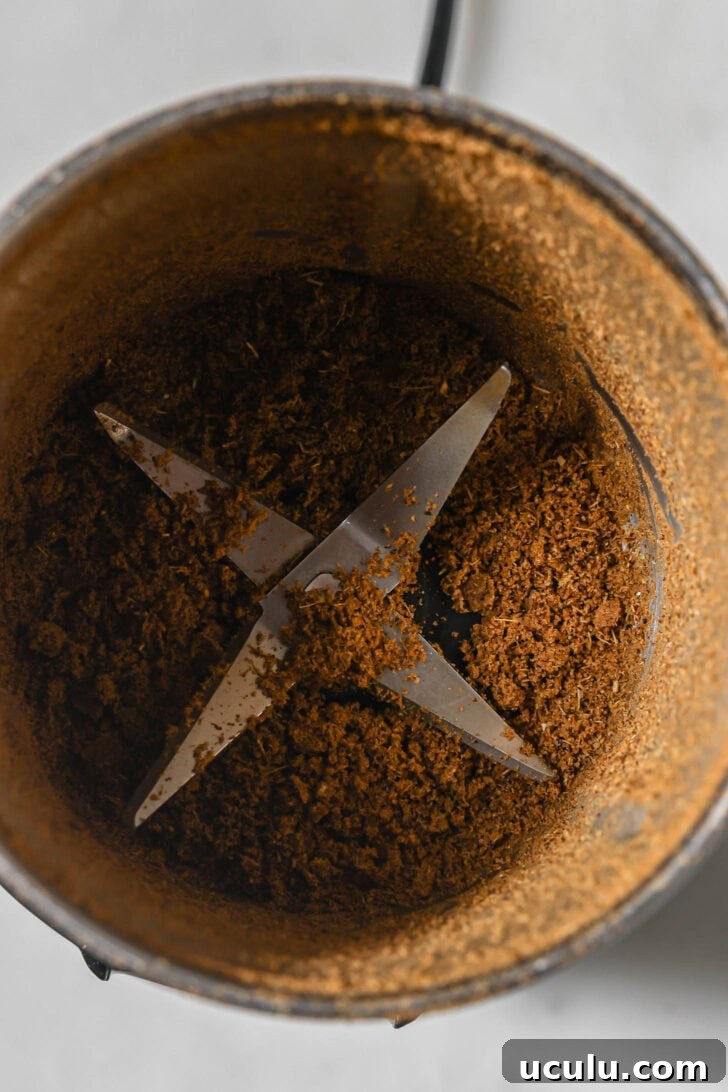
- When the meat is tender, stir in the korma masala powder, heavy cream, and kewra water. Adjust salt to taste. Simmer a few minutes to meld flavors and allow oil to rise to the surface. If sauce is too thin, simmer uncovered to reduce; if too thick, add a little boiling water.
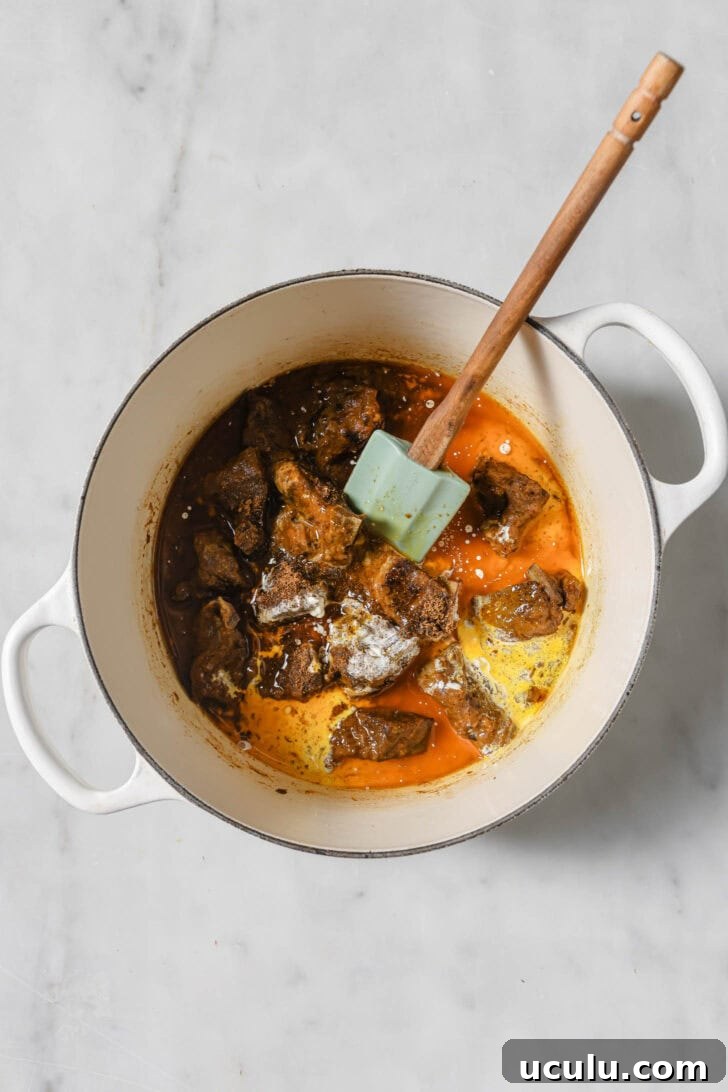
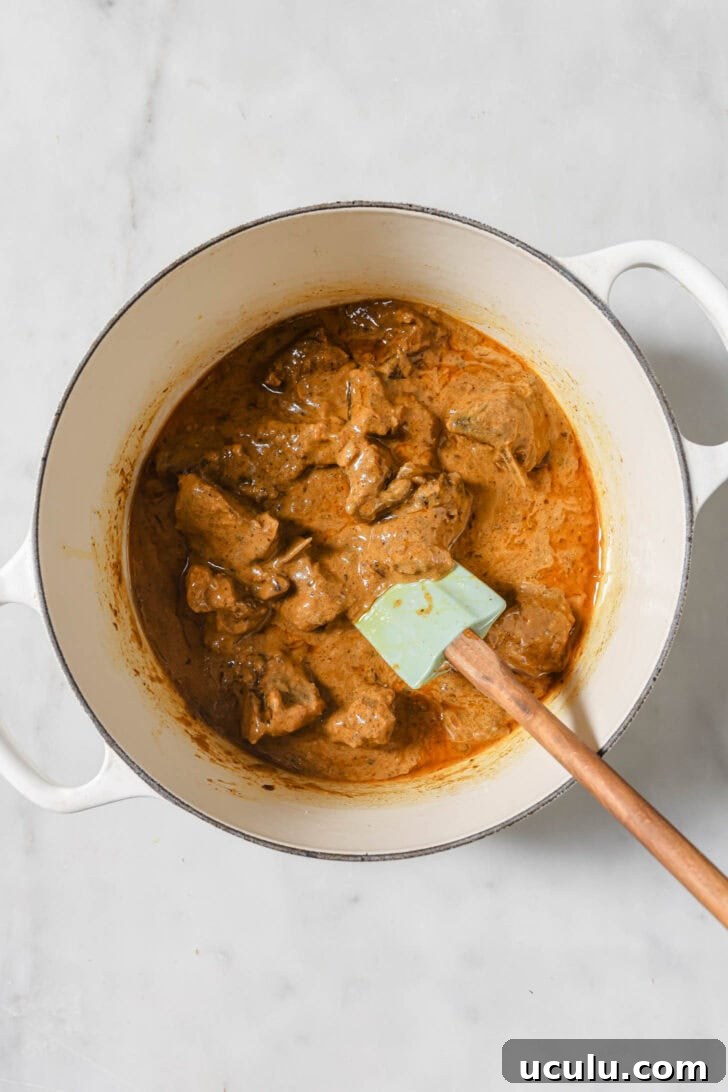
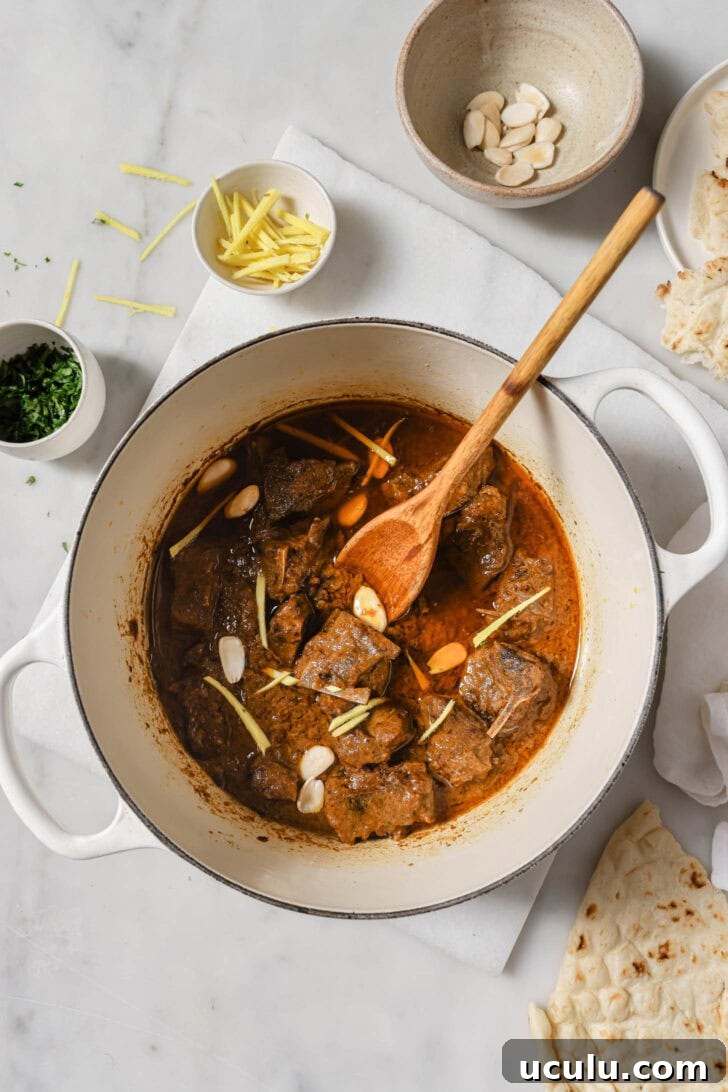
- Prepare blanched almonds: soak in hot water briefly, peel, and reserve. Garnish the finished korma with blanched almonds and julienned ginger. Serve hot with naan, roti, paratha, or basmati rice.
More Tips and Notes
- Maintain the ratios and the order of adding spices to preserve the classic korma profile. Substitutions (nutmeg powder for whole nutmeg, cinnamon for mace) work if needed—just use them sparingly.
- Fresh fried onions create a thicker, creamier sauce than pre-fried onions. For extra richness consider a small amount of cashew paste, but omit blanched almonds if you choose cashews.
- Thoroughly sautéing the meat is essential for flavor development. If you double the recipe, increase sauté time proportionally and ensure the pan surface allows moisture to evaporate during browning.
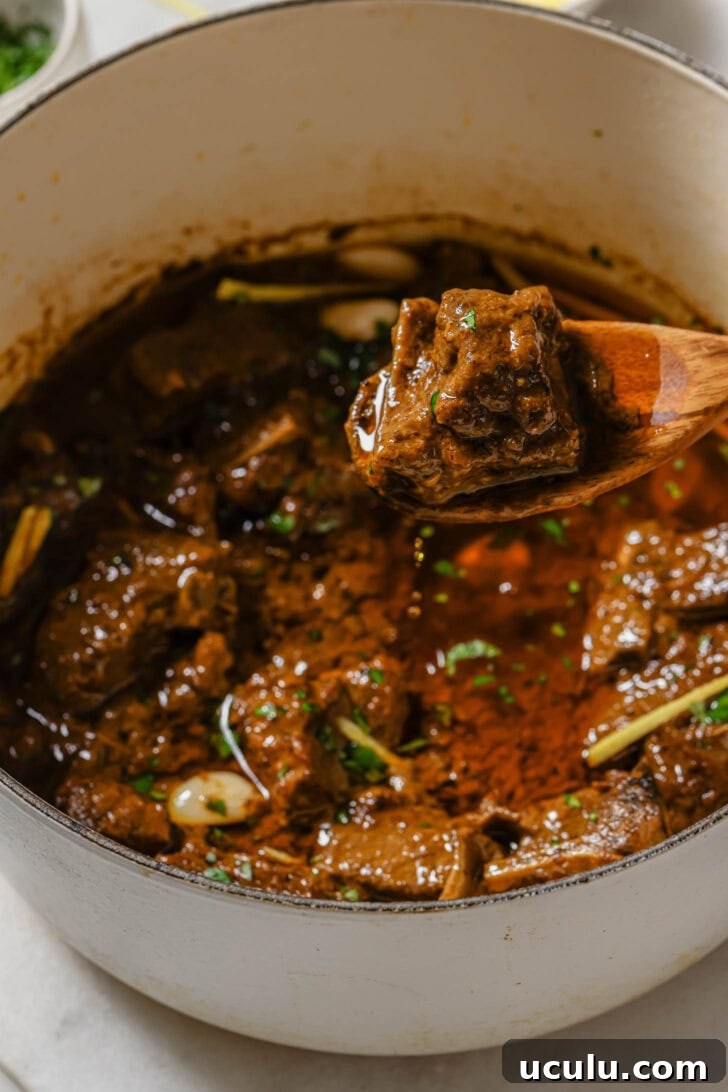
Tried this recipe? If you do make it, please consider leaving a comment and a photo—feedback is always appreciated.