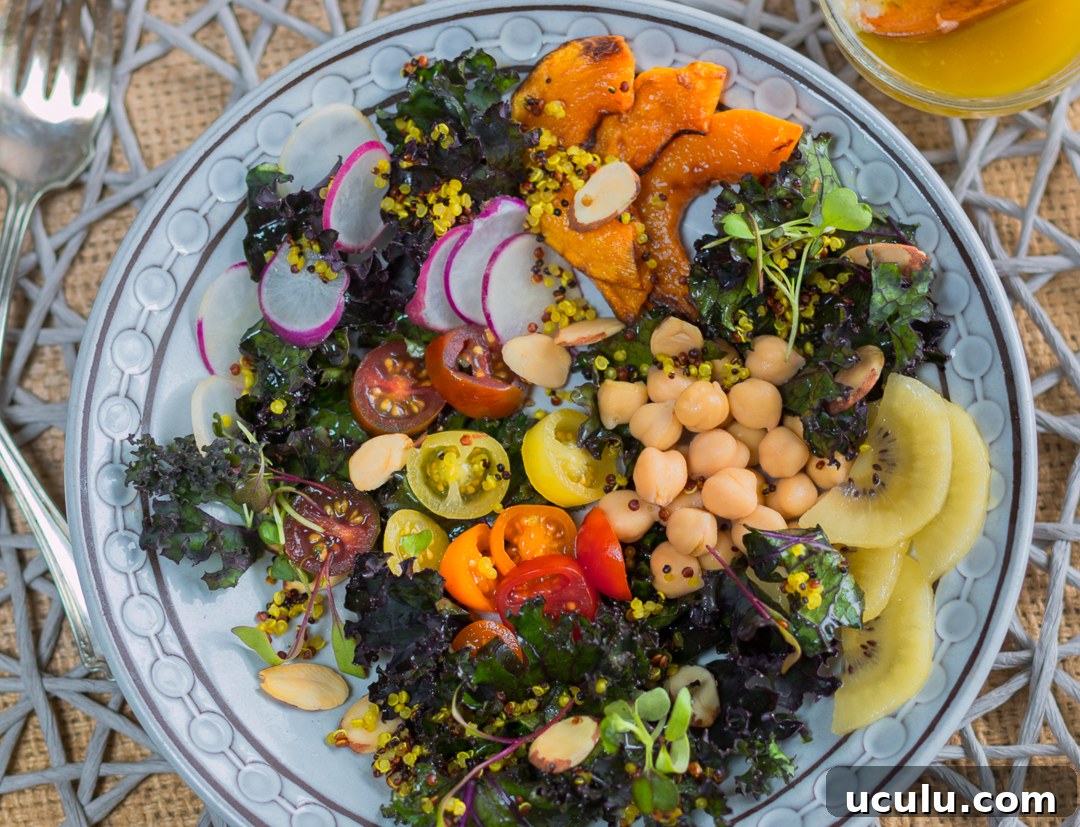
Healthful, good-for-you ingredients with amazing flavors.
Say “YES” to more plant-based foods in your regime for 2019!
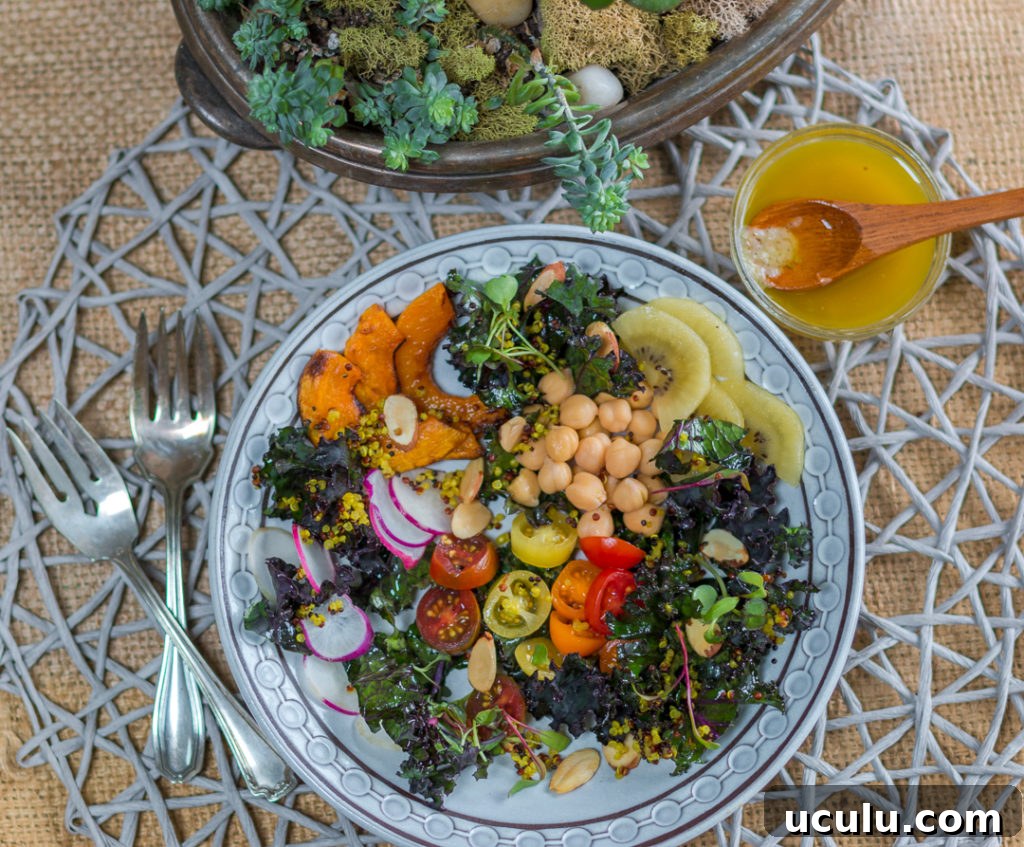
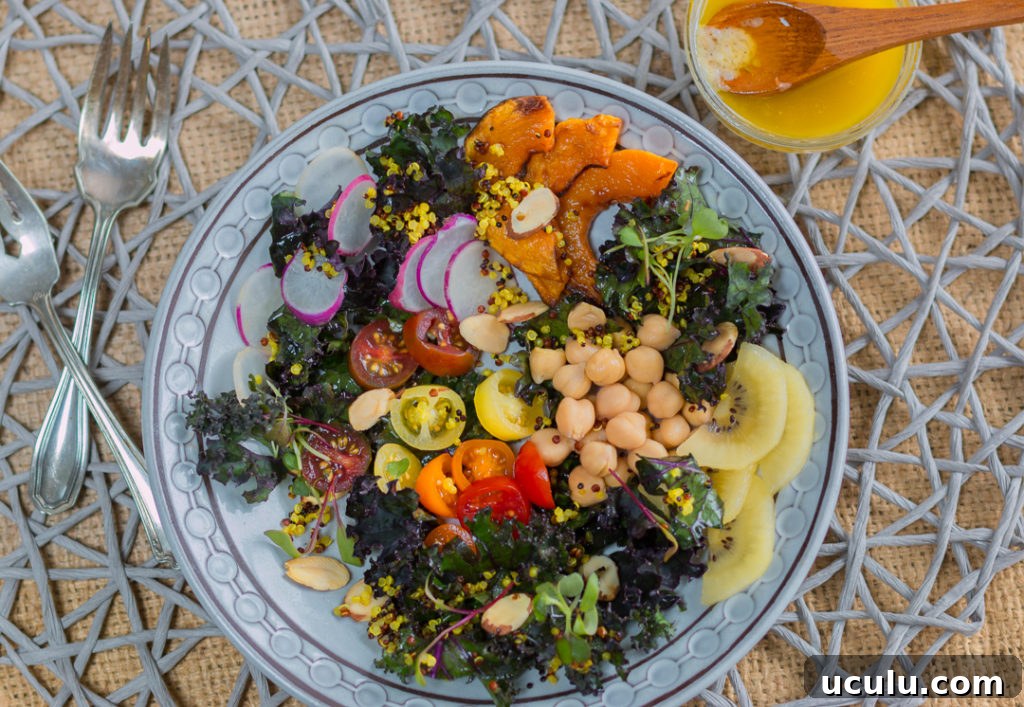
We all want to be healthier and enjoy a long, productive life. A whole-food, plant-based diet focuses on nutrient-dense plant foods and minimizes added sugars, refined grains, and other processed items. This antioxidant-rich salad is high in fiber and flavor, with a good balance of protein. Below I share my recipe and suggested add-ins so you can adapt it to your taste. Avocado, dried fruit and other greens work well — and if you’re not a fan of kale, try the red kale used here: its purplish leaves soften and taste wonderful when massaged with a lemony dressing.
My Lemony Extra Virgin Olive Oil dressing is quick to make and delicious. Use extra-virgin olive oil liberally; it offers anti-inflammatory and antioxidant benefits and contains beneficial omega-3 and omega-6 fatty acids. Extra-virgin olive oil comes from the first, cold-pressed extraction of olives, unlike refined olive oil blends that include processed oils. Genuine extra-virgin oil is produced without excessive heat.
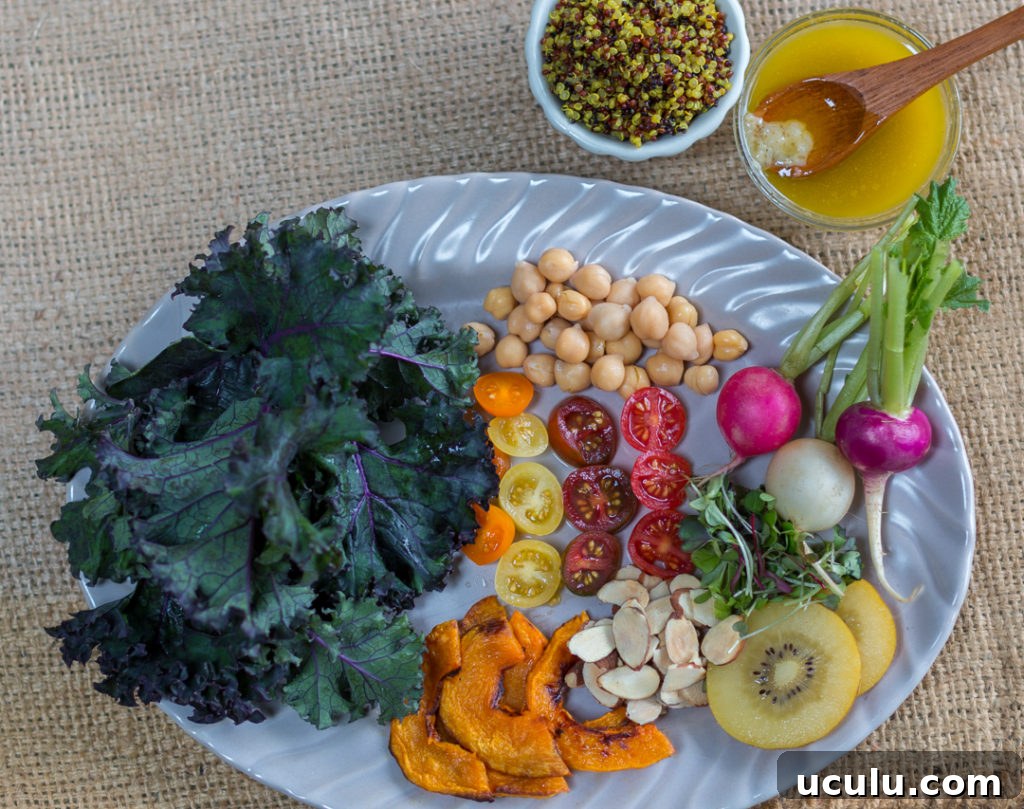
My Antioxidant Kale Salad includes: organic red curly kale, roasted butternut squash, heirloom cherry tomatoes, microgreens, chickpeas, breakfast radishes, cooked tri-color quinoa, sungold kiwi, toasted natural sliced almonds, and a lemon-EVOO dressing. These ingredients combine bright flavors, varied textures and nourishing plant-based nutrition.
What we eat shapes our bodies from the inside out. Many studies support plant-forward approaches like the Mediterranean diet: emphasizing fruits, vegetables, whole grains, legumes and nuts, while limiting excess fats, animal protein, sugar and alcohol. A plant-focused way of eating supports heart health, weight management, blood sugar control and overall longevity.
The vegan lifestyle and gluten-free options are increasingly popular and useful for those with specific needs. For most people, balance is key. Shifting toward more plant-based meals is a practical, positive change. Prioritize quality: fresh, well-grown produce—ideally organic or non-GMO—delivers more nutrients. Certified organic foods are also non-GMO.
Adding more vitamin-rich fruits and vegetables, whole grains, nuts, seeds, herbs, spices and even small amounts of cocoa can yield big health returns. Benefits include improved hydration, heart health, weight support, reduced risk factors for some cancers and diabetes prevention, plus a smaller carbon footprint.
Here’s to a healthy 2019.
Let’s get cooking together!
Karen