BIM coordination is one of the most influential practices in modern construction. It unites architects, engineers, contractors, and stakeholders to align their models before any element is built on site. The objective is clear: detect conflicts early, avoid costly mistakes, and enable a smoother process from design through handover.
This guide explains what BIM coordination is, how the process works, which tools support it, and how construction teams can apply it effectively.
What Is BIM Coordination?
BIM coordination (Building Information Modeling coordination) is the process of combining models created by different disciplines into a single, unified model. Each team produces its own BIM model: architects create the building envelope, structural engineers model the load-bearing systems, and MEP contractors model mechanical, electrical, and plumbing systems. BIM coordination federates these models so conflicts—such as a beam intersecting a duct—can be identified and resolved before construction begins.
Coordination is a proactive process that spans design and pre-construction, providing stakeholders with visibility before work starts on site. Many firms augment internal capabilities with outsourced services to increase coordination capacity and support multidisciplinary delivery.
The BIM Coordination Process Step by Step
The BIM coordination workflow is largely consistent across project types. Understanding each stage helps teams implement effective coordination from the outset.
Step 1: Model Submission & Federated Model Setup
Each discipline (structural, MEP, architecture) submits its model to a common collaboration environment. Linked models are compiled into a federated model for review. Clear communication is essential at this stage: coordinate systems, file formats, and naming conventions must be aligned before coordination can proceed.
Step 2: Running Clash Detection
Once models are linked, teams run clash detection using specialized software. Coordination rules flag hard clashes (physical overlaps), soft clashes (clearance violations), and workflow clashes (sequencing conflicts). Identifying issues early is highly cost-effective—resolving design-phase clashes is far cheaper than correcting them on site.
Step 3: Coordination Meetings and Issue Resolution
Coordination meetings are where issues get resolved. BIM coordinators, design teams, and stakeholders review flagged issues, assign responsibility, and agree on fixes. Regular meetings move the model forward. Issue management tools then track each clash through to resolution so nothing is overlooked.
Step 4: Documentation & Sign-Off
When coordination is complete, issues are documented and signed off by all relevant parties. This documentation supports quality control during construction and provides a reliable record for contractors and project managers.
Benefits of BIM Coordination in Construction
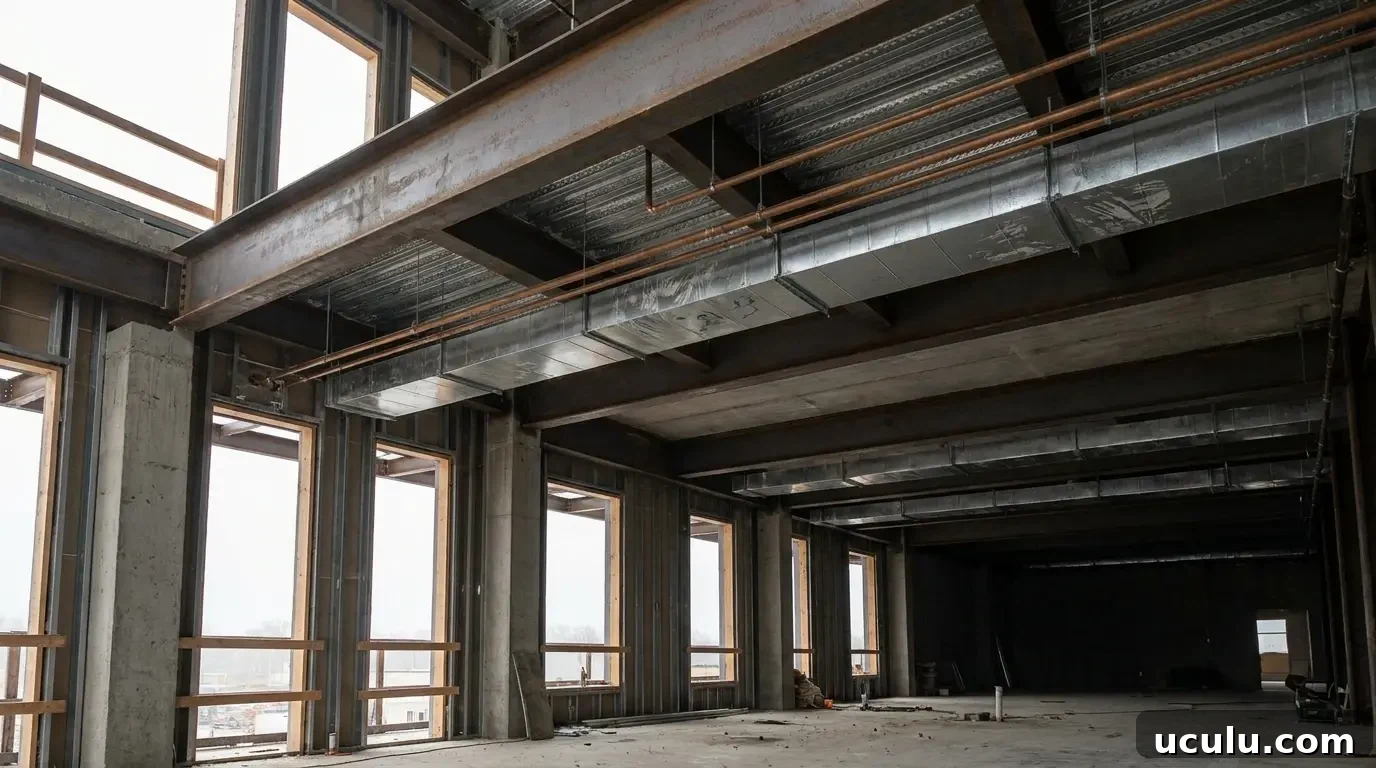
When applied correctly, BIM coordination delivers measurable benefits across every project phase.
Early clash detection reduces cost.
Discovering a conflict between a structural element and an HVAC duct during design costs far less to fix than addressing it during construction. This early detection is the primary financial advantage of BIM coordination.
Improved collaboration across disciplines.
Sharing and updating a common model breaks down silos, reduces miscommunication, and cuts rework. Better collaboration leads to faster, better-informed decisions.
Greater project efficiency.
Teams that employ BIM coordination produce fewer RFIs, change orders, and delays—protecting schedules and improving overall efficiency.
Smoother construction on site.
Resolving design conflicts before construction minimizes interruptions for field crews. Contractors can manage resources and sequencing with greater confidence, which improves project quality.
Reduced risk on complex projects.
BIM coordination provides a clear picture of how elements will fit together, lowering risk throughout the project lifecycle.
BIM Coordination vs BIM Management
These roles are related but distinct.
|
BIM Coordination |
BIM Management |
|
|---|---|---|
|
Focus |
Detecting and resolving model conflicts |
Setting BIM standards and strategy |
|
Who performs it |
BIM coordinator, trade teams |
BIM manager, project management |
|
When |
Design phase and pre-construction |
Full project lifecycle |
|
Key activity |
Clash detection, coordination meetings |
BIM Execution Planning, quality control |
|
Output |
Coordination-complete federated model |
BIM Execution Plan, standards library |
The BIM coordinator works within the framework established by the BIM manager. Both roles are necessary on complex projects—one handles practical coordination, the other sets strategy and standards.
What Does a BIM Coordinator Do?
The BIM coordinator sits at the intersection of technology and communication. Key responsibilities include:
- Scheduling and running coordination meetings with relevant team members
- Running clash detection and configuring detection rules
- Logging, assigning, and tracking issues through to resolution
- Maintaining the federated model and enforcing submission standards
- Reporting coordination status to contractors and stakeholders
- Supporting design and trade teams in resolving conflicts efficiently
An effective BIM coordinator combines technical proficiency with tools like Autodesk Revit and coordination platforms, and strong communication skills. Practical construction experience helps translate model issues into feasible on-site solutions.
Best BIM Coordination Software Tools
The right software accelerates coordination and improves reliability. Commonly used platforms include:
Autodesk Navisworks – A standard tool for clash detection, supporting linked models and complex rule configurations.
Autodesk Revit – A primary modeling tool for architects and structural engineers; Revit models integrate into most coordination workflows.
BIMcollab – A cloud-based issue management and coordination platform designed for BIM workflows with wide tool integrations.
Autodesk BIM 360 / ACC – A collaboration platform that connects design and construction teams in a shared environment.
Tool selection depends on project size, existing workflows, and team preferences.
BIM Coordination Best Practices
Consistent, structured practices make BIM coordination effective:
Start early in the design process. Early coordination yields the greatest value and reduces disruptive changes later.
Define standards before modeling begins. Agree on model standards, coordinate systems, naming conventions, and protocols to avoid compatibility issues.
Hold coordination meetings on a fixed schedule. Regular meetings—weekly or bi-weekly during active design—prevent backlogs and accelerate resolution.
Use issue management tools, not spreadsheets. Dedicated tools ensure every clash is assigned, tracked, and closed; manual tracking fails on complex projects.
Involve all disciplines from day one. Early involvement of architects, engineers, and contractors reduces rework and shortens resolution cycles.
Document everything. Record clashes, resolutions, and model changes to support quality control and protect all parties through construction and handover.
For teams scaling BIM coordination, external support can help manage coordination, drafting, and documentation workflows while maintaining consistent standards.