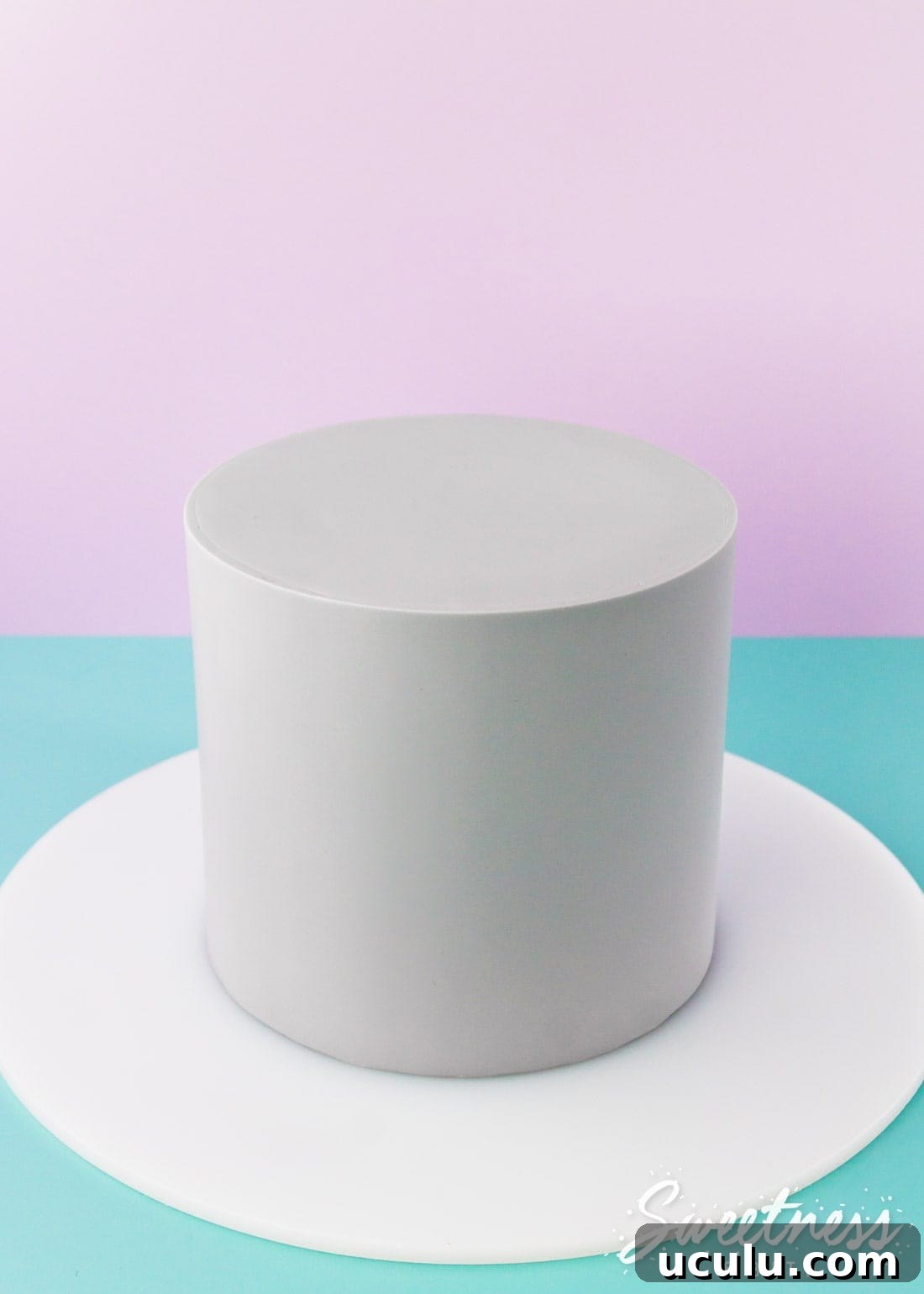
Learn my preferred technique for covering a cake with fondant: the upside-down wrap method. If you’ve struggled with the traditional single-piece cover, this step-by-step guide will show you how to wrap a cake to achieve smooth sides, sharp edges and neat, barely-visible seams.
When I first started decorating cakes, I would have told you I’d never write a tutorial on covering a cake with fondant. Fondant and I had a rocky relationship: too dry, too sticky, full of bubbles or tears. I learned the hard way that certain cake preferences—like tall cakes and razor-sharp edges—make covering with fondant more challenging. The height makes the fondant risk drying and developing texture issues, and sharp edges can easily tear the fondant.
There are decorators who can cover a cake flawlessly in minutes; I’m not one of them. Through lots of trial, error and perseverance I discovered an alternative method that works reliably for me: wrapping the cake rather than draping a single big sheet. Wrapping produces seams, but done correctly they’re tidy and almost invisible.
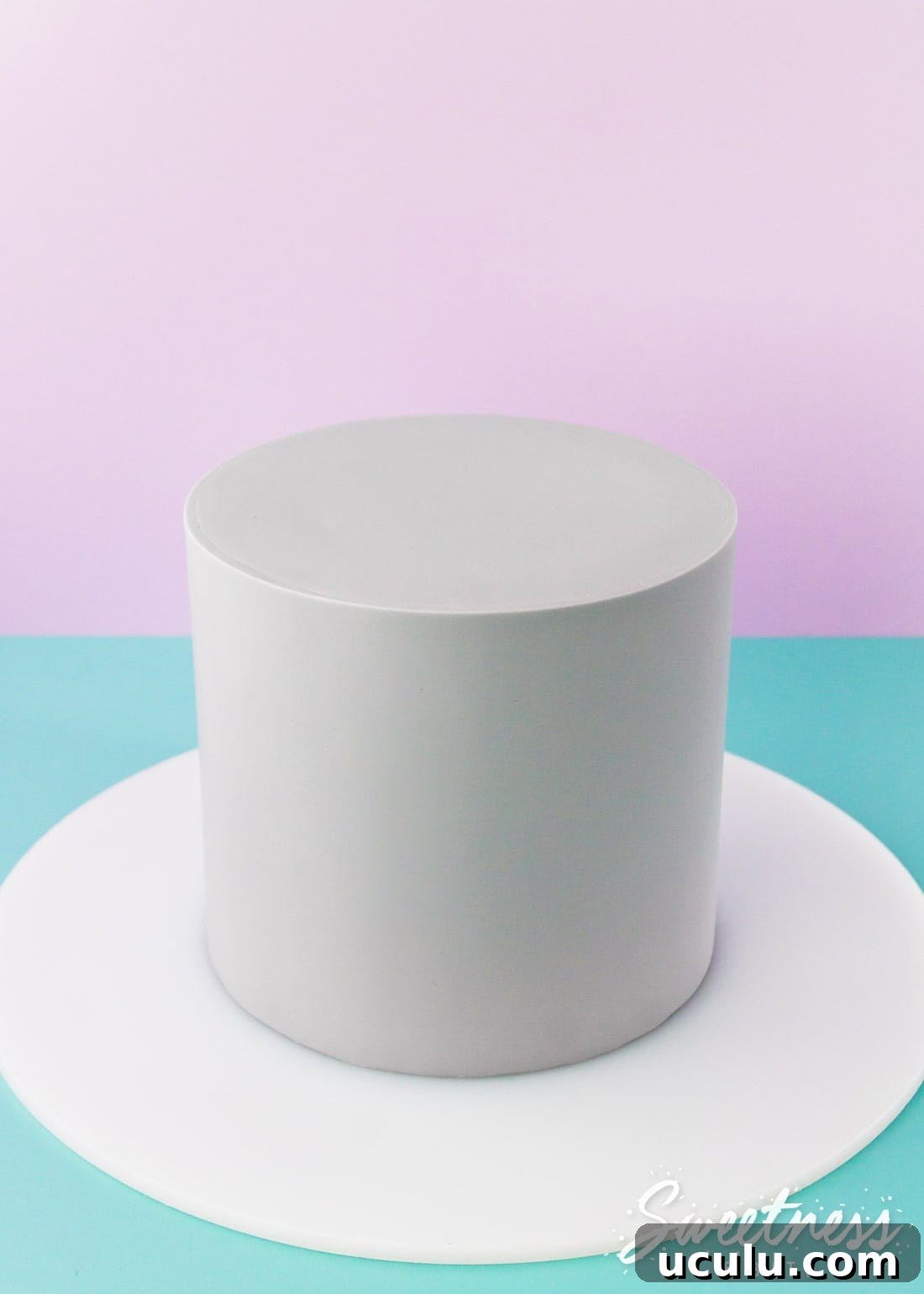
I originally learned wrapping as a recommendation for very tall cakes, but now I use it for most of my cakes. It reduces stress and, with practice, consistently gives good results. Early tutorials I followed suggested trimming the top seam or using cut-to-fit panels, which often looked messy or distorted. My solution came from a simple idea: I flip the cake upside down to cover it. That small change makes trimming minimal and keeps the top edge sharp.
If you prefer the seam on the side for your design, skip the initial step of covering the top; flip the cake upside down immediately and follow the wrapping steps. You’ll then flip the cake back to finish and trim the top as needed.
Table of contents
- My Top Three Keys to Neatly Covering a Cake with Fondant
- How to Wrap a Cake With Fondant
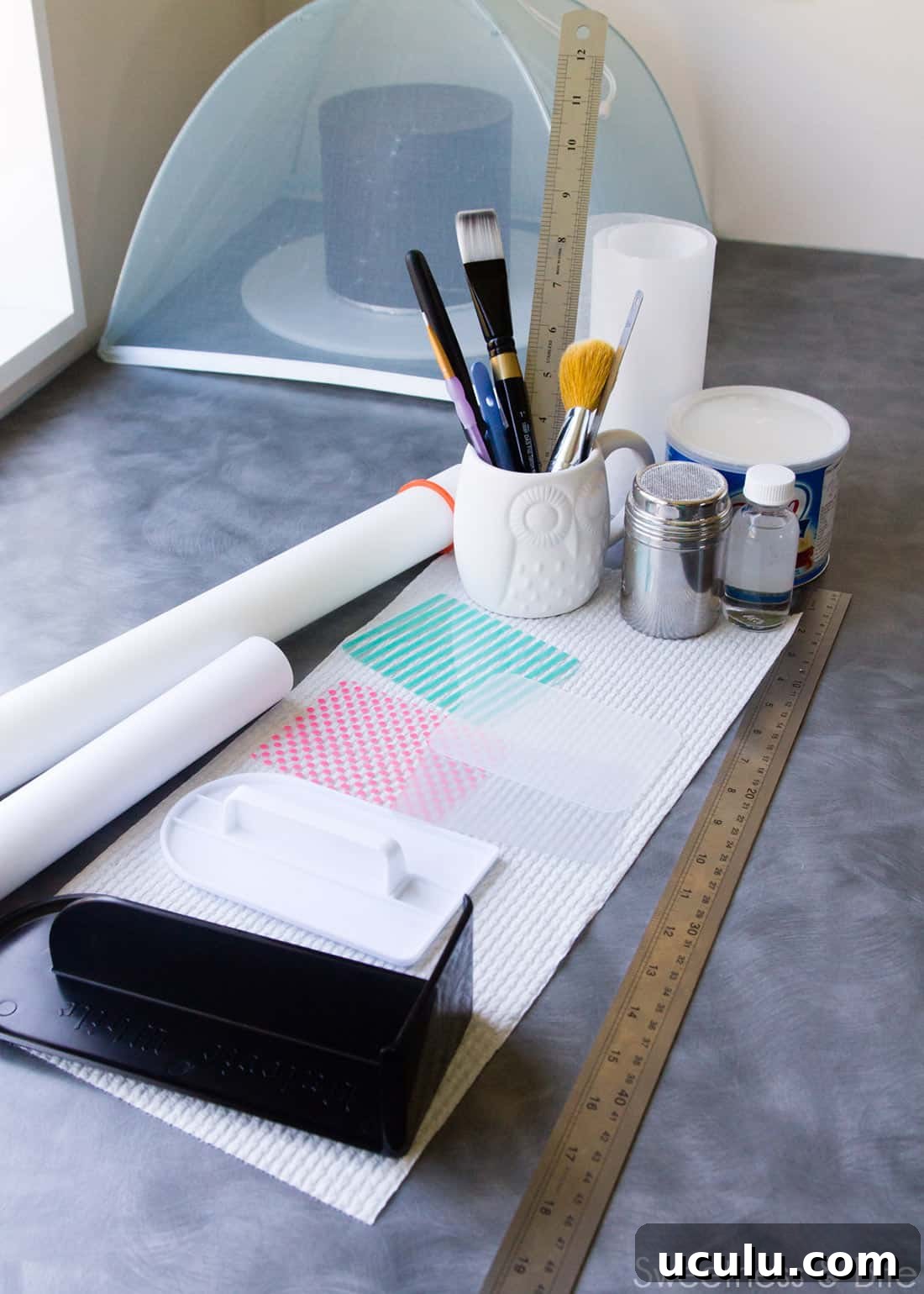
- What You’ll Need
- The Prep
- Wrapping the Cake
- How to Store a Fondant Cake
- Fondant FAQs
My Top Three Keys to Neatly Covering a Cake with Fondant
- A solid ganache base. A clean ganached edge makes achieving a sharp fondant edge much easier. Buttercream can work but needs to be very chilled and firm. If you want both flavor and stability, fill with buttercream and coat the outside with ganache.
- Thin, even fondant. Roll fondant to about 3–4 mm for the neatest top seam; thinner if the fondant handles well. Use spacers on your rolling pin or measure thickness as you go.
- Clean, straight cuts. A pizza wheel or ruler helps create a clean top edge, and a very sharp knife or scalpel makes the back seam tidy. Keep your cutting tools lightly greased with shortening to prevent sticking.
A rolling pin with flat ends makes wrapping easier; if yours has rounded ends, be careful to keep the edge aligned as you roll. PVC pipe with straight-cut ends can also work. With the right prep and tools, this technique is effective for both tall and short cakes.
How to Wrap a Cake With Fondant
What You’ll Need
- Ganached cake — chilled overnight so the ganache is set.
- Fondant — coloured and rested overnight if you’re tinting it; use a quality brand that is not too soft or sticky.
- Vodka or cake decorator’s alcohol for joining seams.
- Vegetable shortening to help the fondant stick to ganache.
- Cornstarch or icing sugar for dusting; I prefer cornstarch.
- Waxed paper to cover the setup board.
- Long metal ruler, craft knife or scalpel, cutting mat.
- Rolling pin (flat-ended preferred).
- Fondant smoothers — both rigid and flexible types.
- Pizza cutter/wheel and a sharp knife/scalpel.
- Pin or acupuncture needle for removing air bubbles.
- Two setup boards — at least 3–4 inches larger than your cake.
- Paintbrushes — flat for applying vodka, fluffy for dusting cornstarch and a flat one for easing stuck fondant.
- Non-slip/grippy mat cut to just under the cake diameter.
The Prep
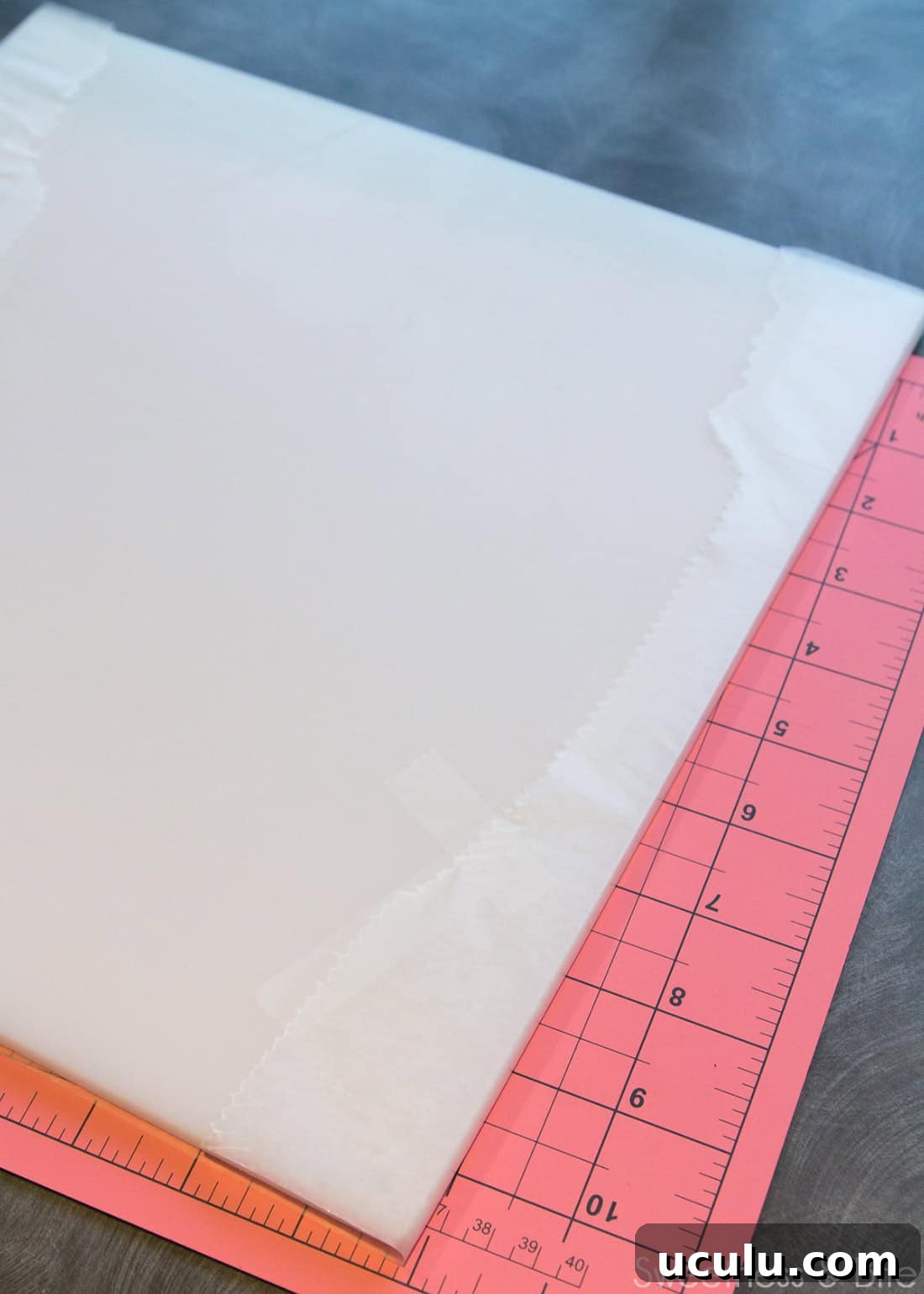
Cover a square setup board with waxed paper, waxed side down, and tape the paper tightly to the board. This paper will sit against the fondant on the top of your cake, so make it as smooth as possible. If you can’t find waxed paper, use non-stick baking paper but be careful when flipping since it won’t tape down.
Create a rectangular template for the side panel. Measure your cake’s circumference and height, then add 2–3 inches to the circumference and 1 inch to the height. Mark and cut this template from waxed or baking paper, roll it up and set aside. Using a template speeds up cutting the fondant and reduces the time it is exposed to air.
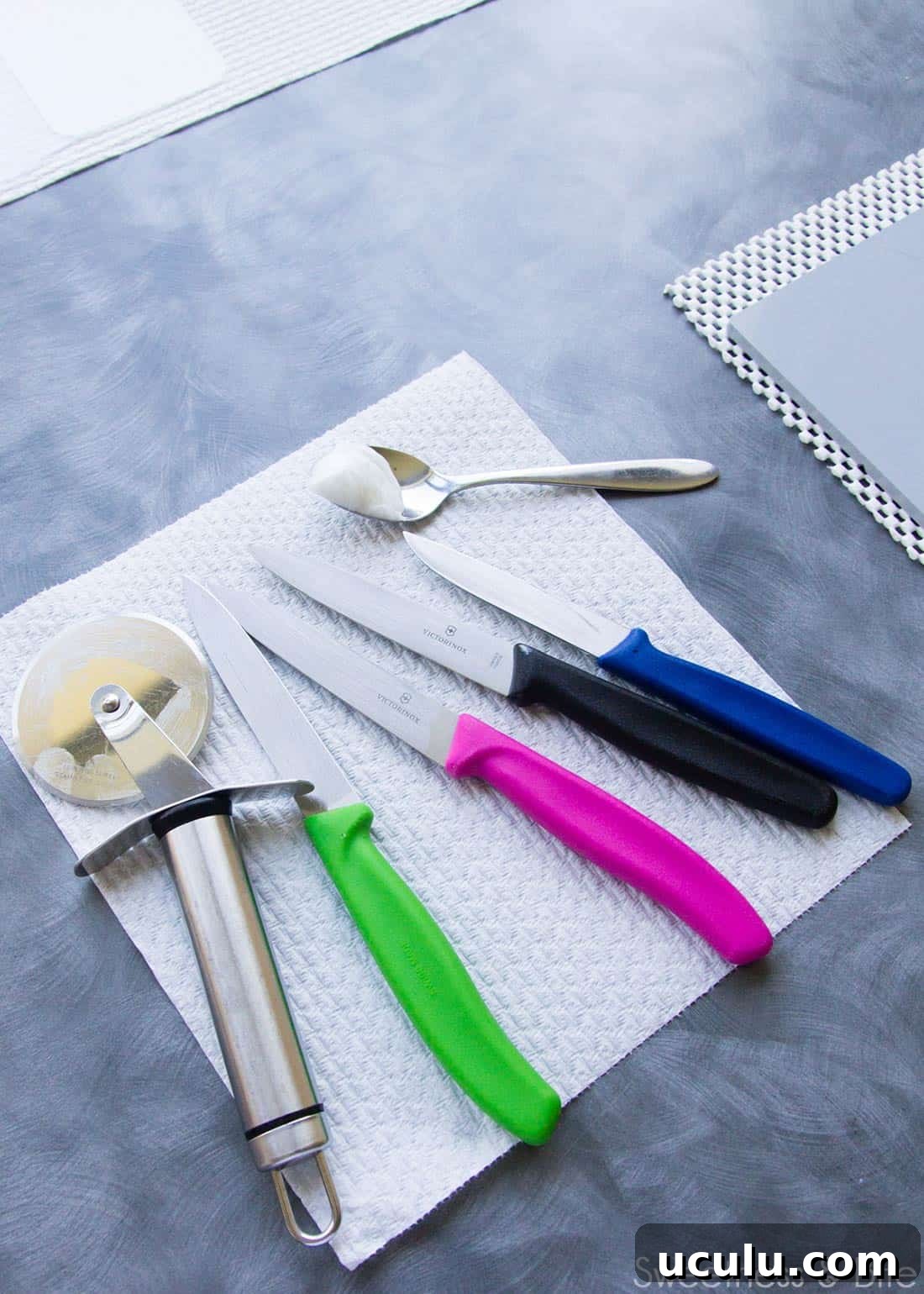
Organize all your tools within reach. Lightly grease knives and the pizza wheel with shortening to keep cuts clean.
Wrapping the Cake
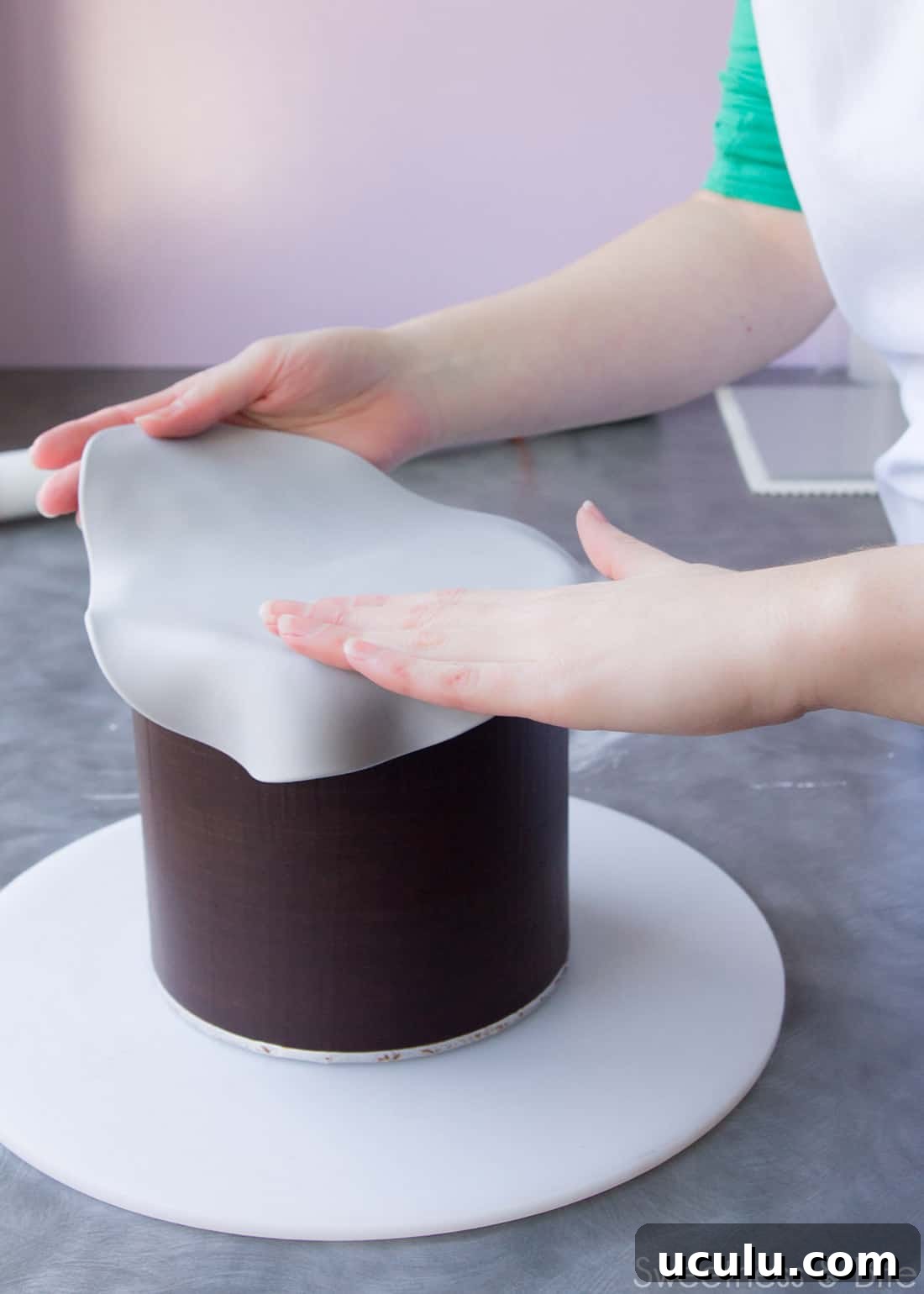
Knead the fondant until warm, pliable and not sticky. Paint vodka or water onto the top of the cake, then roll out a small circle of fondant about 3–4 mm thick and place it on the top. Smooth out air bubbles with a fondant smoother.
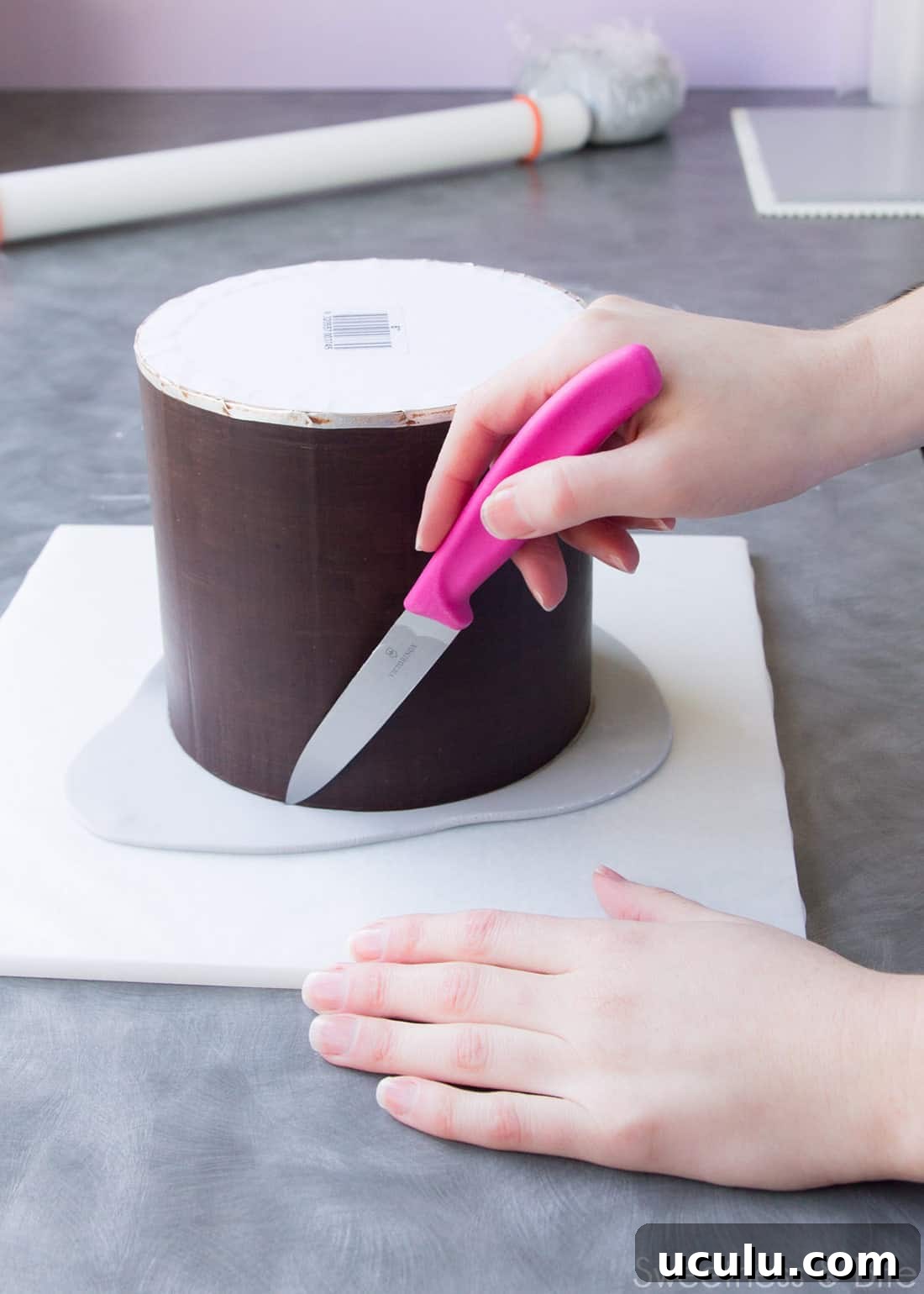
Place the waxed-paper-covered board on top and flip the cake upside down. The top fondant will fold onto the paper. Trim excess fondant flush with the cake using a sharp knife.
Lightly rub the sides with a thin layer of shortening, avoiding the top edge you just created. Knead and roll the remaining fondant into a rectangular shape on a cornstarch-dusted surface, aiming for an even 3–4 mm thickness. Lay your paper template over the fondant and cut out the rectangle, making a careful, clean cut on the long edge that will become the top edge of the cake.
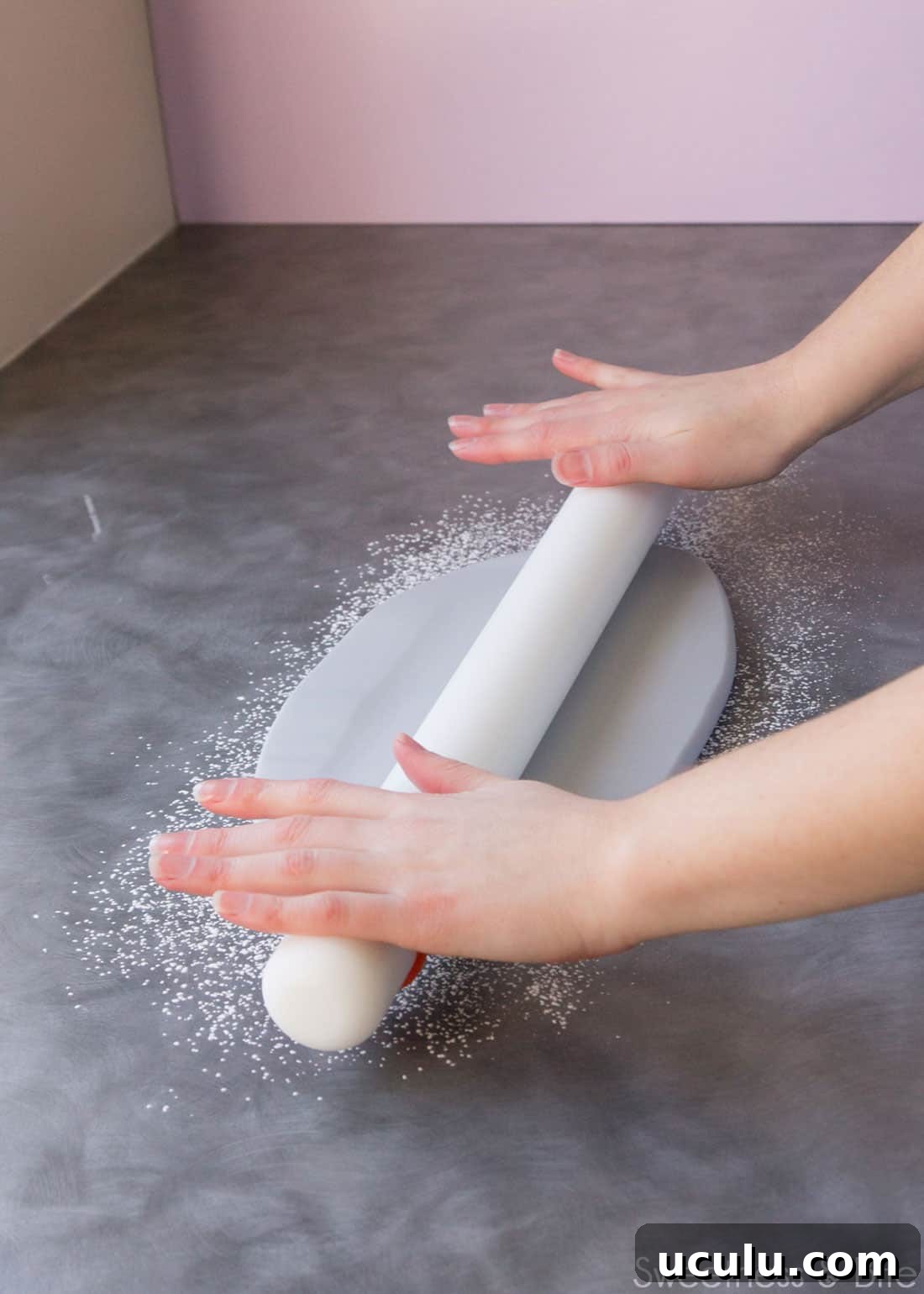
Lightly dust the surface of the fondant with cornstarch so it won’t stick to itself. Roll the fondant around a flat-ended rolling pin so the cut edge is flush. Keep the edge even as you roll.
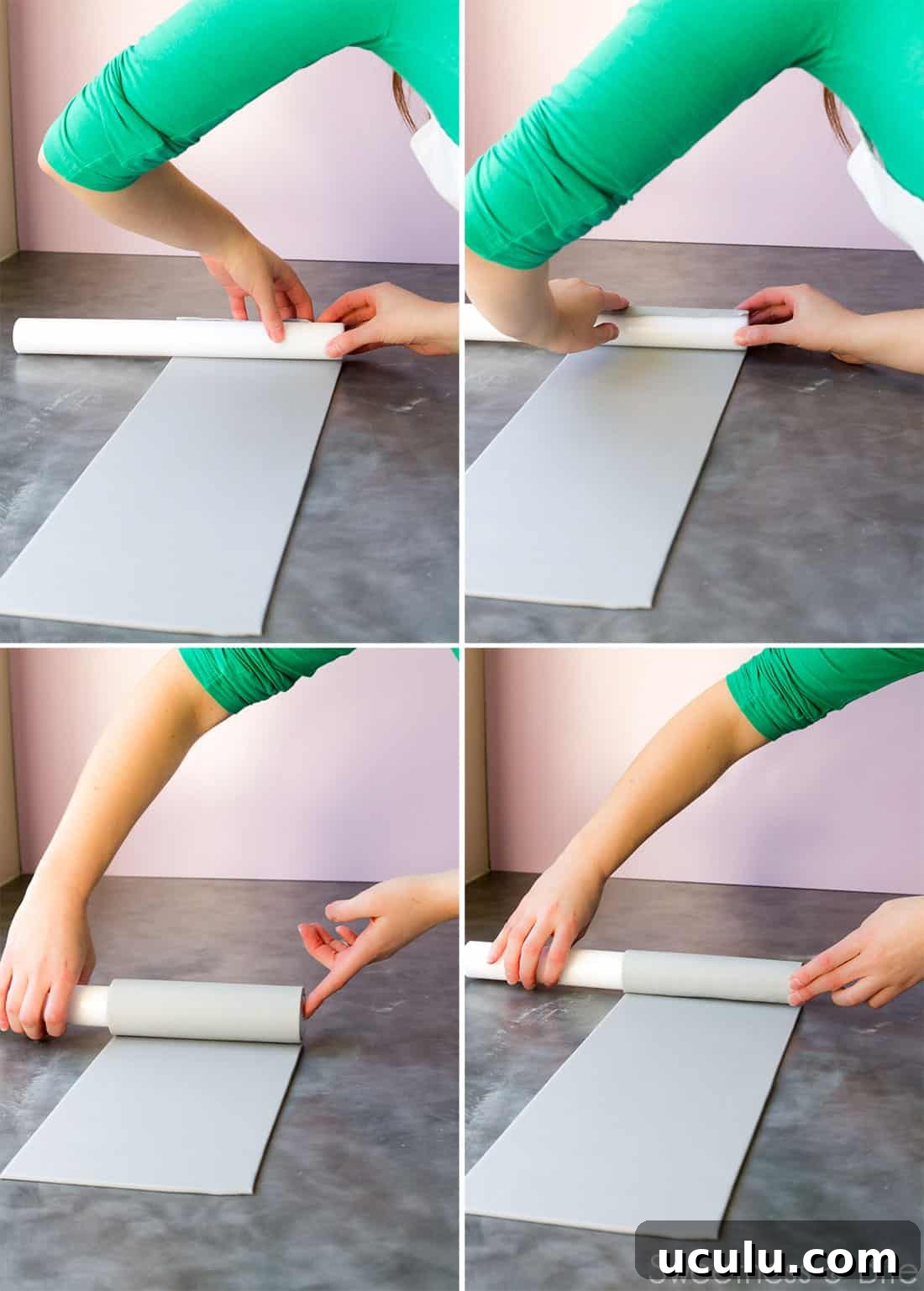
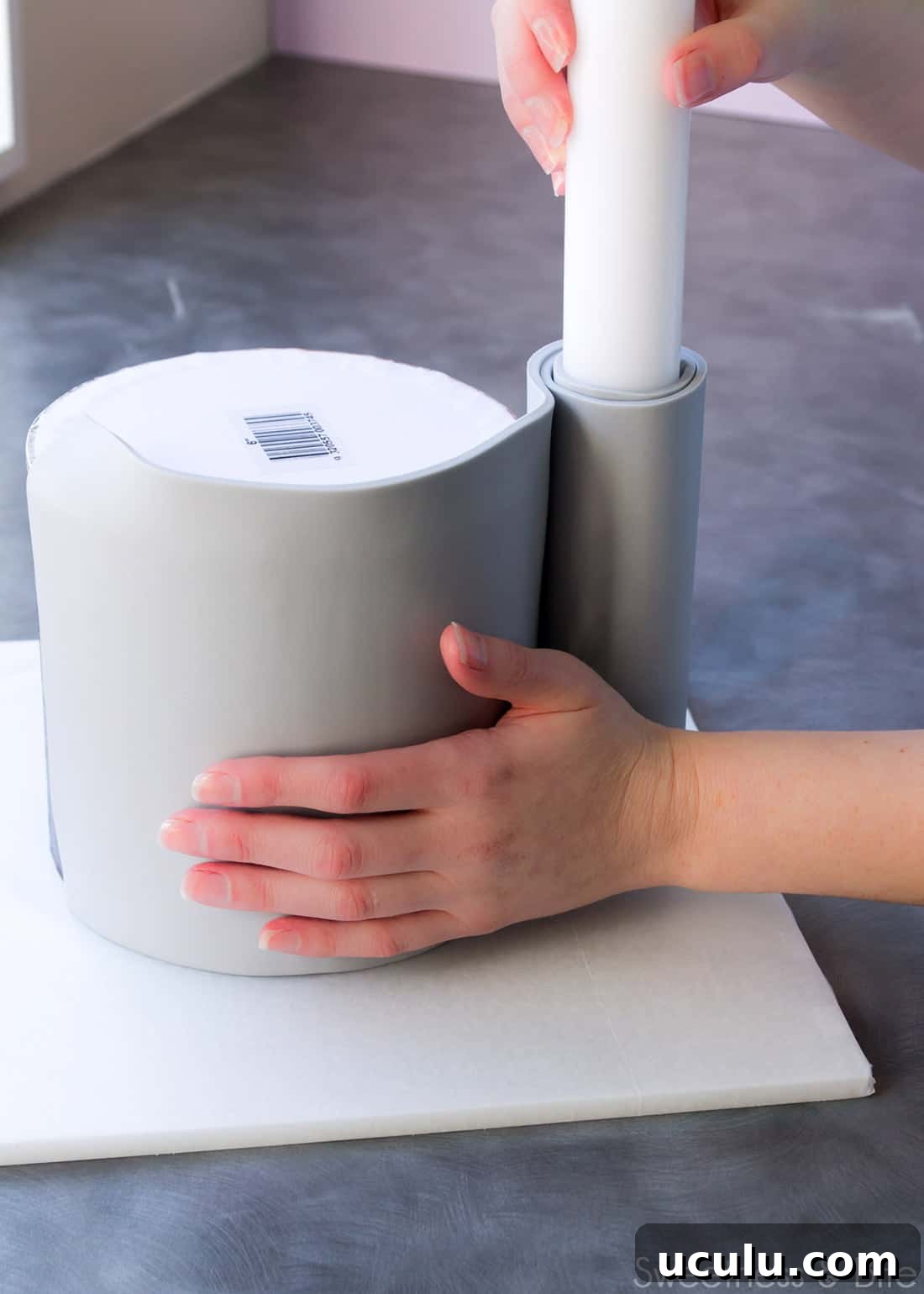
Bring the rolling pin to the cake and press the edge of the fondant against the cake side to stick it. Slowly unroll the strip while smoothing with your hand, checking the bottom edge so it sits flush against the board. If the fondant sticks to itself, ease it apart with a flat brush—don’t pull hard on the roll.
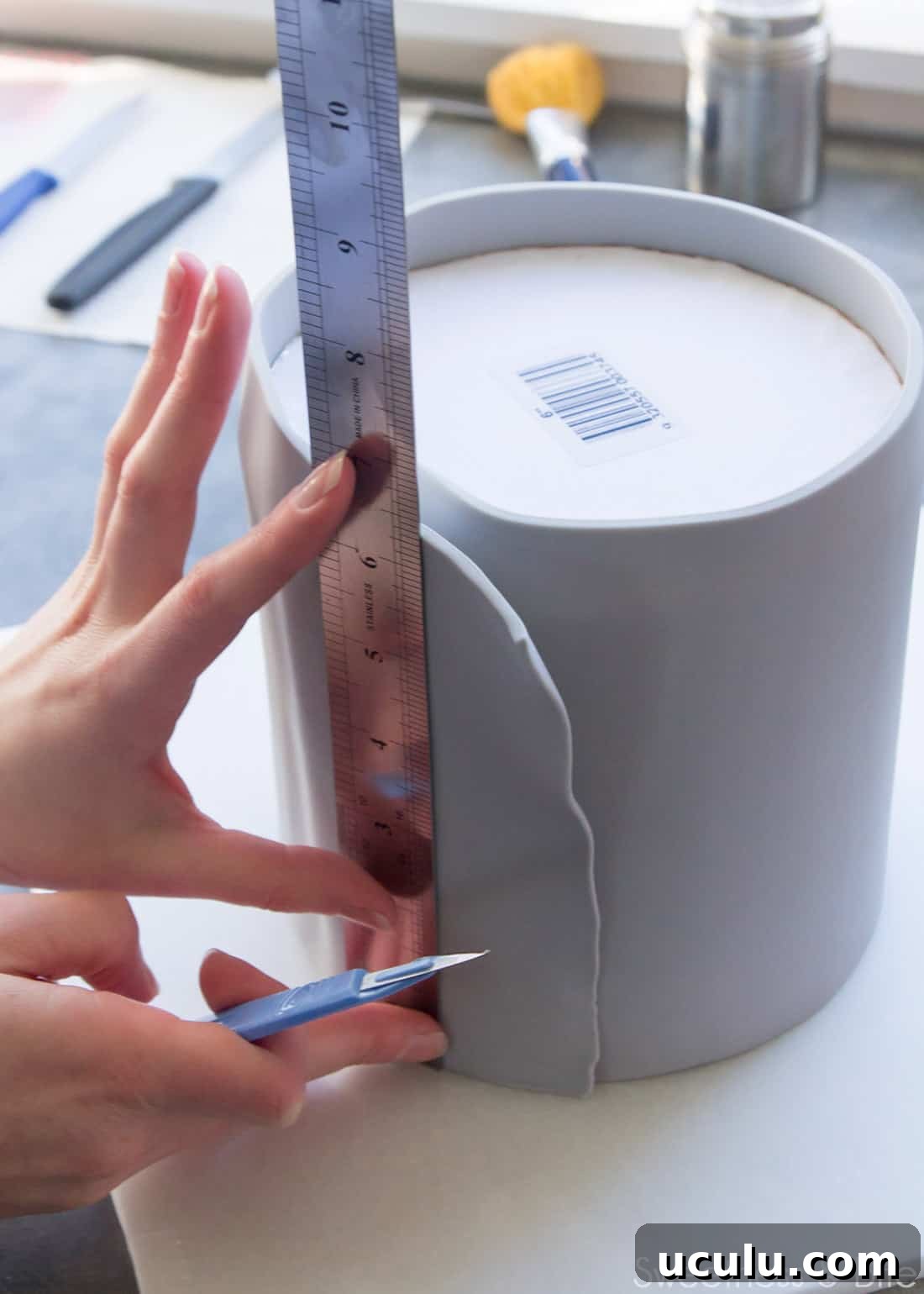
When the panel overlaps, position a ruler across the middle of the overlap and cut through both layers with a scalpel. Remove the outer piece, then gently pull back the inner offcut and remove it. Bring the two cut edges together, pressing them flush—don’t overlap. If needed, moisten the edges with a little vodka and press until they stick.
Use a thicker flexible smoother in gentle circular motions to blend the seam without distorting the line. Work the sides with a smoother to remove bumps and to coax air bubbles to the top where they can be released or pricked and smoothed out with a fine pin. Make sure the fondant sits flush against the setup board around the top edge.
Trim the excess fondant from the top edge by running a knife along the setup board for a straight cut. Place a non-slip mat on top of the board, position your original setup board over it, and flip the cake back right-side-up. Remove the waxed paper by cutting the tape and gently peeling the paper away.
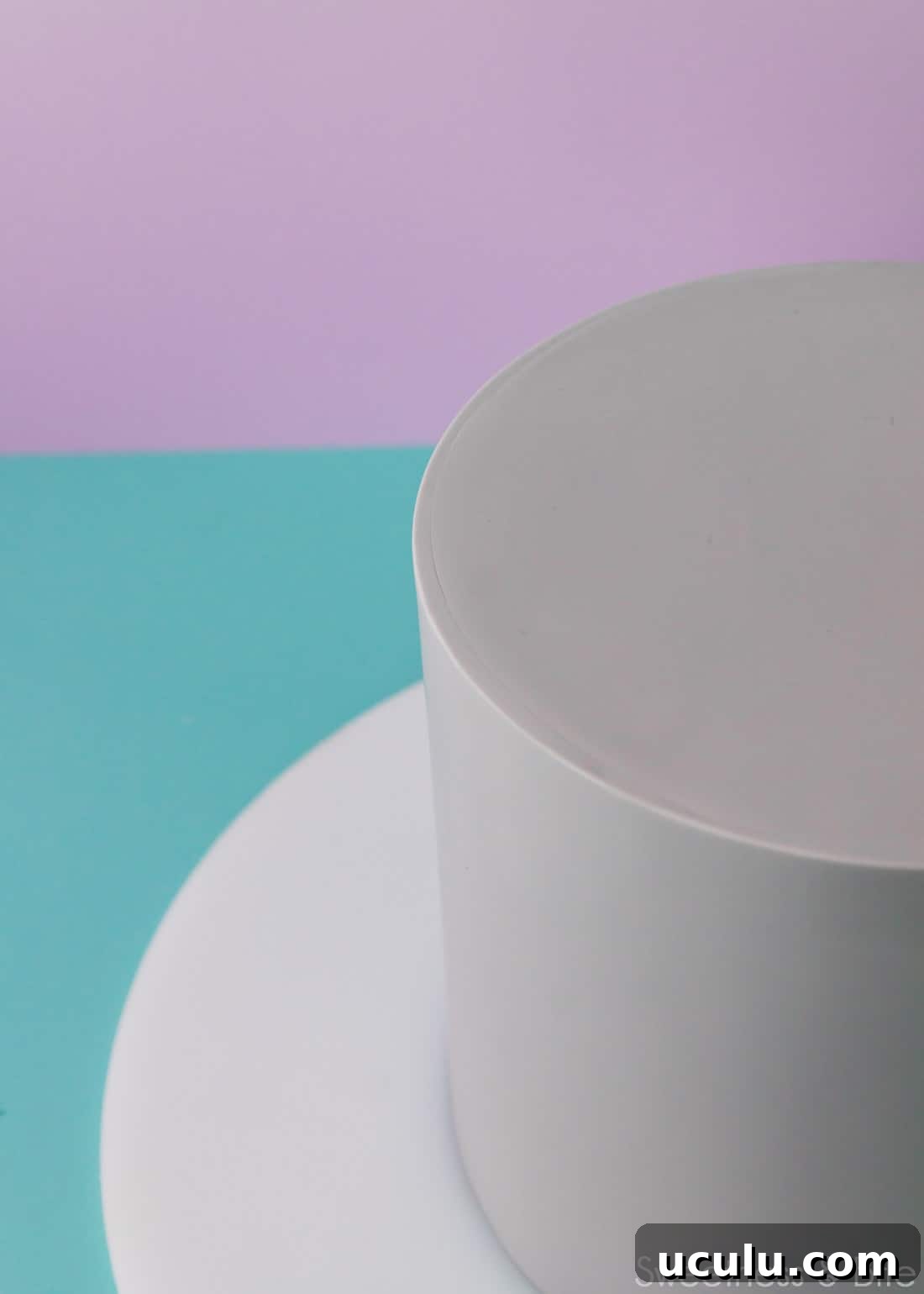
Run a smoother around the cake and check the top seam. If it needs joining, paint a little vodka into the seam and press the fondant together with your fingers. Use a rigid smoother on the side and a flexible smoother on top to sharpen the edge and make the seam less obvious. Finish by using a thinner flexible smoother to feel for and remove any remaining lumps.
How to Store a Fondant Cake
Storage depends on the filling. Cakes covered in ganache (with or without buttercream filling) can sit at cool room temperature for 2–3 days in a box or cupboard away from light. Cakes filled and coated entirely with buttercream are fine at room temperature for about a day; beyond that consider refrigerating in a clean box and allow the cake to return to room temperature in the box before serving to avoid condensation on the fondant. Perishable fillings such as fresh fruit should be refrigerated.
Fondant FAQs
Beginners can try this method, though many find the single-piece drape easier for a first attempt. If you struggle with the all-in-one approach, the wrap method can be less stressful and more forgiving once you practice. Allow plenty of time, read the steps through first and have all tools ready.
Yes, but the cake must be very well chilled and you must work quickly before the buttercream softens. For more reliable results, fill with buttercream and coat the outside with ganache, which gives a firmer surface for fondant.
You wrap square cakes similarly to round ones. Decide where the back seam will sit—on a corner or centered—and start wrapping there, easing the fondant around corners and pressing out air. Sharpen corners using two smoothers, one on each side, to refine the edge.
The best fondant depends on your environment and preferences. Avoid overly soft or sticky formulas. Firmer fondants tend to wrap more cleanly. Try a few brands to find one that handles well for you.
Work efficiently, keep tools and materials ready, and avoid using excess cornstarch or icing sugar. Use a small amount of shortening while kneading instead of lots of dusting sugar. If the fondant feels dry, knead in a little shortening or a small amount of food-grade glycerine, taking care not to overdo it.
Now you know how I wrap a cake with fondant. If you have questions while trying this technique, take your time, practice, and you’ll improve quickly.
Happy wrapping!
~Natalie