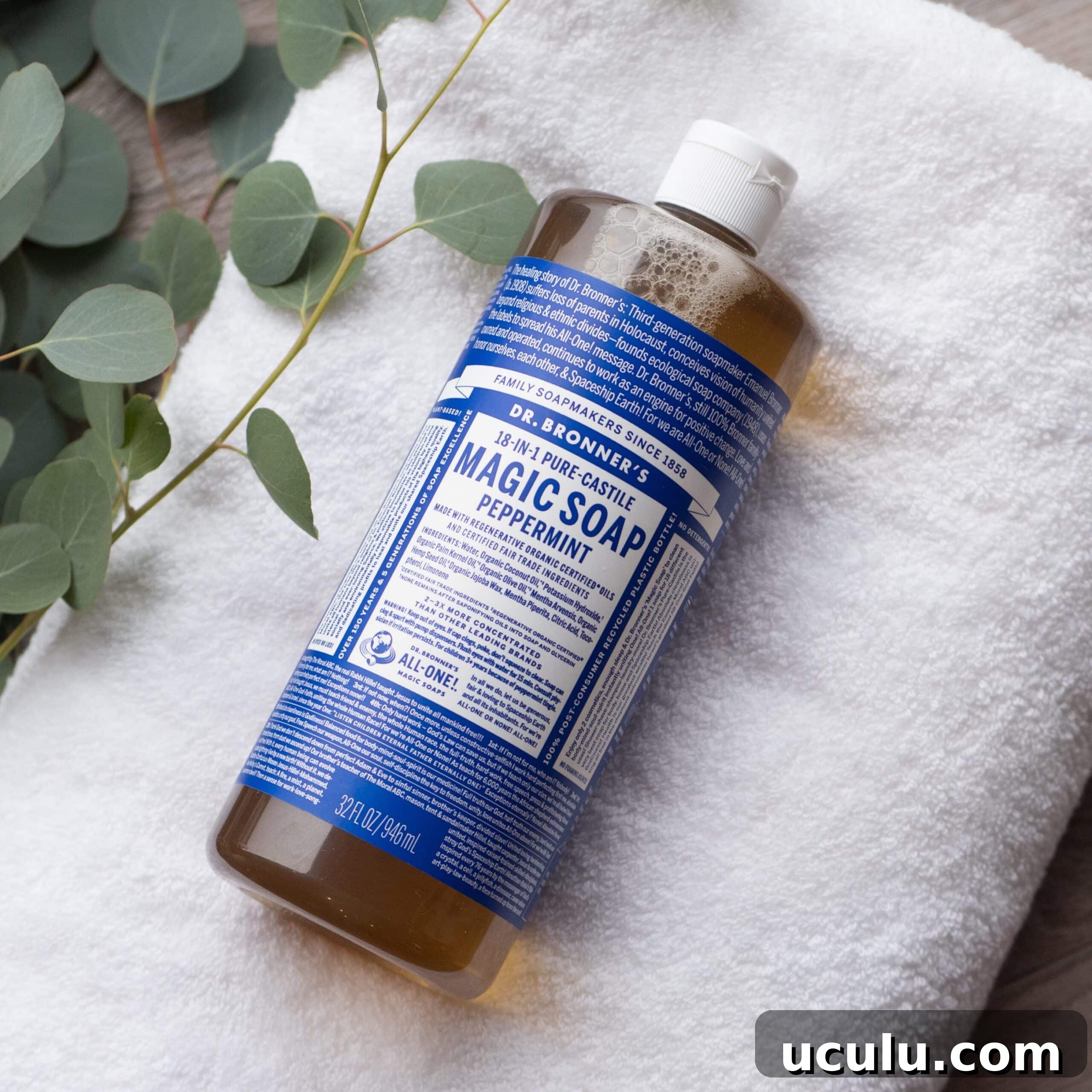
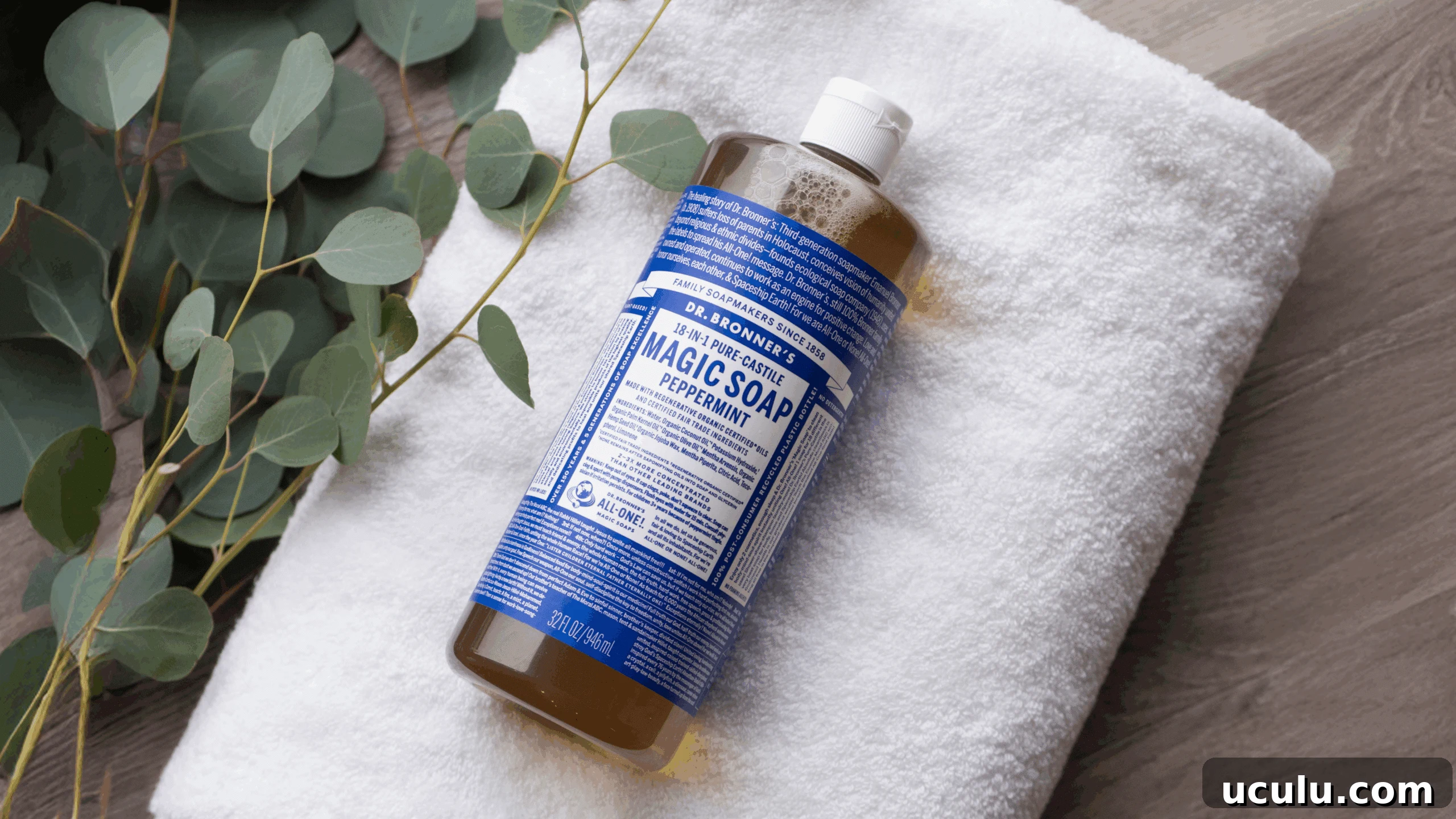
Dilute, but how much? Use this quick reference as a starting point. These are guidelines rather than strict rules—if your laundry is especially dirty or your water is very hard, you may want to use a bit more soap. Some applications call for pre-diluting Dr. Bronner’s Liquid Castile Magic Soap (mixing soap and water in a container ahead of time), while others rely on the water already present during use. Pre-diluting can be convenient, but it also reduces the preservation provided by tocopherols (vitamin E), so prediluted mixtures should be used within a couple of weeks. This list covers many common uses to help you get started.
Body Uses
Face: 2–3 drops on wet hands, gently applied to a wet face, then rinsed.
- I wash my face with Castile soap for a simple gentle routine.
Body: One small squirt on wet hands or a washcloth, worked onto a wet body.
- Simplifying the shower with minimal products works well with Castile soap.
Foaming Pump Dispenser: Dilute one part soap to three parts water for a foaming hand soap.
- Use a foaming pump to stretch the soap and create a pleasant lather.
Wipe-Off Castile Body Wash Spray: Useful when running water isn’t available (illness, cast or bandage, hiking). Combine 1½ tsp (7.5 mL) soap with 1 cup (240 mL) room-temperature water in a spray bottle. Lightly mist skin, wipe with a damp (not dripping) cloth, and dry.
- Convenient for travel or situations where a rinse isn’t possible.
Makeup Removal: Wet face, lather several drops in hands, massage over skin, and rinse.
Hair: Use a couple of drops for very short hair or up to ½ tbsp (7.5 mL) for long hair. Work the soap into very wet hair or pre-dilute in a cup of water. Follow with a diluted rinse: a capful of Dr. Bronner’s Citrus Organic Hair Rinse in 1 cup (240 mL) water, or dilute apple cider vinegar half-and-half with water.
- Switching to soap-based hair care can be gradual; adjust amounts by hair length and texture.
Bath: Approximately 2 tbsp (30 mL) in an average tub; Castile soap won’t produce big bubbles but will clean effectively.
Shaving: Face—10 drops; underarms—3 drops; legs—½ tsp (2.5 mL). Work into a lather in wet hands, then apply to the area.
- Soap lathers well and provides a close shave when used sparingly.
Teeth: 1 drop on a toothbrush. It tastes like soap, but some people use this sparingly.
Oral Appliances: For retainers, nightguards, and dentures: wet the device, add 1–2 drops of soap to a soft toothbrush, brush gently, then rinse thoroughly.
- Gentle cleaning helps remove buildup without harsh chemicals.
Foot Bath: ½ tbsp (7.5 mL) in a small tub of hot water for a soothing soak.
Household Uses
Dishes (Handwashing): Pre-dilute 1:10 with water and apply to a scrub brush, or add 1–2 tbsp (15–30 mL) to a large sink of water. Use a small squirt for a single pot and more as needed. To minimize spots in hard water, dry dishes by hand.
Laundry: Use 2–4 tbsp (30–60 mL) for high-efficiency washers; add ½ cup (120 mL) vinegar to the rinse cycle. For whitening or odor control, add ¼ cup (60 mL) baking soda to the wash. Double quantities for standard top-loading washers.
- Adjust amounts based on soil level, load size, and washer type.
Handwashing Delicates: Use 1 capful (1 tbsp or 15 mL) in about 1 gallon (4 L) cold water. Swish garments gently, soak 10 minutes, swish again, then rinse. Press out excess water with a towel and hang or lay flat to dry.
- Gentle agitation and short soak time protect delicate fibers.
Mopping (Wood, Laminate, Vinyl, Stone & Tile): Mix 2½ tbsp (38 mL) soap in 1 gallon (4 L) hot water. Dunk and wring a microfiber mop thoroughly; avoid excess water on wood or laminate and dry wet areas promptly. For small spots, use 2 tsp (10 mL) in a quart (1 L) spray bottle.
All-Purpose Cleaning Spray: Combine 2 tbsp (30 mL) soap in 16 oz (500 mL) water, spray, and wipe with a damp cloth. Optional: add ¼ tsp (1.25 mL) tea tree essential oil for extra antimicrobial action. Safe on sealed stone, tile, painted or sealed wood (not waxed), plastics, stainless steel, sinks, toilets, and similar surfaces.
Windows: Mix ½ tbsp (7.5 mL) soap in 16 oz (500 mL) water. Spray and squeegee, then follow with plain club soda or a half vinegar/half water solution for a streak-free finish.
Toilet: Predilute 1:4 with water in a squirt bottle and add ¼ tsp (1.25 mL) tea tree oil. For a deeper clean, empty the toilet, apply 2–3 drops of soap to the brush, sprinkle baking soda in the bowl, scrub, let sit 10 minutes, then flush while rinsing.
Other Uses for Liquid Castile Magic Soap
Fruit & Veggie Wash: Add a dash (about ¼ tsp) to a bowl of water, dunk produce, swish, then rinse in clear water.
- Effective for removing surface residues and waxes when followed by a thorough rinse.
Dog Washing: Wet the dog thoroughly and massage in enough soap to create a good lather, working down to the skin. Rinse thoroughly. Amounts vary by size, coat type, and dirtiness. Avoid tea tree-scented soap on pets, as tea tree oil can be harmful to them.
- Proper rinsing is essential to prevent residue and skin irritation.
Cleaning Makeup Brushes: Wet brushes, add 1–2 drops of soap to the bristles, massage gently for 10+ seconds, and rinse. Repeat until water runs clear.
- Regular cleaning prolongs brush life and prevents buildup.
Plant Spray for Bugs: Mix 1 tbsp (15 mL) in a quart (1 L) of water. Optional: add ½ tsp (1.25 mL) cayenne or cinnamon. Spray plants twice daily during cooler parts of the day until pests are under control.
- Test on a small section first to ensure no sensitivity on tender plants.
Ant Spray (Not on Plants): Use ¼ cup (60 mL) Tea Tree Magic Soap in a quart (1 L) of water. This concentration can harm plants, so use only on hard surfaces and ant trails.
- Effective for targeted ant control around entry points and along paths.
I kept this guide concise to help you find the right dilutions quickly. If you have questions about a specific application, feel free to ask.
Further reading
- Comparing Sal Suds and Castile soap can help decide which cleaner suits a task.
- A bar soap dilutions cheat sheet is useful if you prefer the Castile Magic Bar for cleaning.
- DIY non-toxic recipes provide more green cleaning and body care options.
Avoid using Tea Tree-scented soap on pets, as tea tree oil can be toxic to them.
This guide summarizes common dilutions; many of these and additional recipes are included in the book Soap & Soul: A Practical Guide to Minding Your Home, Your Body, and Your Spirit with Dr. Bronner’s Magic Soaps, available in print and digital formats.