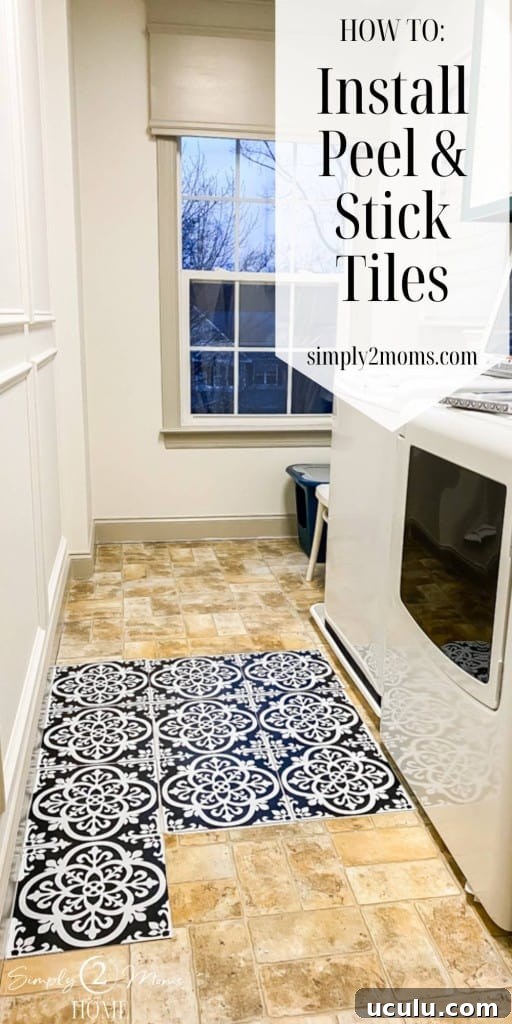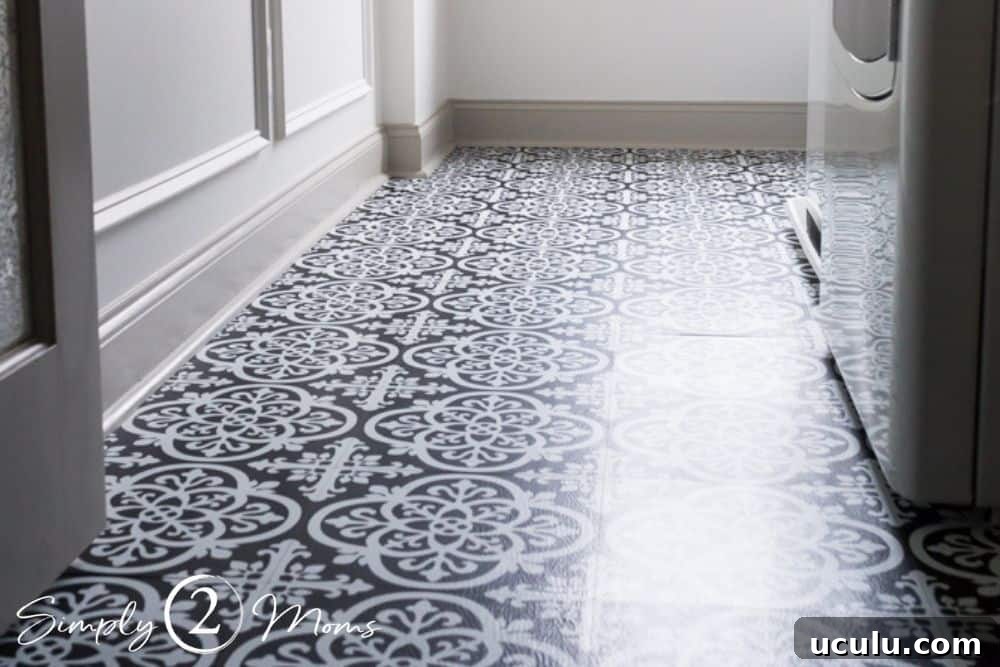
Want to refresh your linoleum floor without a full remodel? Peel & stick vinyl tile offers an affordable, fast way to upgrade your space.
After years of wear, our laundry room floor looked tired and discolored, so replacing it was a priority for the makeover.
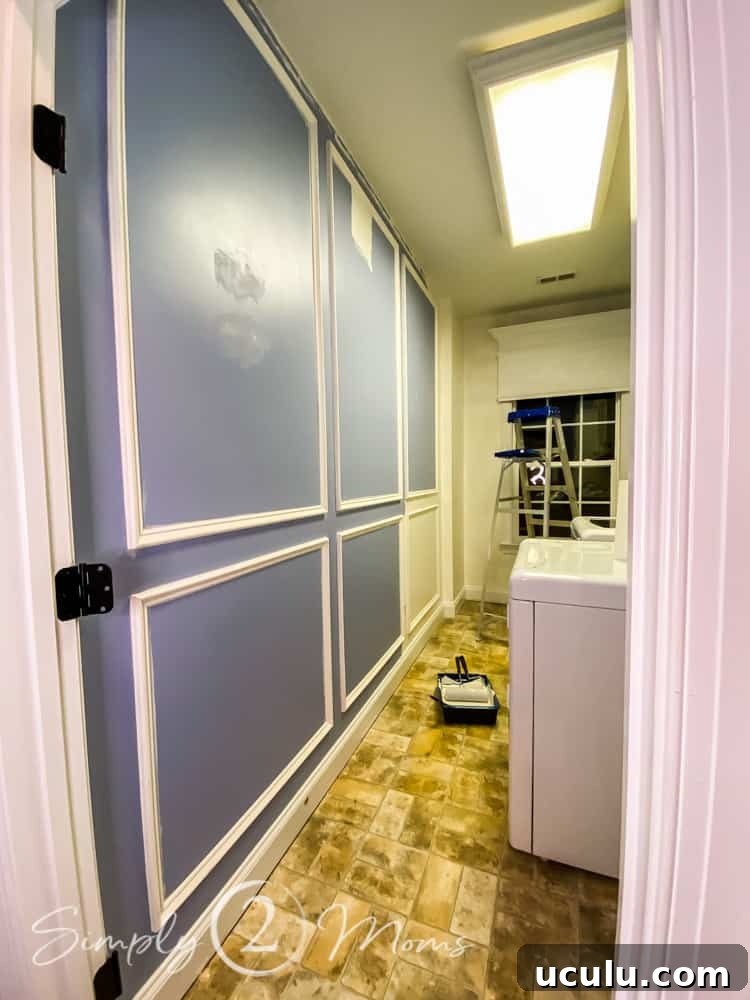
Once we decided to change the floor, peel-and-stick vinyl tiles seemed like the best option: economical, simple to install, and able to achieve the look I wanted for the room.
- Why Choose Peel and Stick Tile?
- How Do You Prepare a Linoleum Floor for Peel and Stick Tile?
- How Do You Plan The Tile Layout?
- What Tools Do You Need to Install Peel and Stick Tiles
- How Do You Apply Peel and Stick Tiles?
- Should You Use Adhesive With Peel and Stick Tile?
- Would You Recommend Using Floorpops?
Why Choose Peel and Stick Tile?
I considered several flooring options, including vinyl planks and painted ceramic tiles, but budget and compatibility with existing wood floors were concerns. Peel-and-stick vinyl tiles offered the aesthetic I wanted—classic black-and-white patterned tiles—without the high cost or complicated installation of ceramic.
We chose a patterned peel-and-stick tile that mimics hand-painted ceramic. Affordable and easy to work with, these tiles let us achieve the visual impact of tile without breaking the bank.
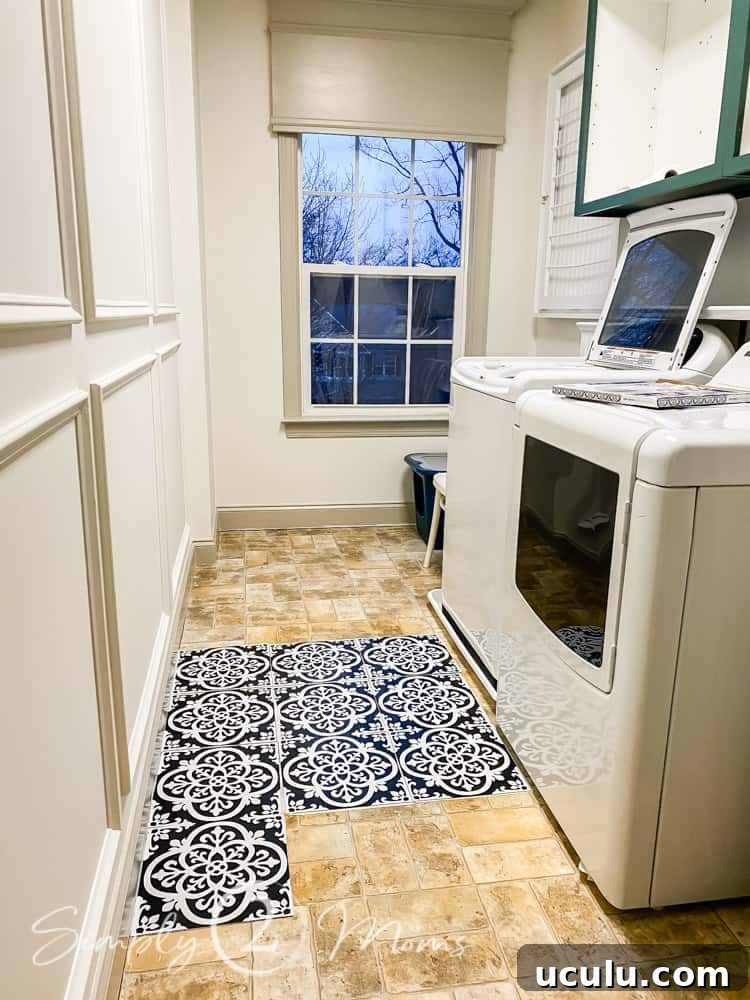
Before installation we finished painting, added a window valance and shelving, enclosed the space above cabinets, painted the cabinets, and built a beadboard drying rack. With the room prepped, the floor installation was one of the last steps.
How Do You Prepare a Linoleum Floor for Peel and Stick Tile?
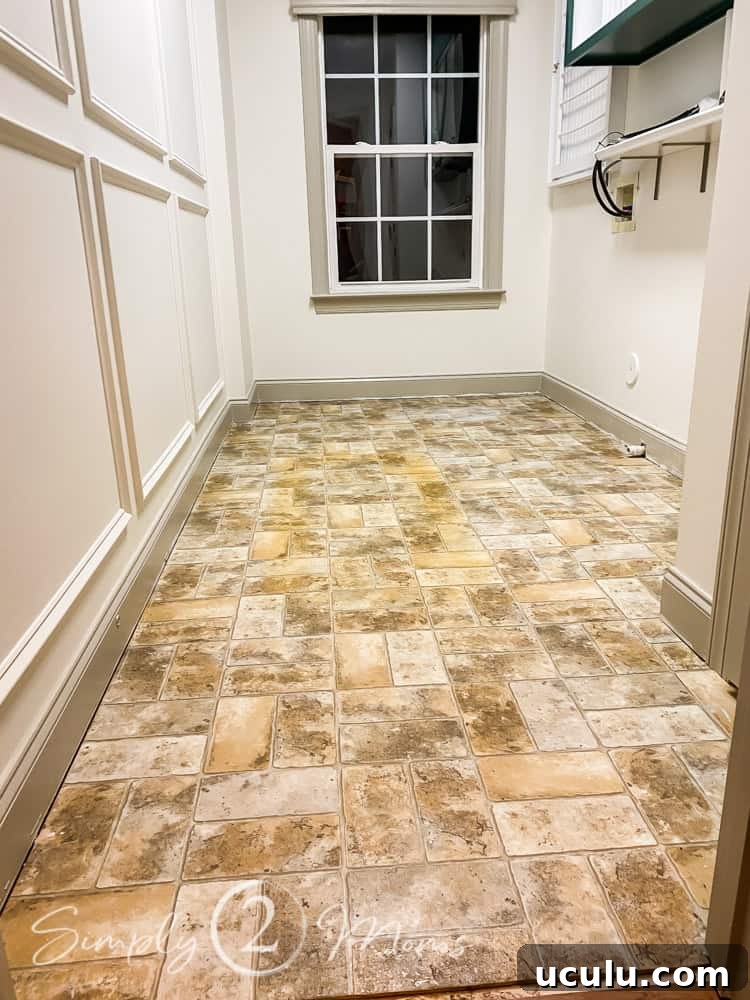
Advice on installing peel-and-stick tiles over linoleum varies: some sources recommend removing the linoleum, others allow installing directly over it, and some suggest priming first. Our linoleum had only mild texture, so we decided to install the tiles over it after applying a primer designed to improve adhesion.
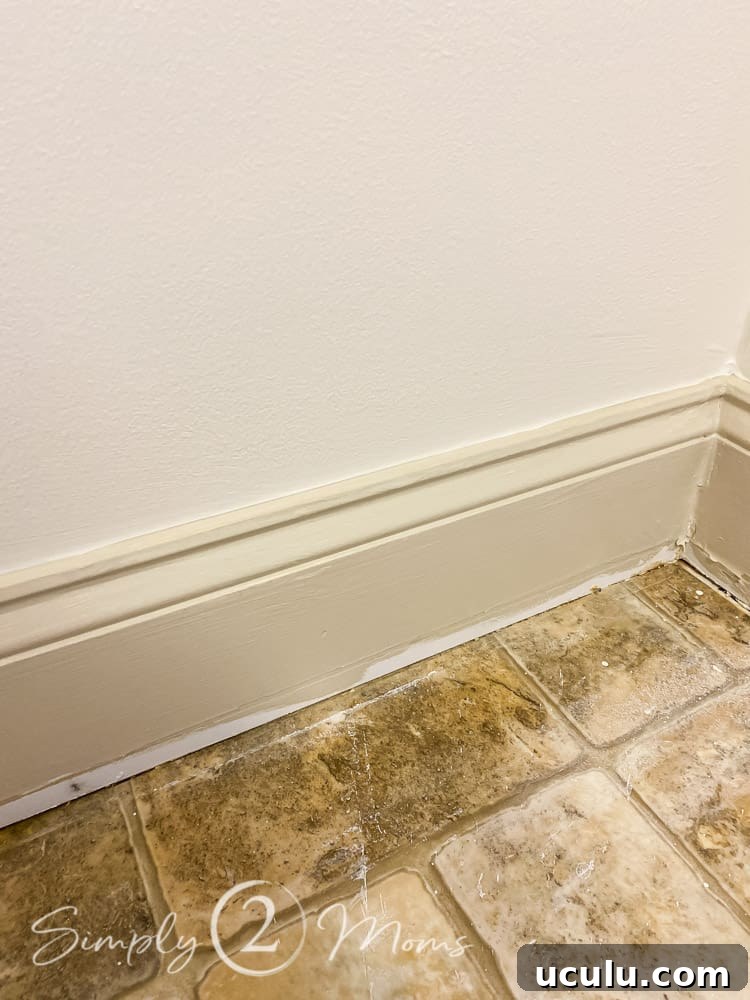
Start by removing quarter-round molding and thoroughly vacuuming and mopping the floor. A clean surface is essential for good adhesion.
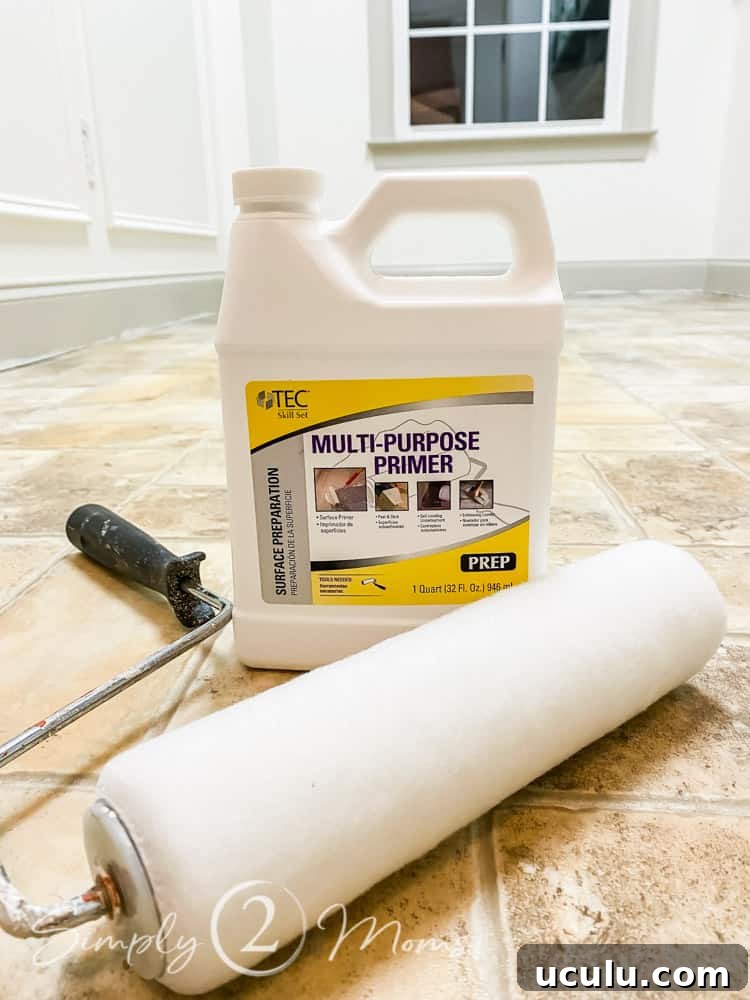
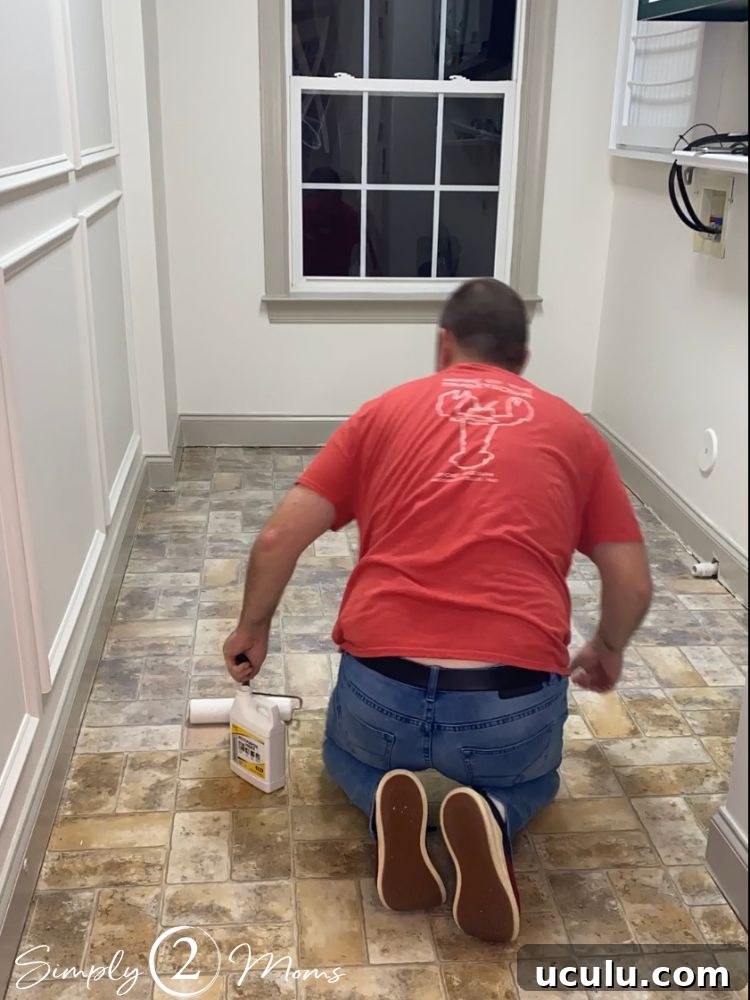
Pour a multi-purpose primer recommended for stick-on tiles over linoleum and spread it with a roller. The primer fills minor texture and creates a surface the tiles can bond to. This step is quick and makes a big difference in adhesion.
How Do You Plan The Tile Layout?
Lay out tiles with their backing still on to test patterns and placement. Work around room features like doorways, nooks, and slopes. For our layout, we aimed to keep the long section full tiles and planned cuts where needed so smaller pieces wouldn’t be too narrow to stick.
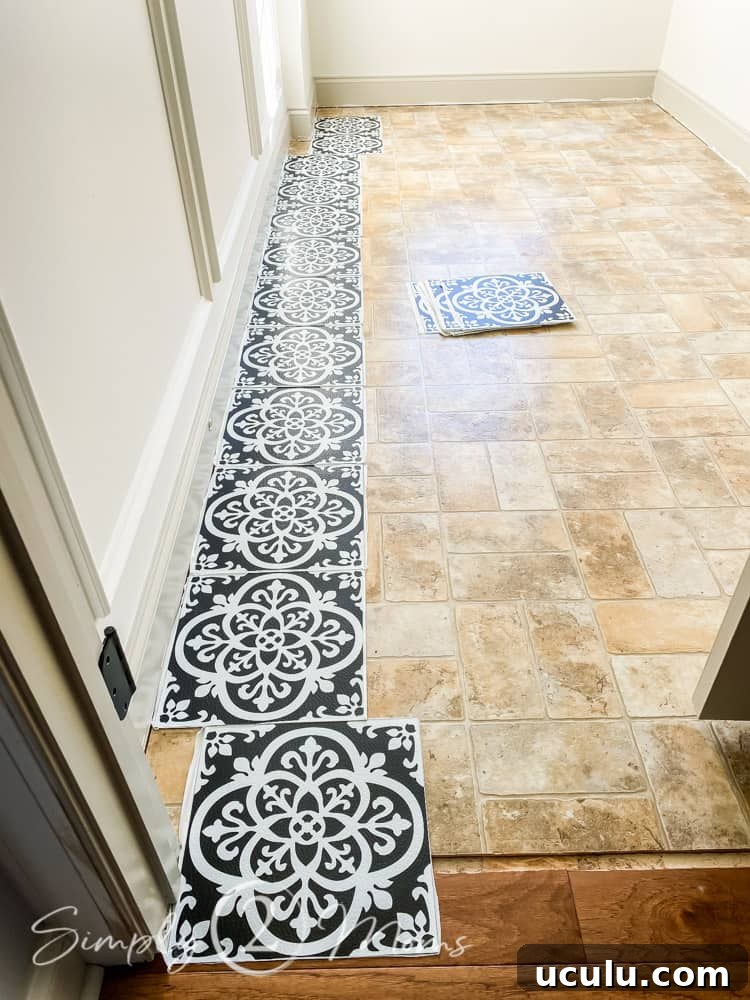
Once you choose a layout, snap a level chalk line to guide the first row. Use the chalk line as your reference, not the wall, since walls and floors can be out of square.
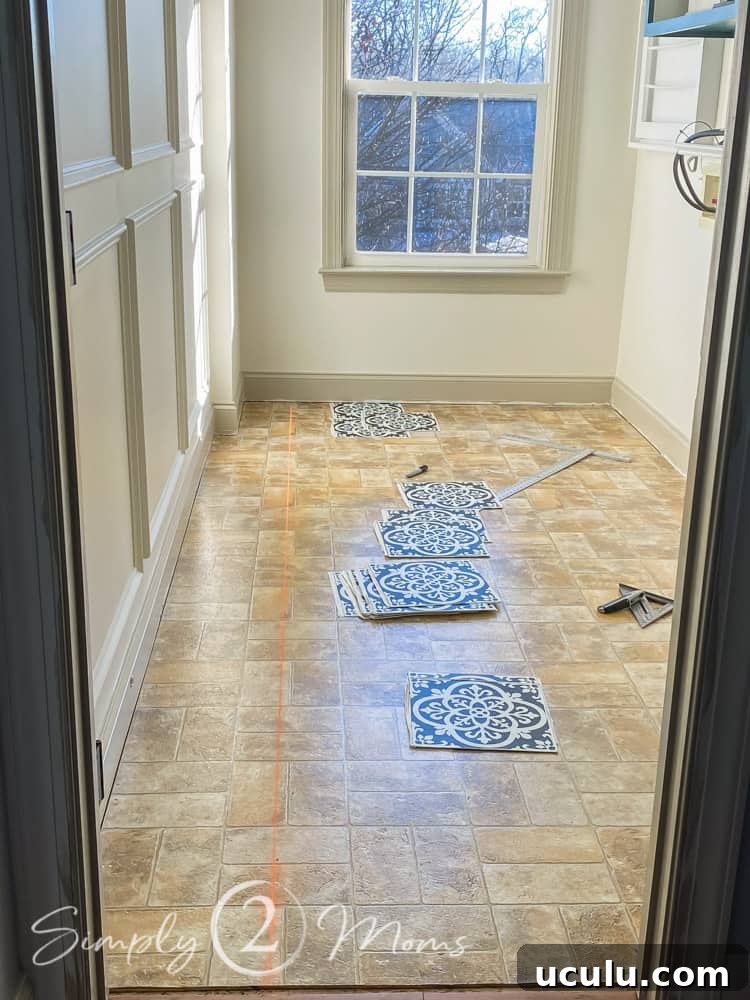
What Tools Do You Need to Install Peel and Stick Tiles
- Chalk line
- T-square or metal straight edge
- Level
- Utility knife
- Oscillating multi-tool (if door casings need trimming)
Have a trash can nearby for backing paper and a piece of scrap wood as a cutting surface. These small conveniences speed the job and keep it tidy.
How Do You Apply Peel and Stick Tiles?
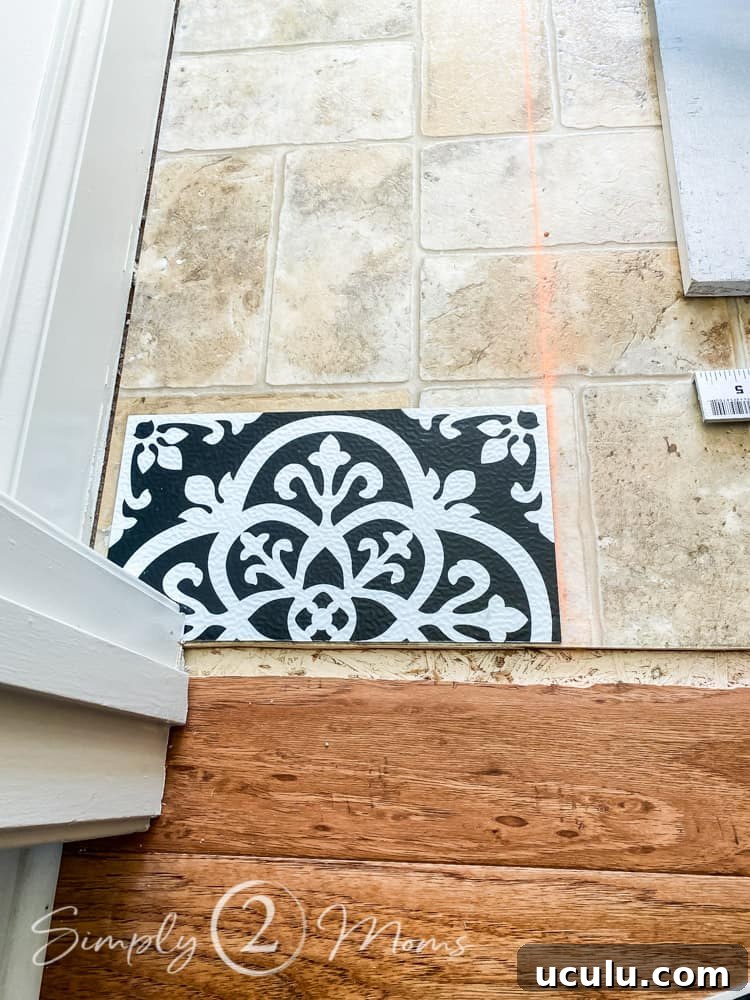
Installing these tiles is fast. Use a metal T-square as a cutting guide and score the tile with a utility knife. Fold along the score, flip the tile, and finish cutting through the backing. Then peel off the paper backing and stick the tile to the floor.
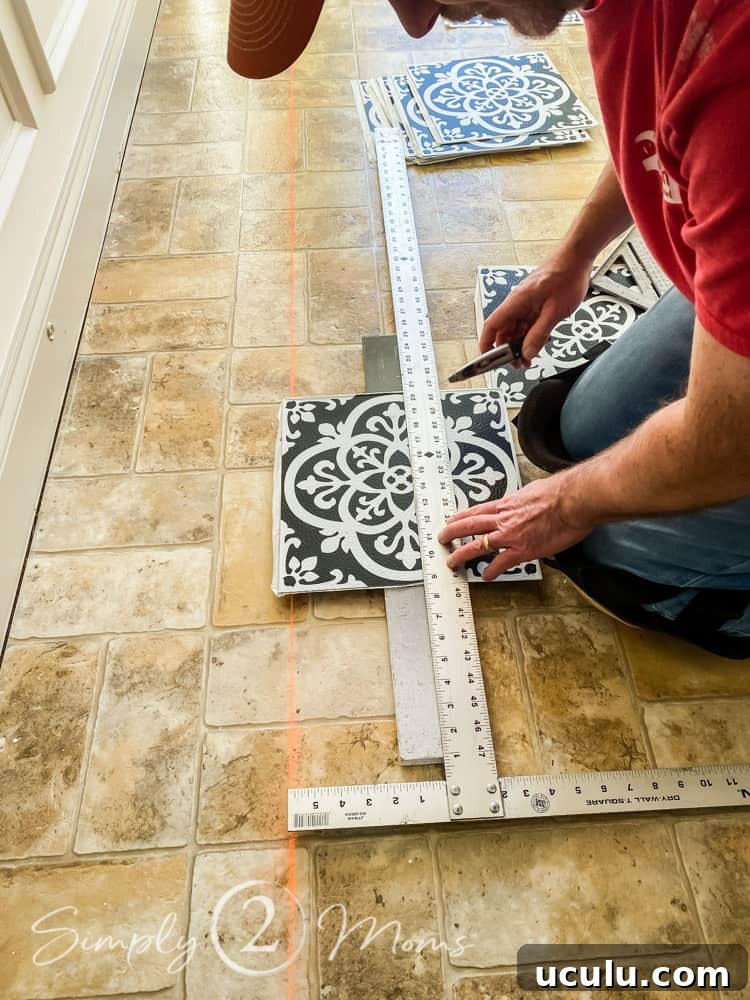
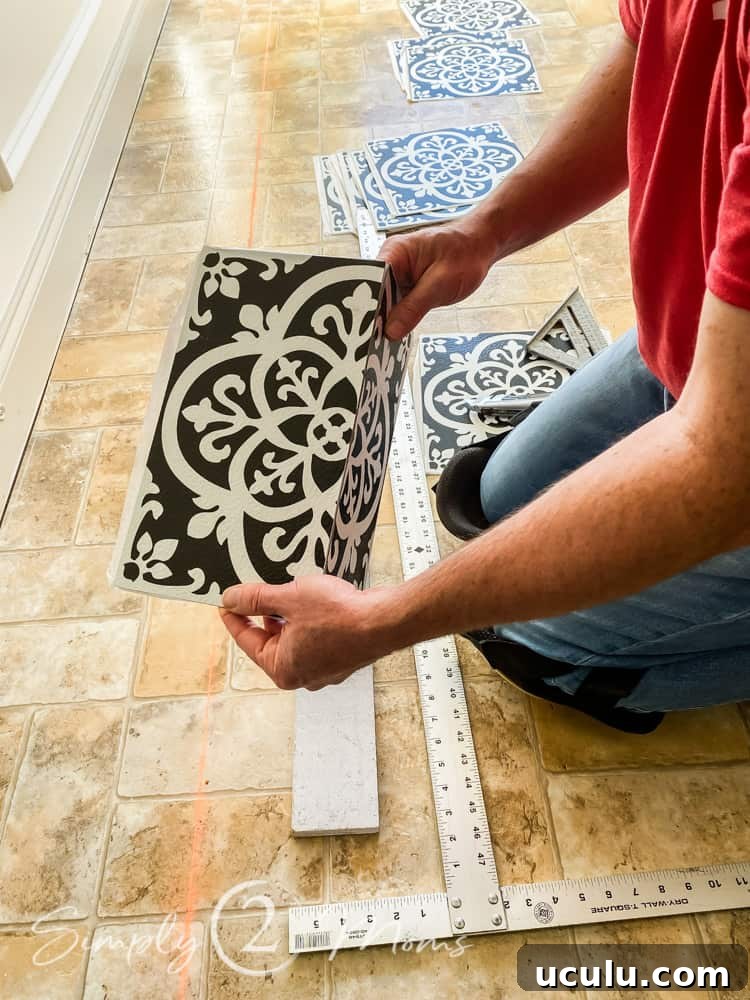
Work row by row, lining up edges to the chalk line. For tight spaces under door frames, check for clearance first; use an oscillating multi-tool to trim casings if necessary. Keep a trash can handy to dispose of backings—they can become slippery if left on the floor.
Should You Use Adhesive With Peel and Stick Tile?
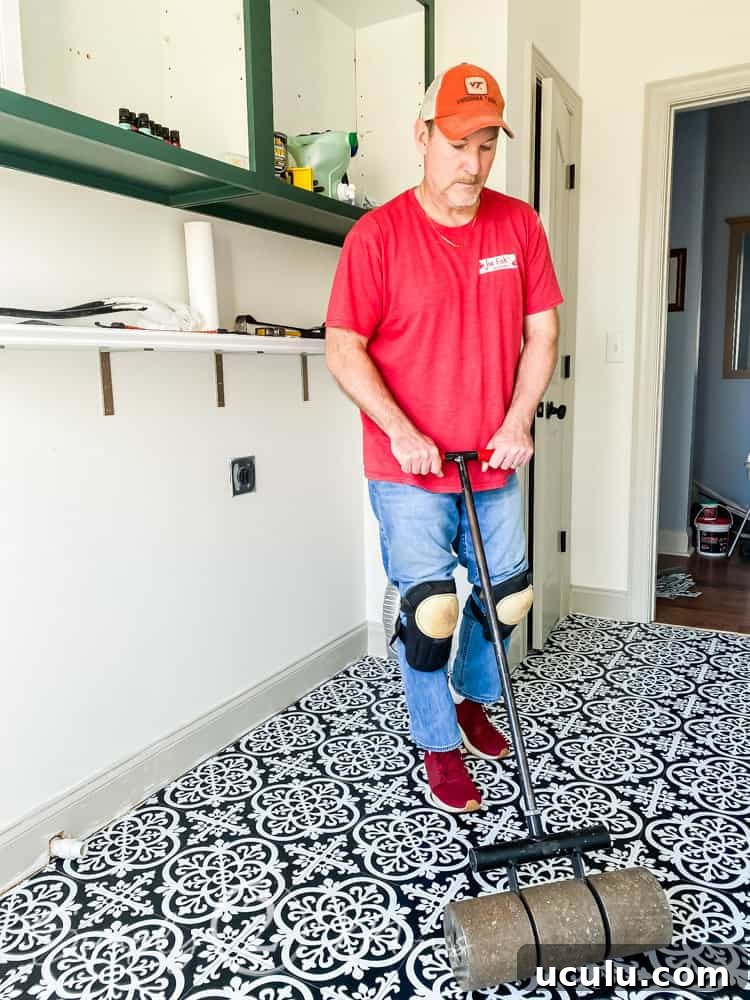
After installing all tiles, use a weighted vinyl floor roller to press the tiles firmly into the primer. We rented a roller for a small fee, and it made a noticeable difference. A few tiles may still need extra adhesive—especially on floors with a slope or minor texture. Apply a small amount of recommended adhesive where needed and press into place.
Would You Recommend Using Floorpops?
Overall, I’m very pleased with the result. The tiles gave the laundry room a dramatic transformation for a modest cost. There are a few caveats: these tiles are an economical option and, up close, they don’t have the perfect precision of high-end ceramic or porcelain tiles. Pattern matching can be imperfect because the design emulates hand-painted tiles.
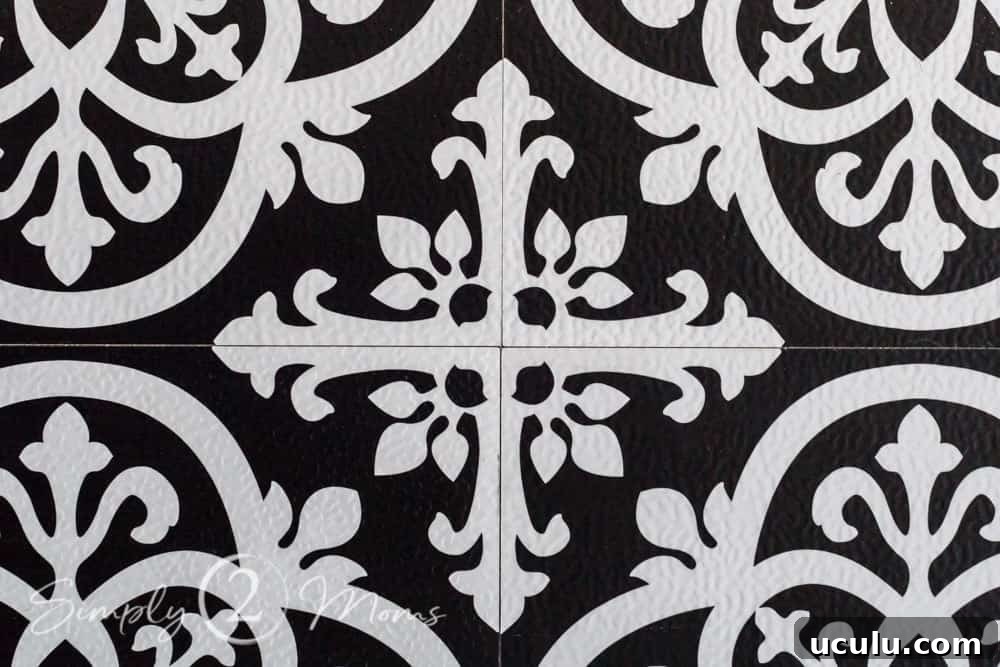
In our project, primer plus a roller and a bit of extra adhesive where necessary resulted in secure tiles and a beautiful finished floor that completely refreshed the space. The small irregularities aren’t noticeable when viewing the room as a whole.
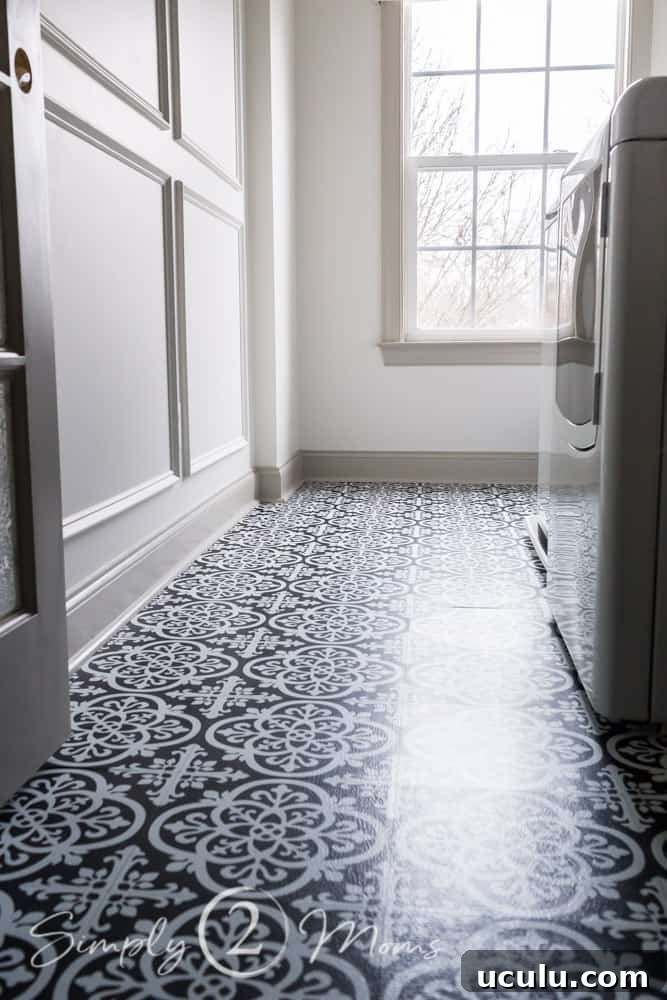
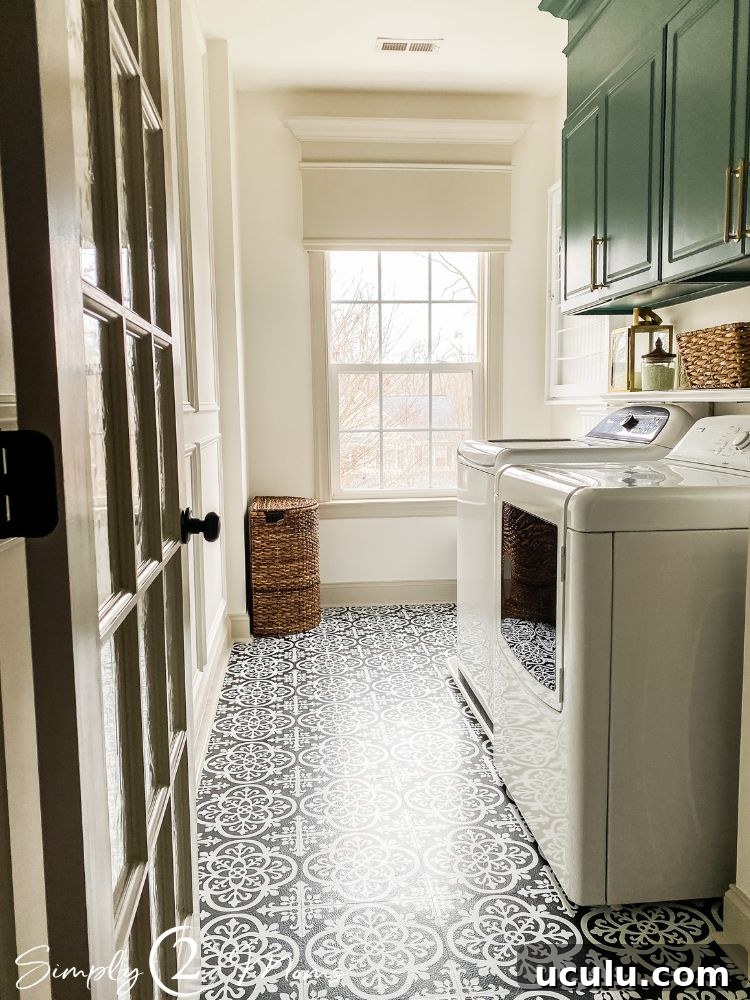
If you follow the steps—cleaning, priming, planning the layout, using a chalk line, cutting carefully, rolling the floor, and adding adhesive where needed—you’ll likely have a successful installation over linoleum. The result can be a dramatic, budget-friendly update that brightens the whole room.

Pin it to Remember it: