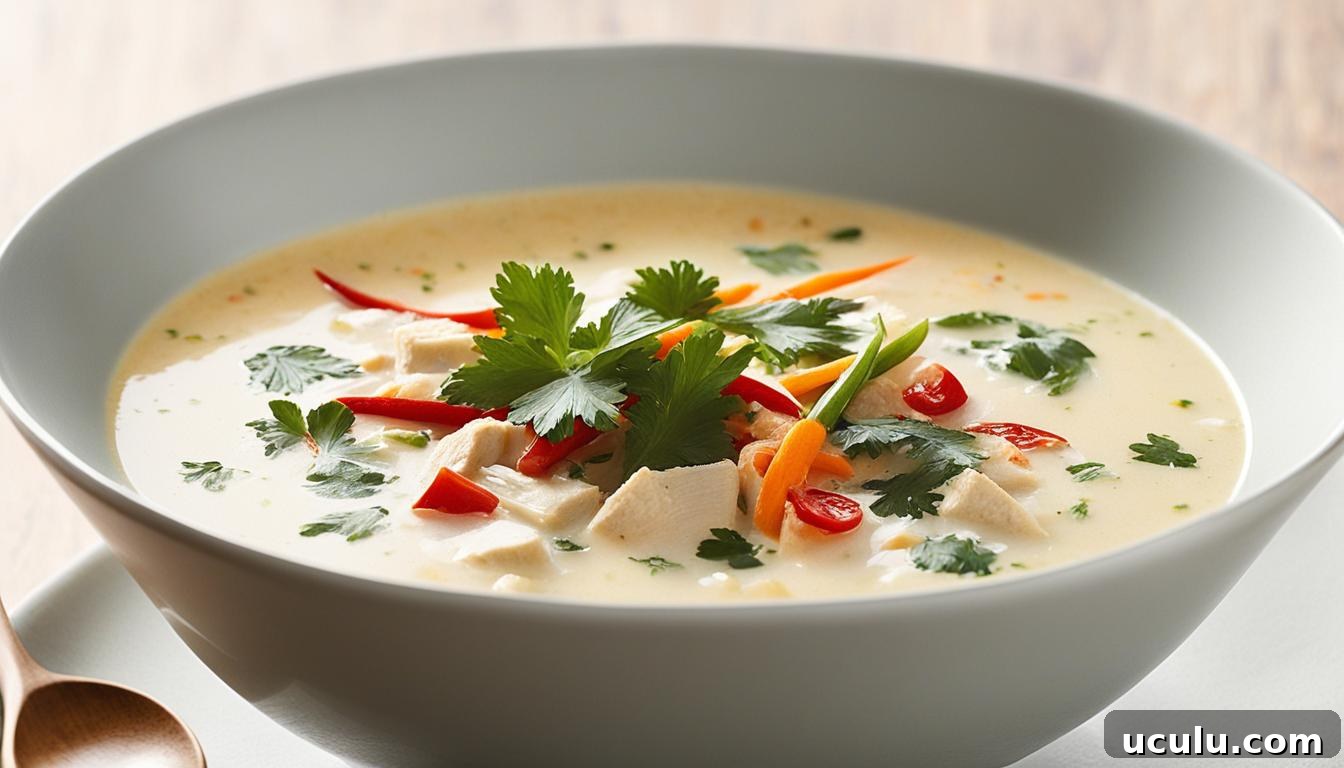
Thai cuisine is celebrated for its vibrant flavors and skilful balance of sweet, sour, spicy and savory elements. Among its many beloved dishes, Thai coconut soup stands out for its creamy texture and aromatic profile. Made with rich coconut milk and fragrant herbs and spices, this soup is a comforting, memorable introduction to the tastes of Thailand.
Below we’ll examine what gives this soup its signature flavors, outline traditional ingredients and techniques, and offer guidance so you can recreate an authentic Thai coconut soup in your own kitchen. Whether you prefer the classic chicken version or a vegetarian take, the recipe ideas here are designed to be approachable and adaptable.
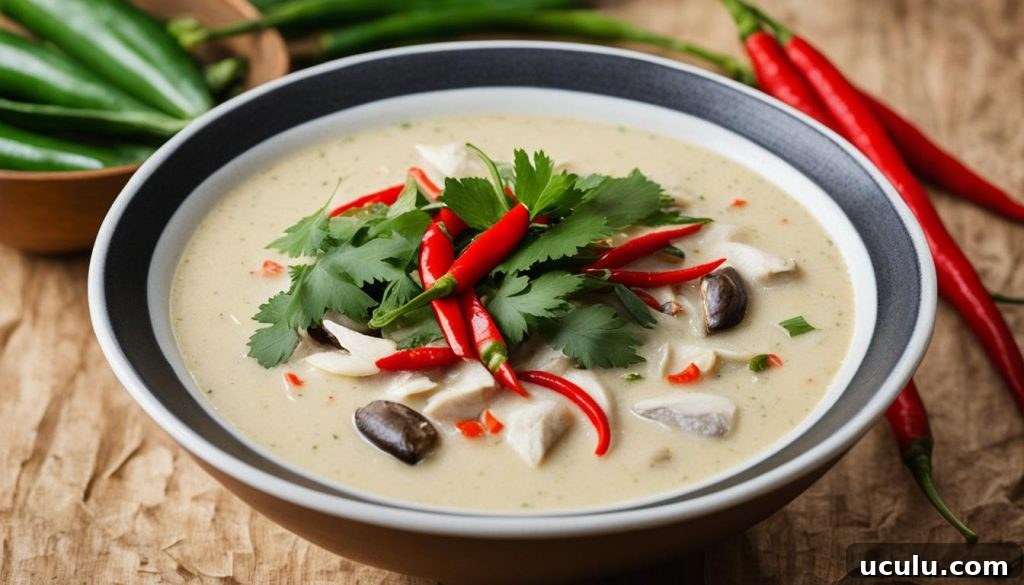
Key Takeaways
- Thai coconut soup is a hallmark of Thai cuisine, prized for its creamy, aromatic profile.
- The interplay of coconut milk, fresh herbs and spices creates a distinct and memorable flavor.
- Traditional recipes use ingredients like lemongrass, galangal, kaffir lime leaves, fish sauce and lime juice.
- There are many variations—chicken, vegetarian, spicier or creamier—so you can tailor the soup to your taste.
- With a few pantry staples and fresh aromatics, you can prepare an authentic-tasting bowl at home.
Explore the Flavors of Thai Cuisine
Thai food is defined by bright contrasts: heat from chilies, tang from lime, umami from fish sauce, and creaminess from coconut. Soups in Thai cuisine often showcase this balance. Coconut-based soups, in particular, deliver a soothing richness while still allowing fragrant herbs and tart accents to shine through.
Experimenting with different herbs and spice levels is one of the joys of cooking Thai food. Swap the protein, tweak the heat, or add seasonal vegetables—each variation reveals a different facet of Thai flavor.
Popular Thai soups range from the fiery Tom Yum Goong to the milder, creamier Tom Kha Gai. Each of these highlights how flexible and diverse Thai soup traditions can be.
Adding a Touch of Thai Flavors to Your Kitchen
If you’re new to Thai cooking, start with a few essential aromatics: lemongrass, galangal (or ginger if unavailable), kaffir lime leaves and fresh chilies. Combine these with coconut milk and a splash of fish sauce or soy sauce for a quick, reliable base.
Beyond soups, classic dishes like Pad Thai, Massaman curry and green papaya salad are great next steps for exploring Thai cuisine. For soups, consider trying:
| Thai Soup | Description |
|---|---|
| Tom Yum Goong | Spicy, sour shrimp soup with lemongrass, chilies and lime. |
| Tom Kha Gai | Creamy coconut soup with chicken, galangal and lemongrass. |
| Khao Soi | Coconut curry noodle soup topped with crispy egg noodles. |
| Guay Tiew Tom Yum | Spicy noodle soup with pork or seafood, flavored with fish sauce and chili paste. |
Pair your meal with a simple dessert like mango sticky rice for a classic Thai finish.
Cooking Up Creamy Thai Coconut Soup
The success of Thai coconut soup lies in layering flavors. Start by gently simmering aromatics in broth to extract their oils and fragrances, then add coconut milk for creaminess and seafood, chicken or vegetables for substance. Finish with lime juice and fish sauce to brighten and balance the dish.
Below are common variations you might try depending on dietary preferences or texture goals.
| Types of Thai Coconut Soup | Description |
|---|---|
| Vegetarian Thai Coconut Soup | Uses vegetable broth and tofu or a variety of mushrooms and vegetables for a satisfying meat-free option. |
| Spicy Thai Coconut Soup | Boosts heat with extra chilies, red curry paste or chili flakes for a bold, warming bowl. |
| Creamy Thai Coconut Soup | Increases richness by adding more coconut milk or a spoonful of coconut cream for a velvety texture. |
| Healthy Thai Coconut Soup | Uses light coconut milk, lean proteins and extra vegetables or grains like quinoa for a nutrient-forward version. |
Whatever variation you choose, this soup is comforting and adaptable, making it a reliable choice for weeknights or special occasions alike.
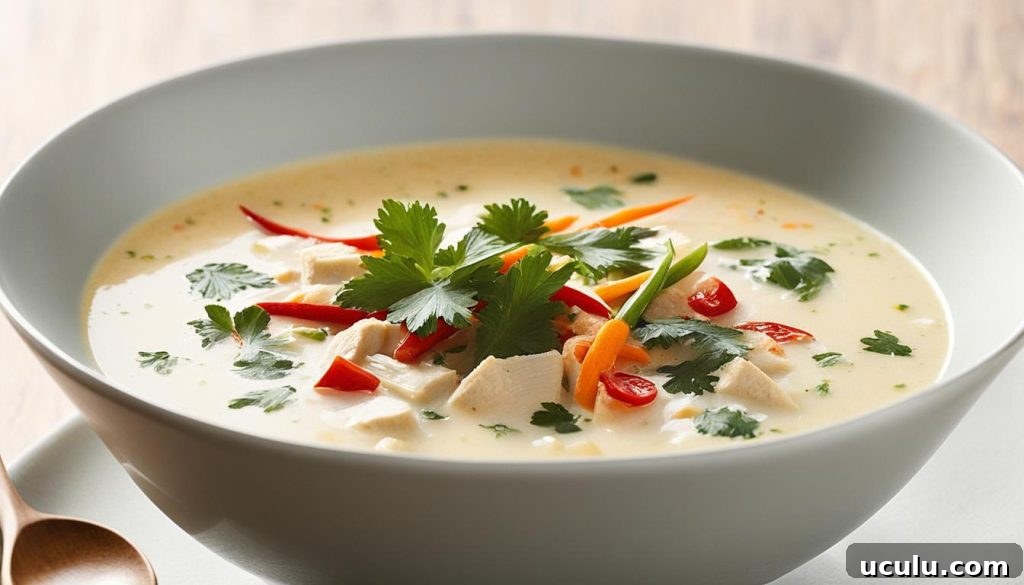
Unveiling the Authenticity of Thai Coconut Soup
An authentic Thai coconut soup balances fragrant aromatics with tangy and salty accents. Typical components include coconut milk, a clear or light chicken or vegetable broth, galangal, lemongrass, kaffir lime leaves, Thai chilies, fish sauce and lime juice. Proteins like chicken, shrimp or tofu are common, and mushrooms are often added for texture.
The Traditional Thai Coconut Soup Recipe
The classic approach involves simmering sliced galangal, bruised lemongrass and torn kaffir lime leaves in broth to release their flavors. Add coconut milk and mushrooms, then introduce poached chicken or shrimp near the end to prevent overcooking. Finish with fish sauce for umami and lime juice for brightness, and garnish with cilantro and green onions.
Chickening Up the Soup
To make the soup more substantial, gently poach chicken in the broth before adding coconut milk. Alternatively, grill or roast chicken separately and add it at the end for smoky flavor and texture contrast.
Vegetarian and Healthier Options
Vegetarian versions replace fish sauce with tamari or soy sauce and use vegetable broth. Light coconut milk or reduced quantities of full-fat milk create a lower-calorie version while preserving the essential flavors. Tofu, mushrooms and hearty vegetables make the soup filling and nutritious.
“Thai coconut soup is a comforting and nourishing experience.”
Understanding these traditional elements and simple substitutions lets you tailor the soup to dietary needs while keeping its distinctive Thai character.
Experience the Ultimate Comfort Food: Thai Coconut Soup
Thai coconut soup is an inviting, flavorful dish that brings warmth and comfort to any meal. With straightforward ingredients and minimal prep, it’s accessible for cooks of all skill levels. Serve it as a starter, a light main course, or part of a larger Thai-inspired spread.
Cozy Up with a Warm Bowl of Coconut Soup
This soup delivers both comfort and nourishment: creamy coconut, bright citrus, fresh herbs and a customizable level of heat. It’s ideal for chilly evenings or when you need a flavorful, soothing meal. Simple recipes and ready-made pantry staples mean you can prepare it quickly without sacrificing authenticity.
Discover the World of Thai Cuisine
Making Thai coconut soup is a great gateway into broader Thai cooking. Once comfortable with these core flavors, you can branch out into curries, stir-fries and salads that use similar aromatics and seasonings. Each new recipe expands your understanding of how Thai cuisine balances contrasting tastes to make deeply satisfying food.
FAQ
Is Thai coconut soup spicy?
Thai coconut soup can range from mild to spicy. Ingredients like fresh chilies or red curry paste add heat, but you can control the spiciness to suit your palate by adjusting or omitting those elements.
Can I make a vegetarian version of Thai coconut soup?
Yes. Substitute chicken broth with vegetable broth, replace fish sauce with soy sauce or tamari, and use tofu, mushrooms and vegetables as the main protein and texture elements.
How can I make Thai coconut soup creamier?
Use full-fat coconut milk, add a spoonful of coconut cream, or blend a portion of soaked cashews or silken tofu into the soup to achieve a richer, silkier texture.
What is an authentic Thai coconut soup recipe?
An authentic recipe typically includes lemongrass, galangal, kaffir lime leaves, fish sauce and lime juice, and may feature chicken, shrimp or tofu. Regional variations exist throughout Thailand, so recipes can differ in spice level and ingredients.
Is Thai coconut soup healthy?
Thai coconut soup can be healthy when made with fresh ingredients and balanced portions. Coconut milk provides healthy fats, while added vegetables and herbs contribute vitamins and minerals. Opting for light coconut milk and lean proteins can reduce calories while keeping robust flavor.