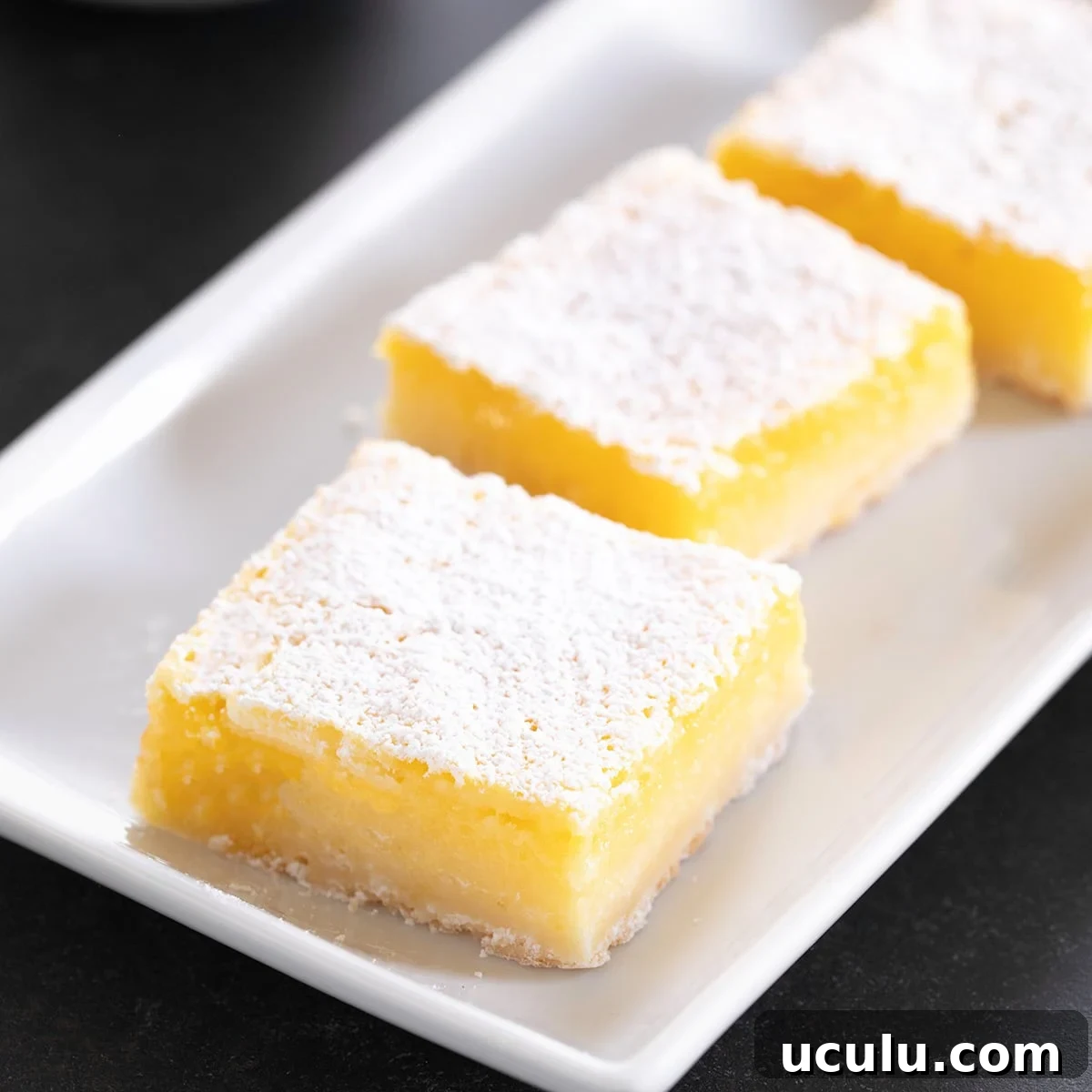
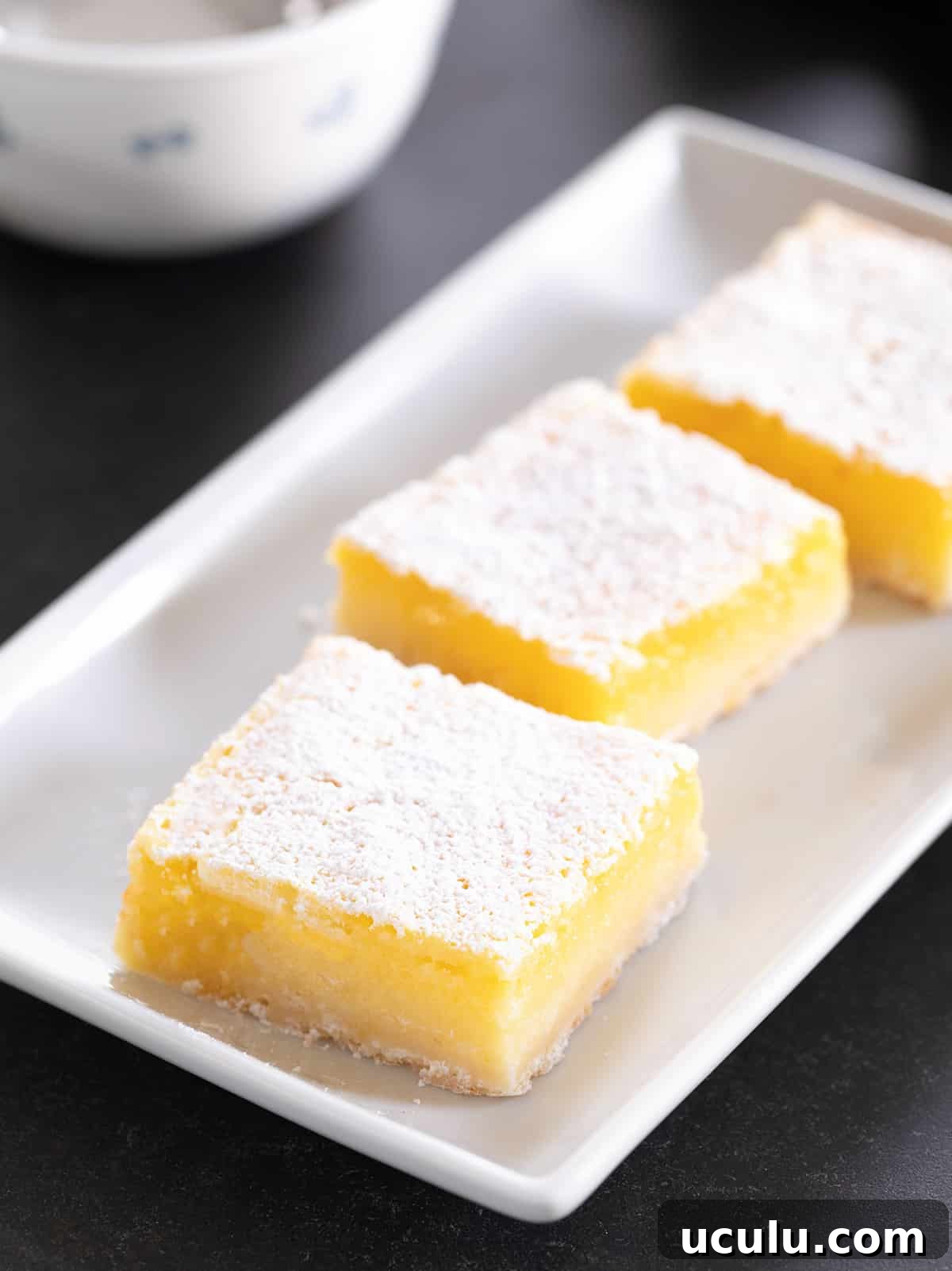
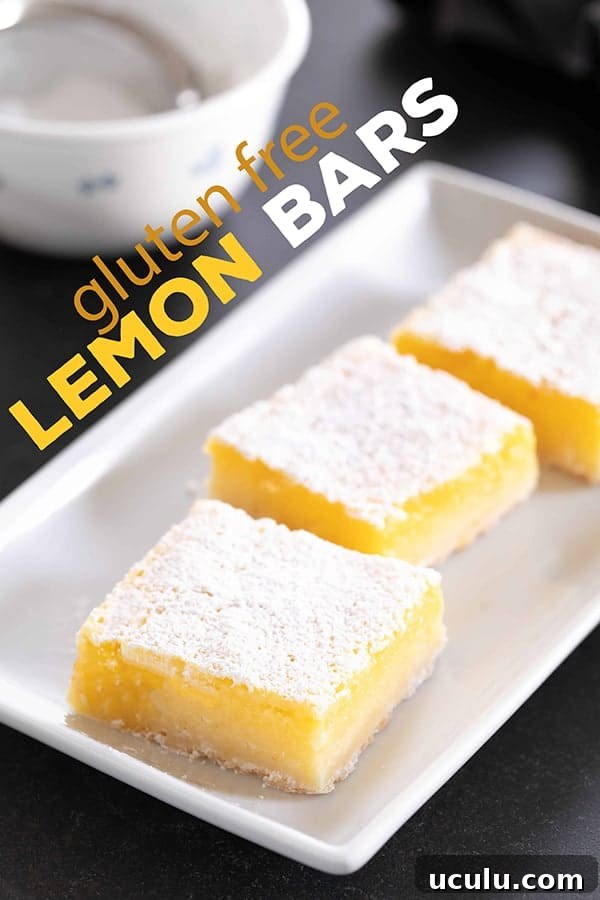
These gluten-free lemon bars feature a crisp, buttery shortbread crust and a smooth, bright lemon custard that sets reliably every time. They’re straightforward to make, cut cleanly, and deliver the classic sweet-and-tart balance with no guesswork.
Why this recipe works
The texture mirrors what you expect from classic lemon bars, and in many ways it’s even better without gluten. The crust bakes tender yet sturdy, with just enough chew to hold the filling without becoming soggy or greasy.
The filling is silky and full of fresh lemon flavor. Lemon zest is added to the crust as well as the custard, so each bite tastes balanced and bright rather than flat or overly sweet.
The filling sets consistently because the recipe gives clear doneness cues, not just a single time. Ovens vary, so the multiple visual and tactile signs ensure you remove the bars at the right moment to avoid an underbaked, runny center or an overbaked, rubbery texture.
“I’m the only gf person in the room but everyone loved it! Custard is so lemony and delicious.” Shannon
“I have made it many times and am making it again to bring to my 101 year-old grandpa who loves lemon bars.” Jennifer
Recipe ingredients
Below is a summary of the ingredients and why each one matters to the final result.
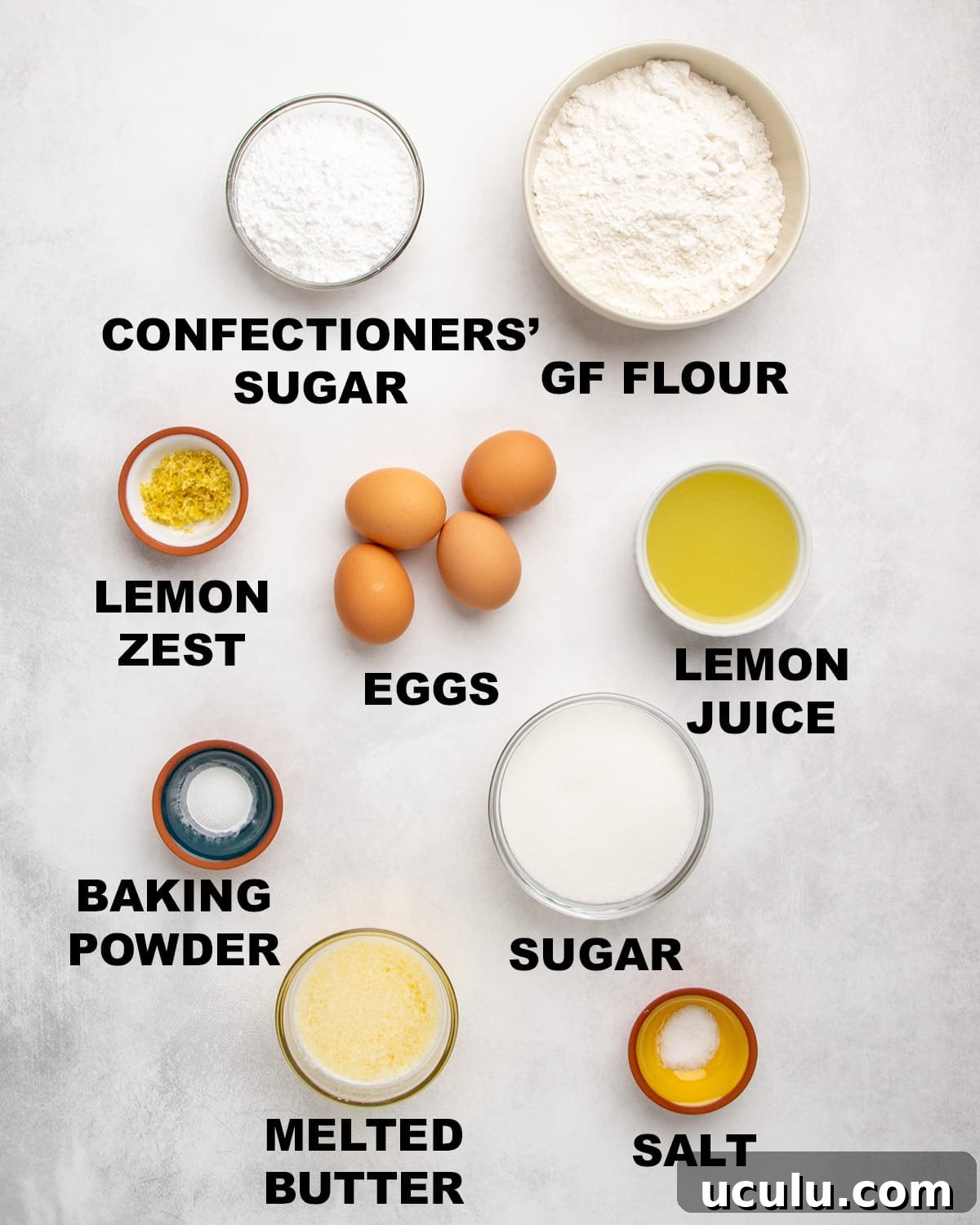
- Gluten-free flour blend: Use a gum-free blend with superfine white rice flour as the base. Avoid xanthan gum here; adding it can make the crust chewier and the filling gummy. The blend gives structure to both crust and filling. If using a commercial blend, sift it to avoid grittiness.
- Confectioners’ sugar: Adds gentle sweetness to the crust and helps create a tender, slightly crisp crumb. More is dusted on top for flavor and a polished look.
- Granulated sugar: In the filling, it balances the lemon’s acidity and dissolves into the lemon juice to help the custard become smooth.
- Fresh lemon juice: Provides the primary bright flavor. Use freshly squeezed and strained juice—bottled juice lacks the same intensity and can taste bitter when baked.
- Lemon zest: Contributes concentrated lemon oil and aroma. Avoid grating into the bitter pith.
- Butter: Binds the shortbread crust and creates a rich, crisp exterior.
- Eggs: Set and thicken the custard to a creamy, sliceable texture as the bars cool.
- Salt: Rounds out and brightens the other flavors.
- Baking powder: Gives a touch of lift to the filling so the custard is light rather than dense.
How to make gluten-free lemon bars (step-by-step photos)
You’ll bake the pan twice: once to parbake the crust and again to finish the filling. This overview explains each step; full quantities appear in the recipe card below.
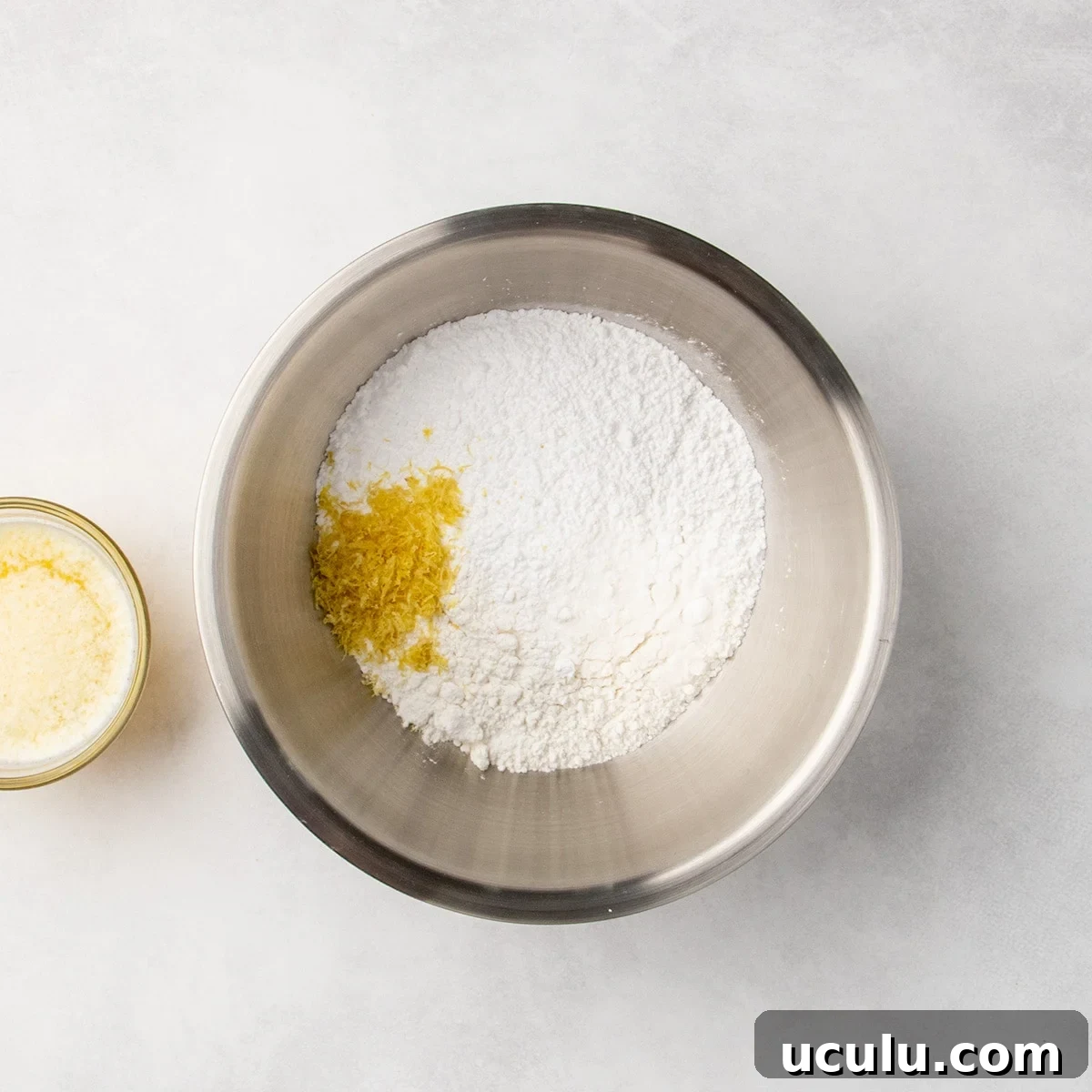
For the crust: whisk dry ingredients
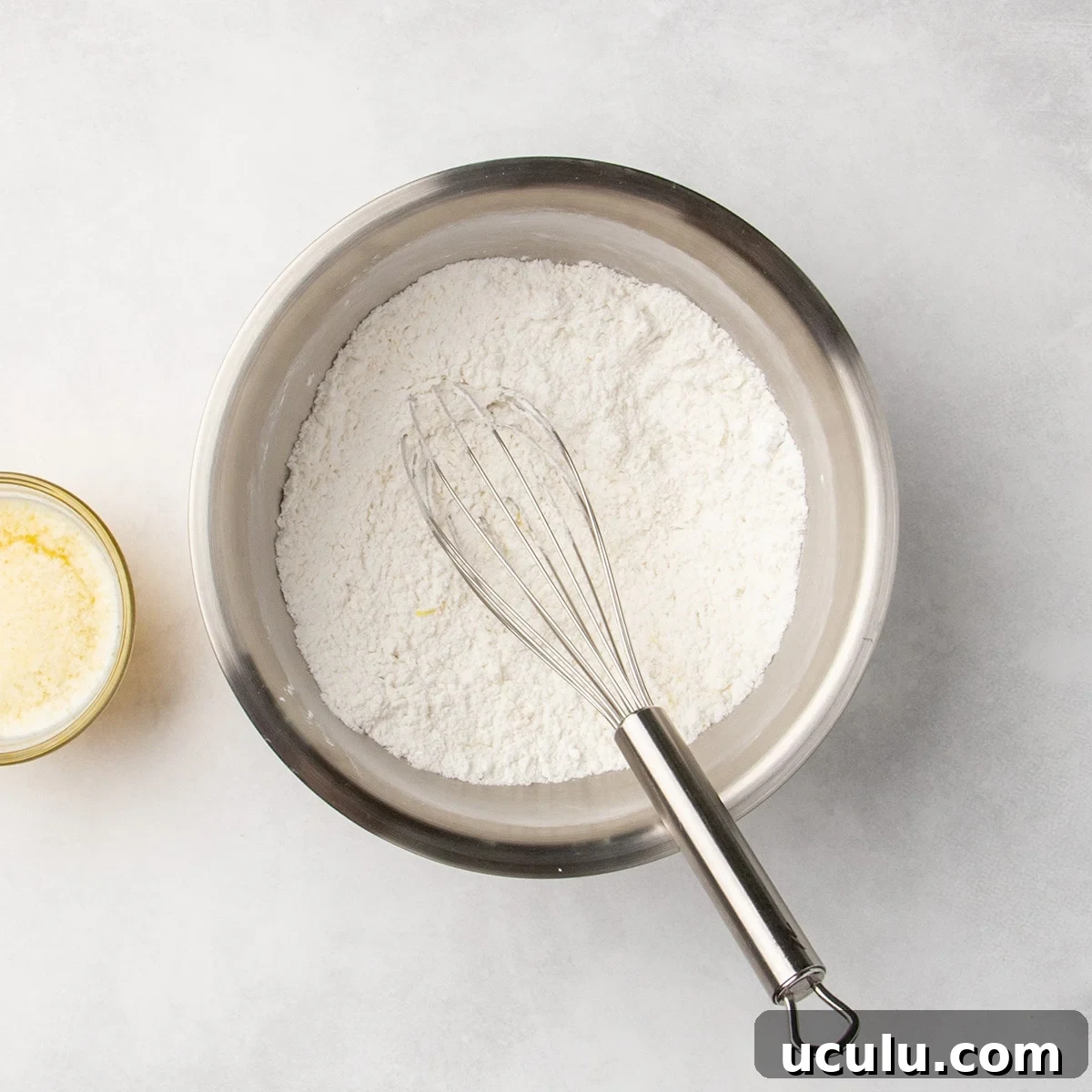
Whisk the flour blend, confectioners’ sugar, salt, and lemon zest until combined and free of clumps. The zest can cling together, so keep whisking until evenly distributed.
Add melted butter
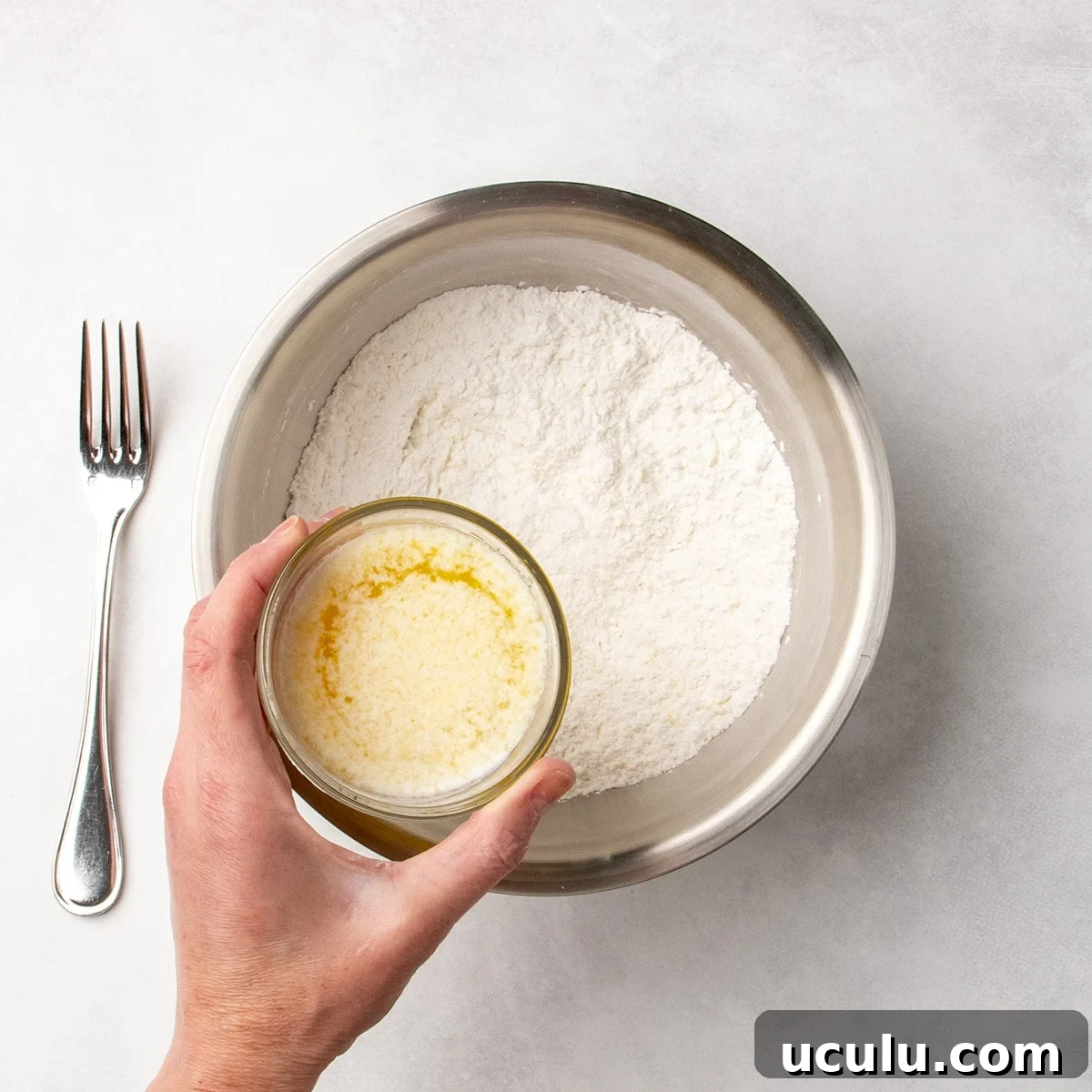
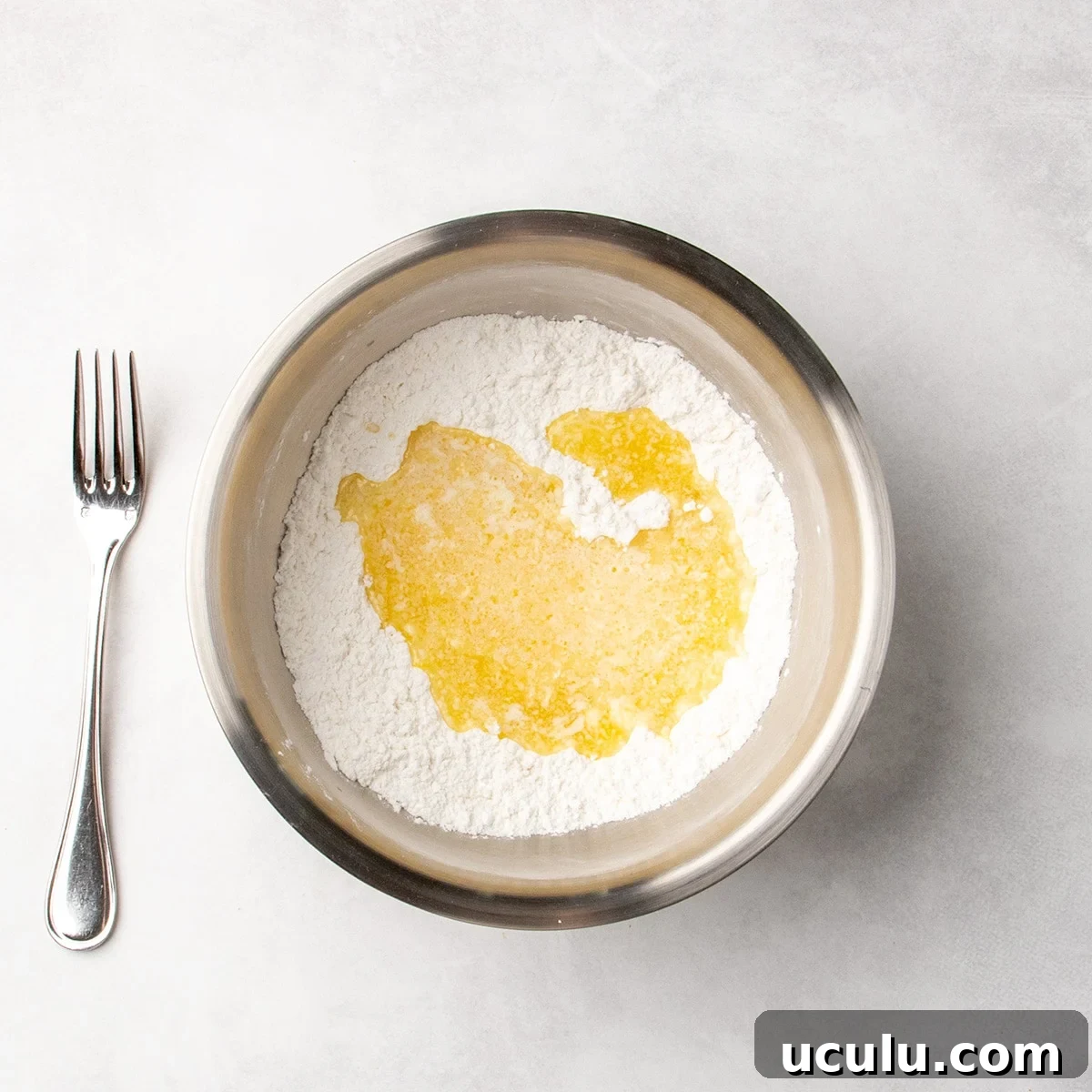
Stir in melted unsalted butter (cool slightly so it doesn’t cook the other ingredients) until the mixture forms large, moist clumps.
Mix into clumps
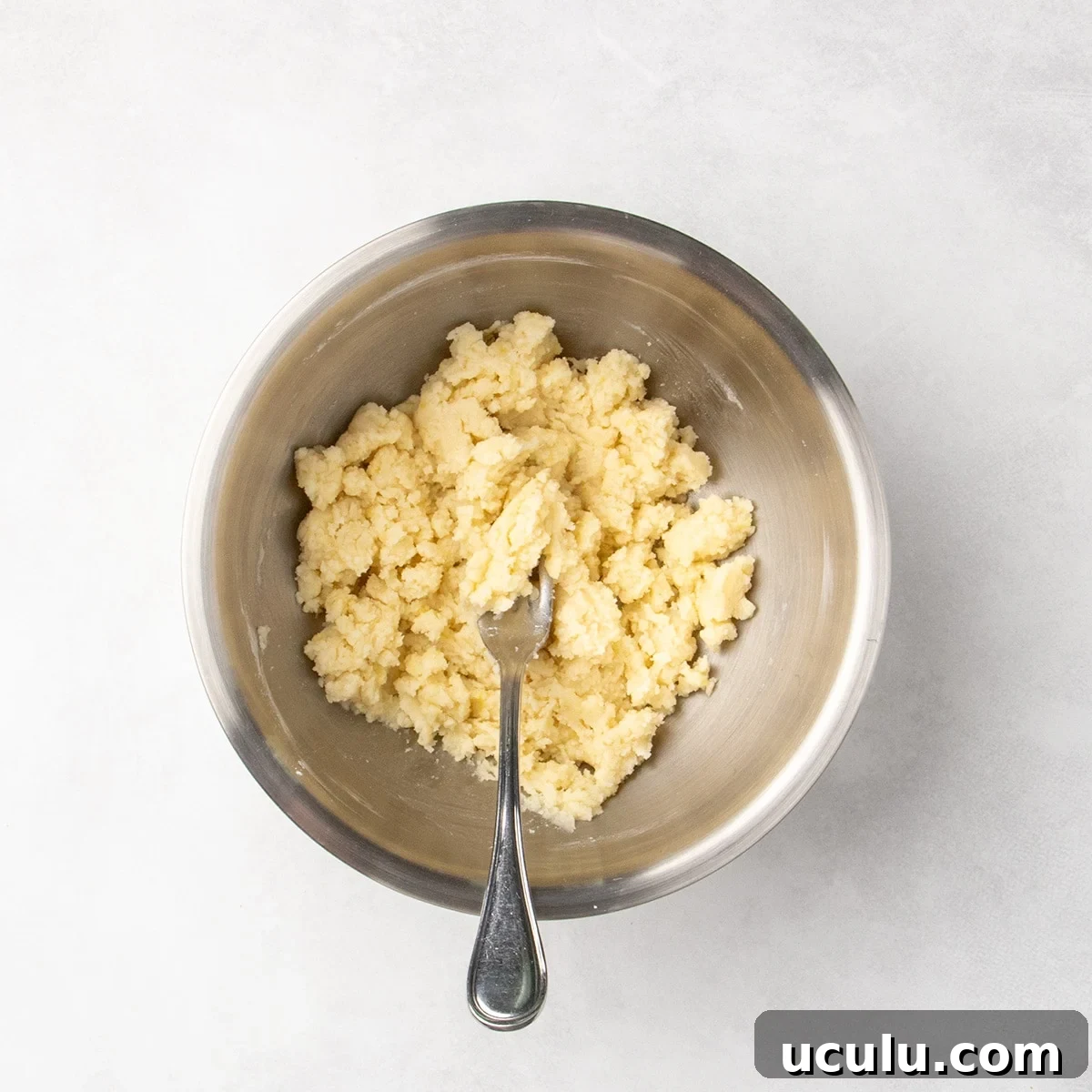
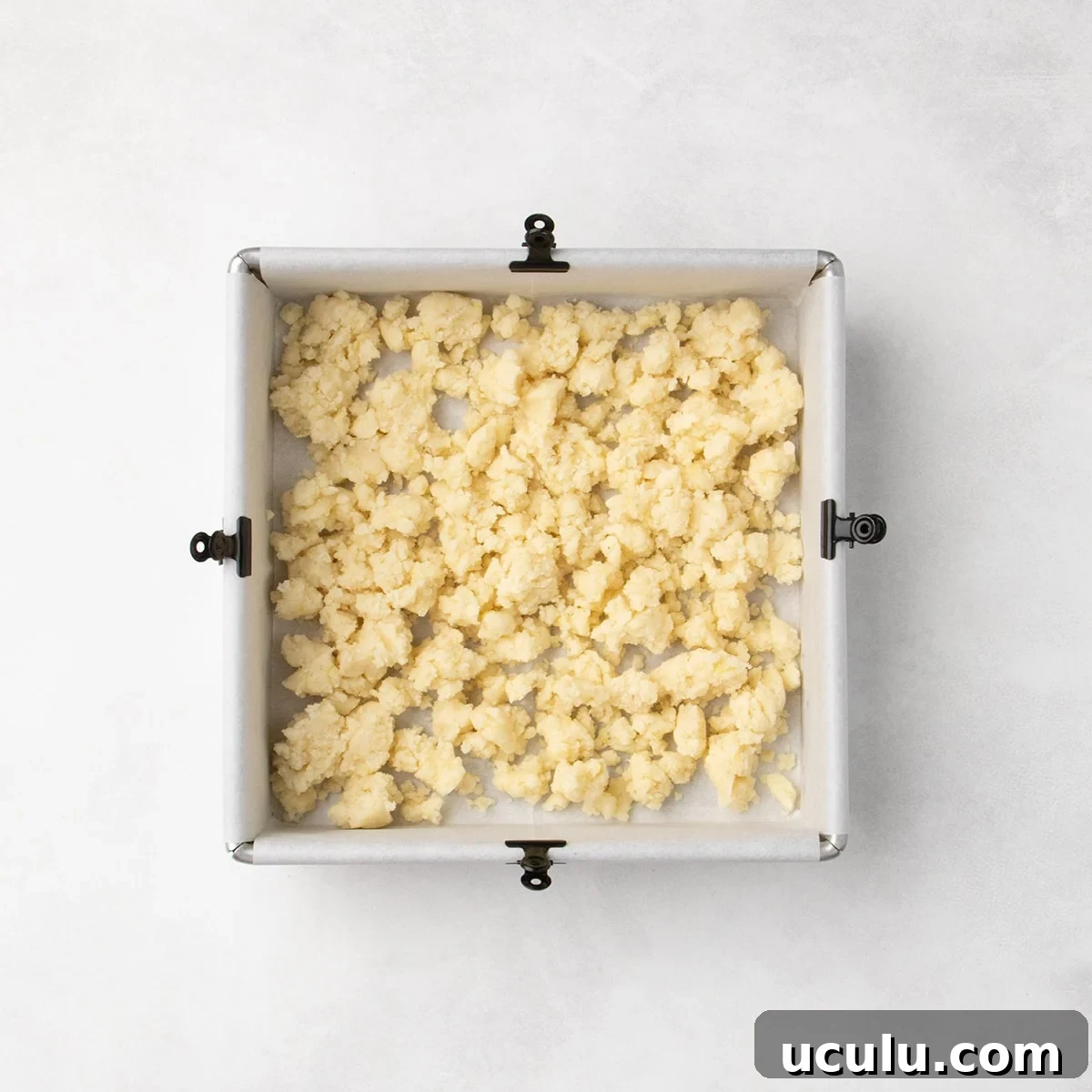
Use a fork to combine the butter into the dry ingredients until clumpy; these clumps are easy to scatter evenly in a lined and greased pan. Clip the parchment to the pan sides if needed to keep it in place while baking.
Smooth the crust
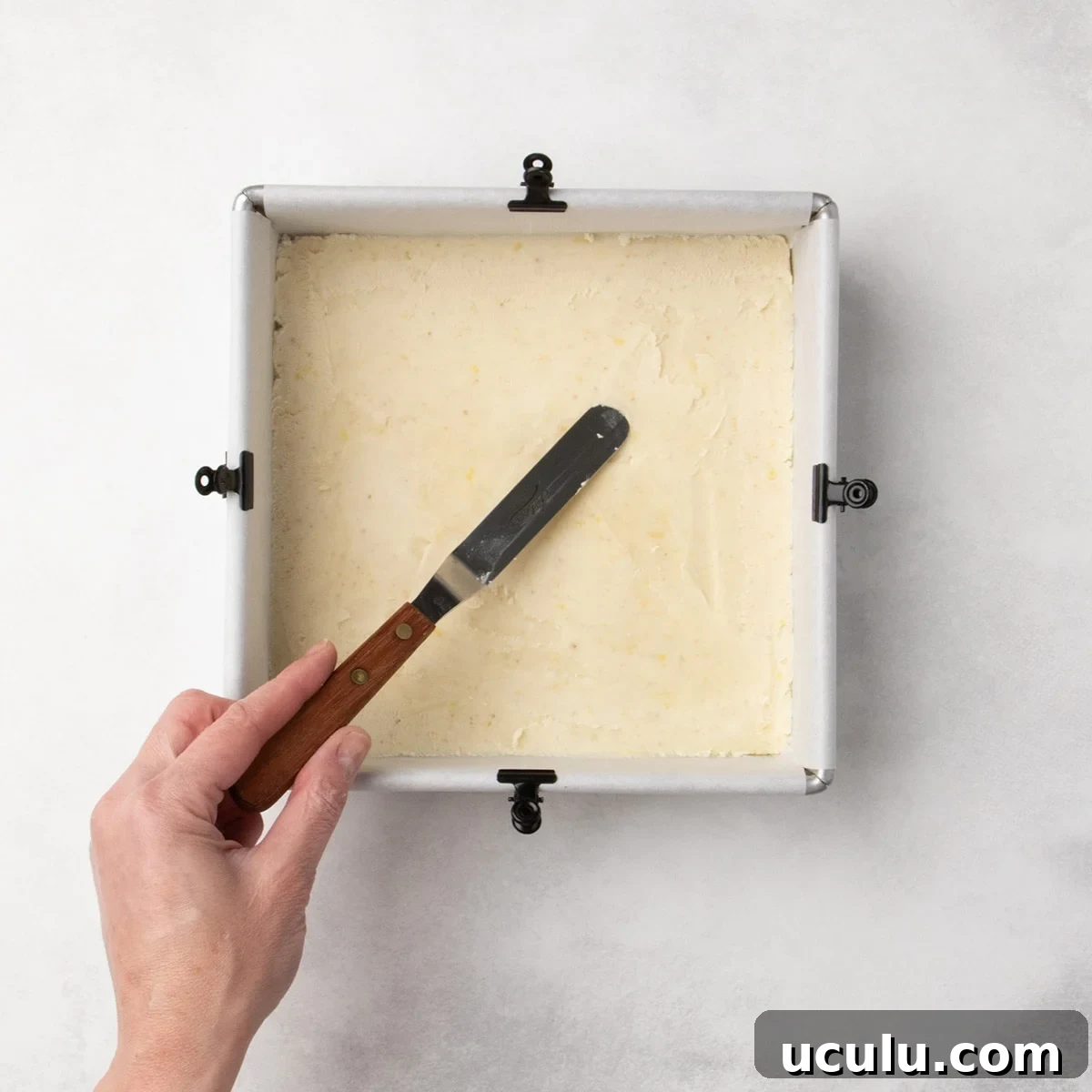
Press the clumps into an even layer with an offset spatula or butter knife. Don’t press too hard or the crust can compress and bake unevenly.
Parbake
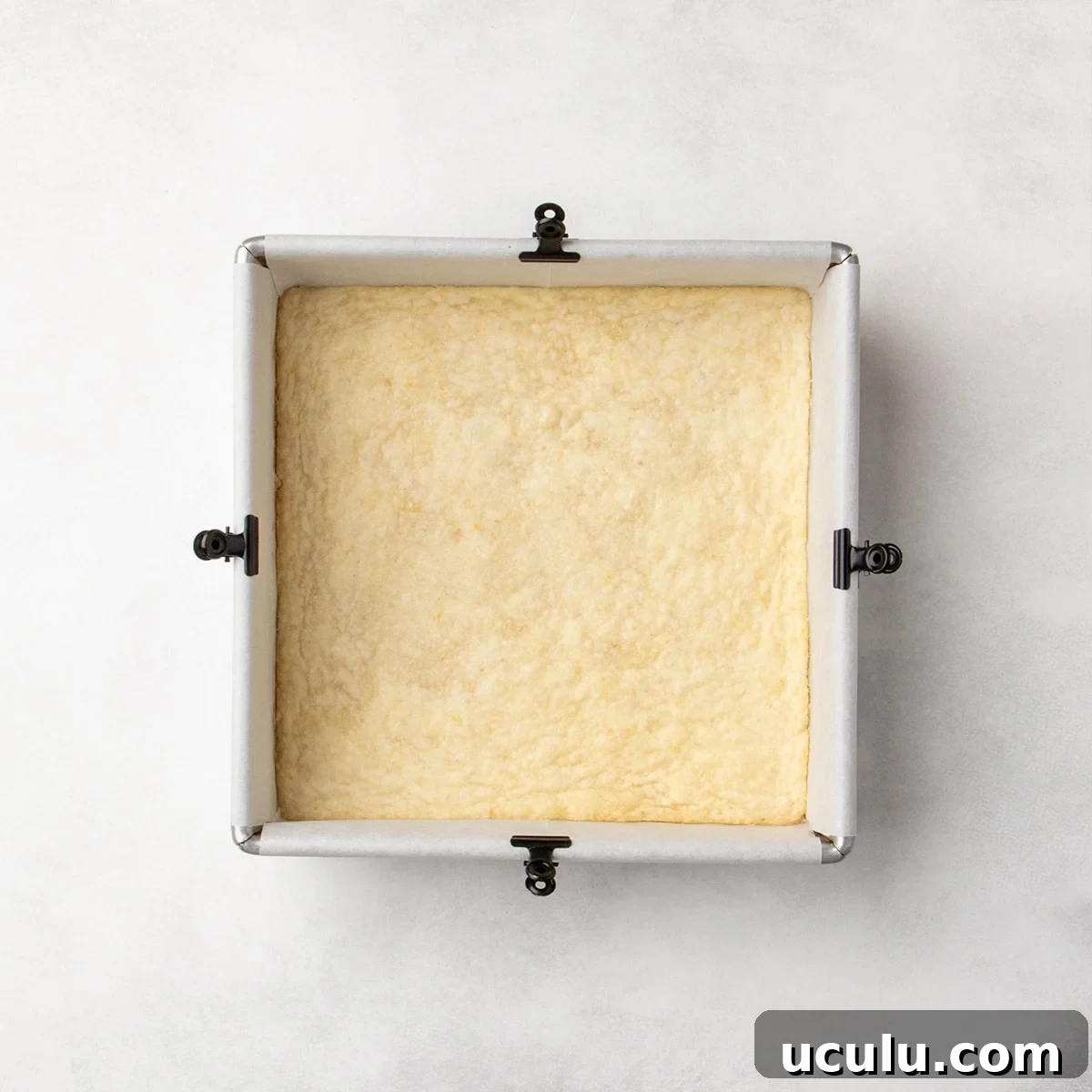
Bake the crust at 325°F for about 15 minutes to seal it so it won’t get soggy under the filling. It will change from shiny to a pale, matte finish. Let it cool briefly while you prepare the filling.
For the filling: whisk dry, then wet ingredients
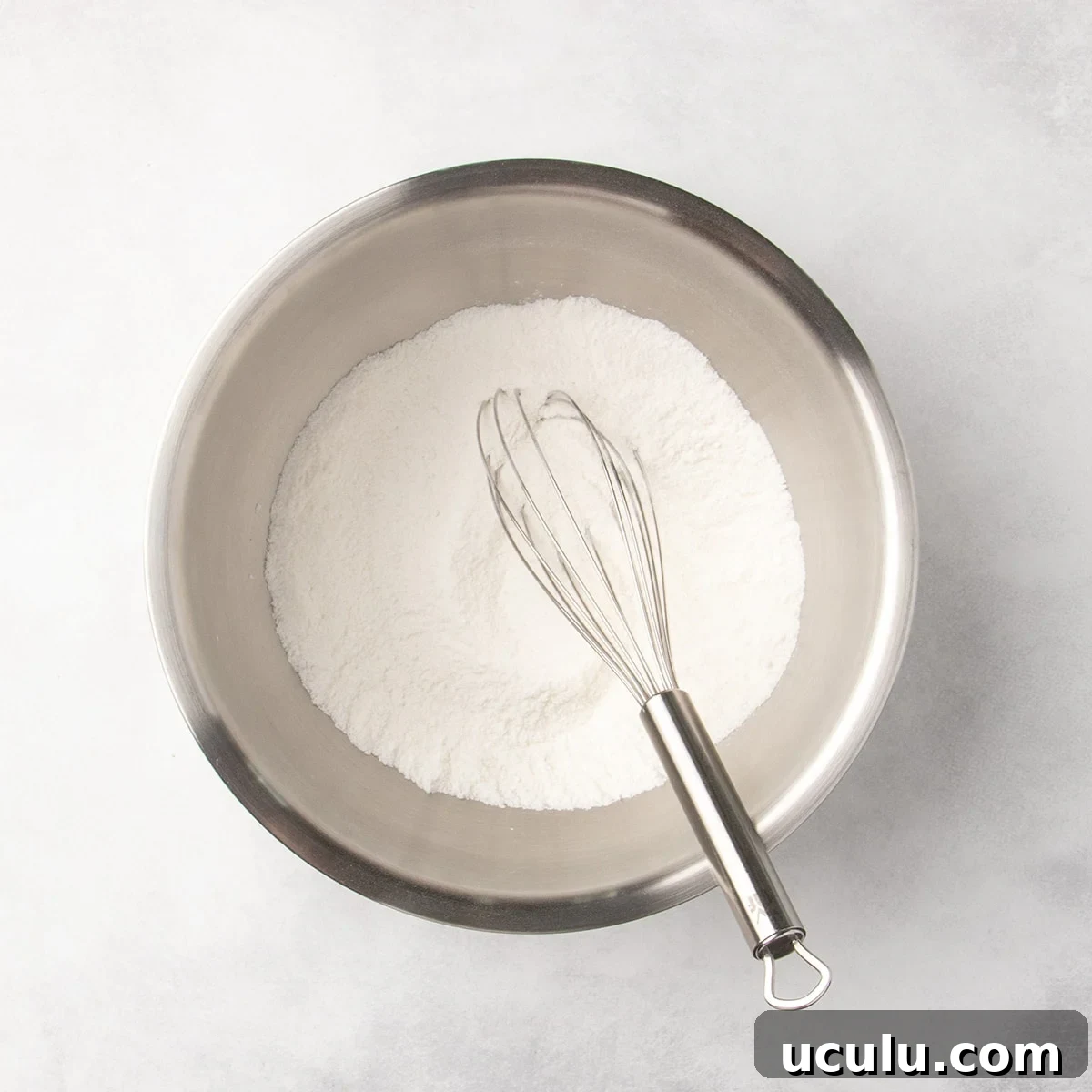
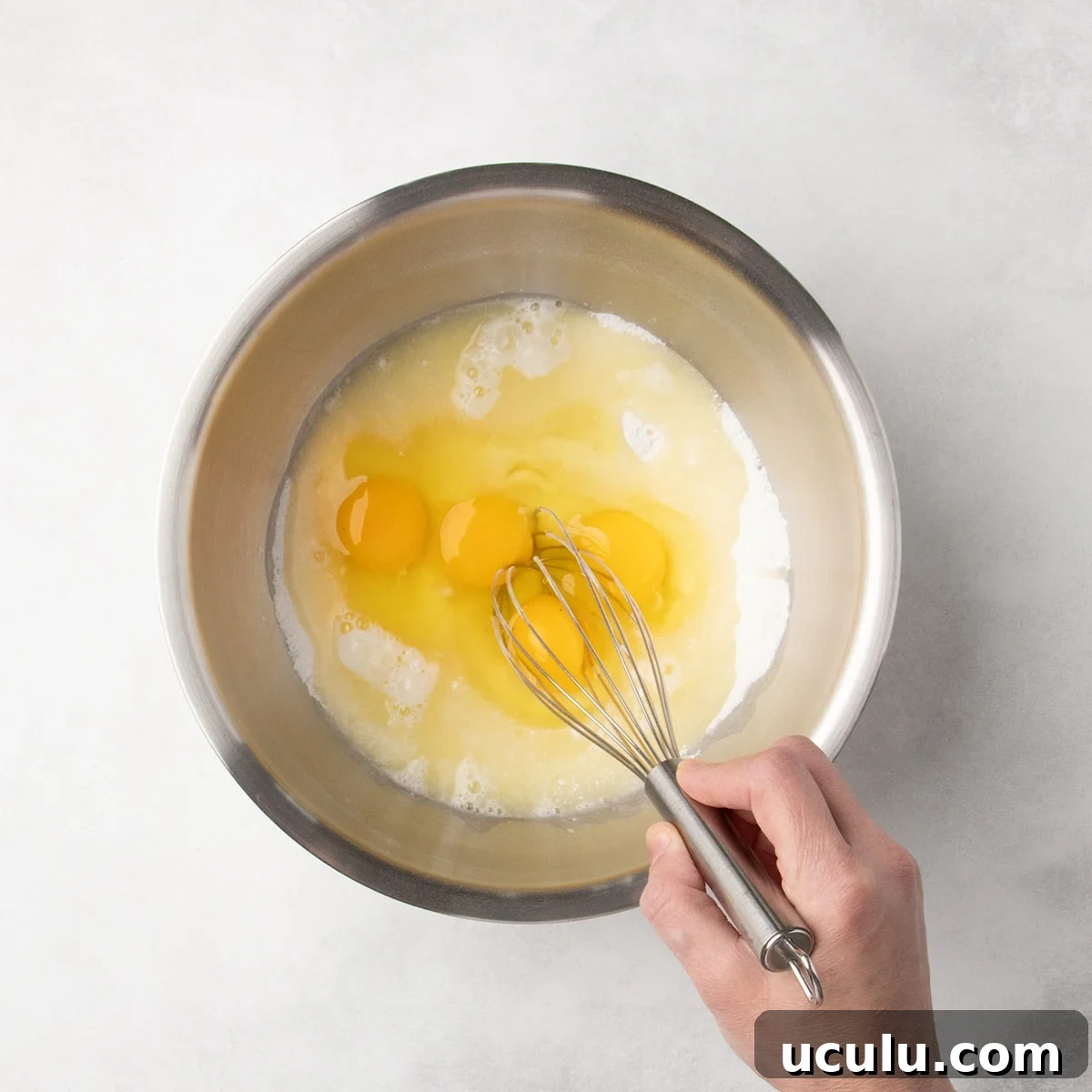
Whisk the remaining flour blend, granulated sugar, and baking powder in a bowl to remove lumps. Add fresh-squeezed and strained lemon juice and eggs, then whisk until the mixture is smooth and homogeneous but not foamy.
Combine crust and filling
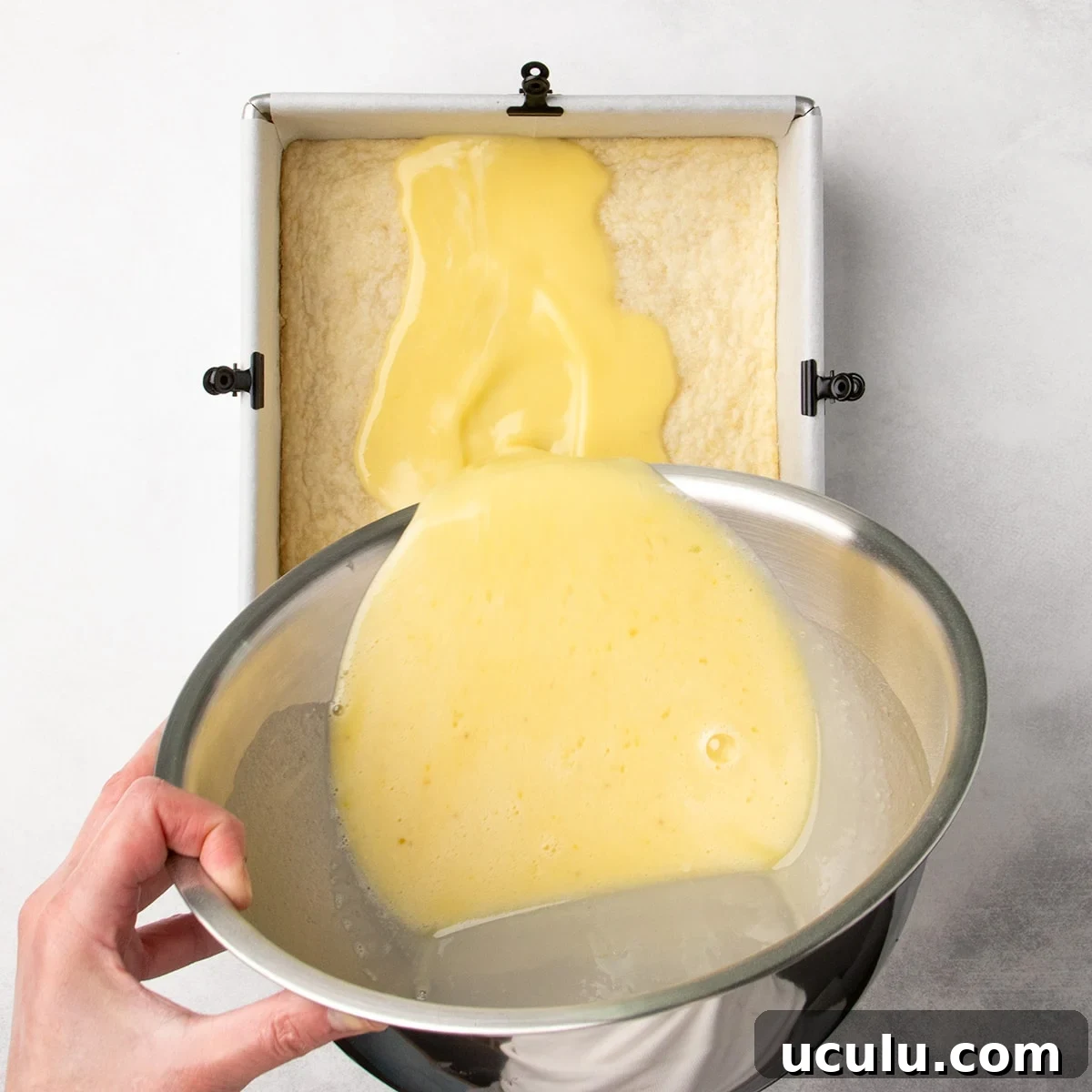
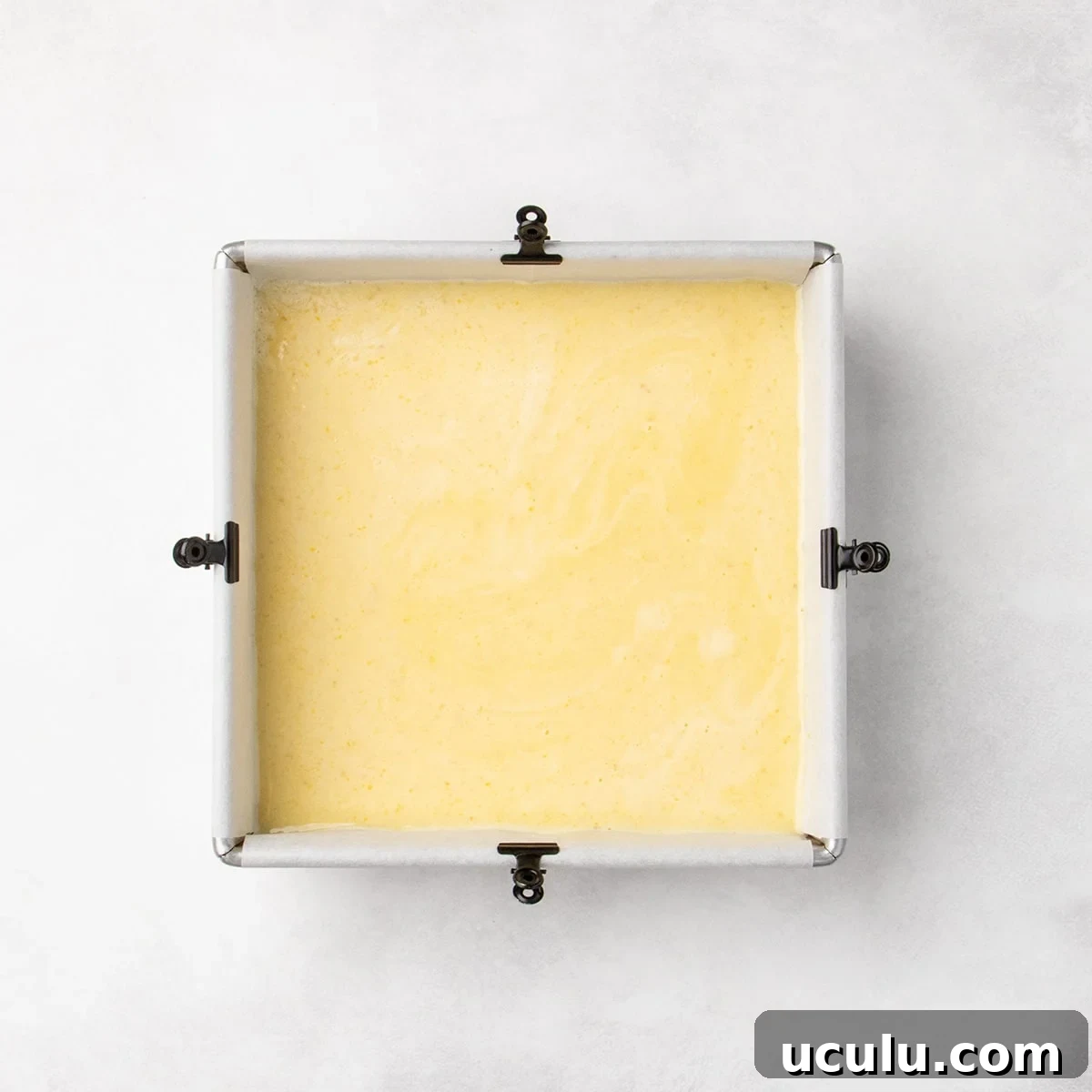
Pour the thin filling into the parbaked crust and tap the pan on the counter a few times to release air bubbles so the filling bakes smoothly.
Finish baking the bars
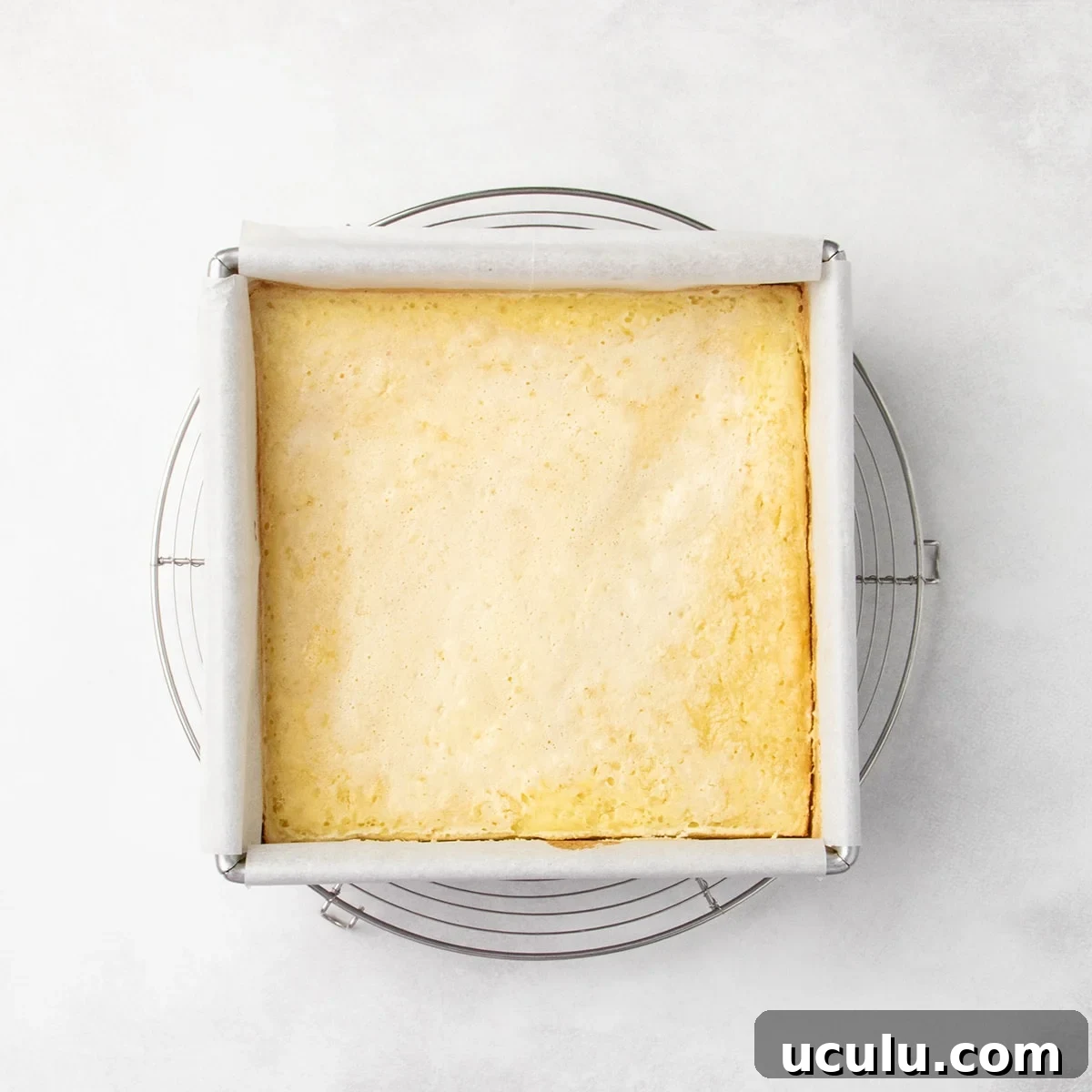
Bake both layers together for about 25 minutes. The filling will look liquid for the first 18–20 minutes then begin to set. The bars are done when the filling has pulled slightly away from the pan sides, appears evenly risen, and only jiggles a little in the center when shaken gently.
Chill and slice
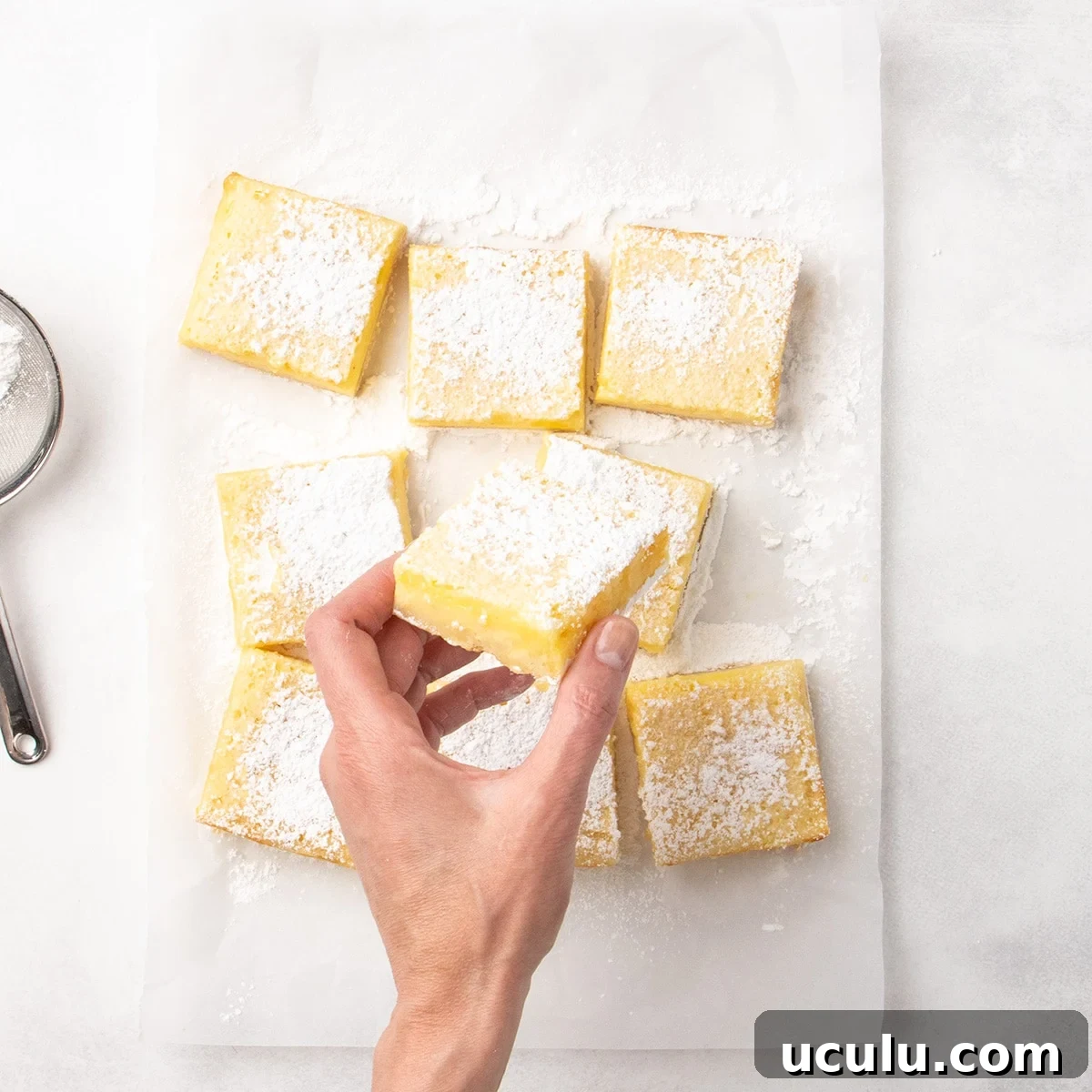
Cool the pan on a wire rack for about 20 minutes, then refrigerate for at least 2 hours so the custard firms for clean slicing. Run a knife around the pan, lift the bars out using the parchment overhang, and slice into squares. Dust with confectioners’ sugar before serving.
Expert tips
Use fresh lemon juice
Fresh lemon juice is best—the flavor is brighter and less bitter than most bottled options. Strain out pulp and seeds before measuring the 2/3 cup required so you have an accurate amount.
Whisk the filling fully, but gently
Whisk until smooth and uniform, but avoid vigorous whipping that traps air. Too many air bubbles will break during baking and leave pinholes in the custard. If bubbles form, let the mixture rest and tap the pan to release them before baking.
Allow for setting time
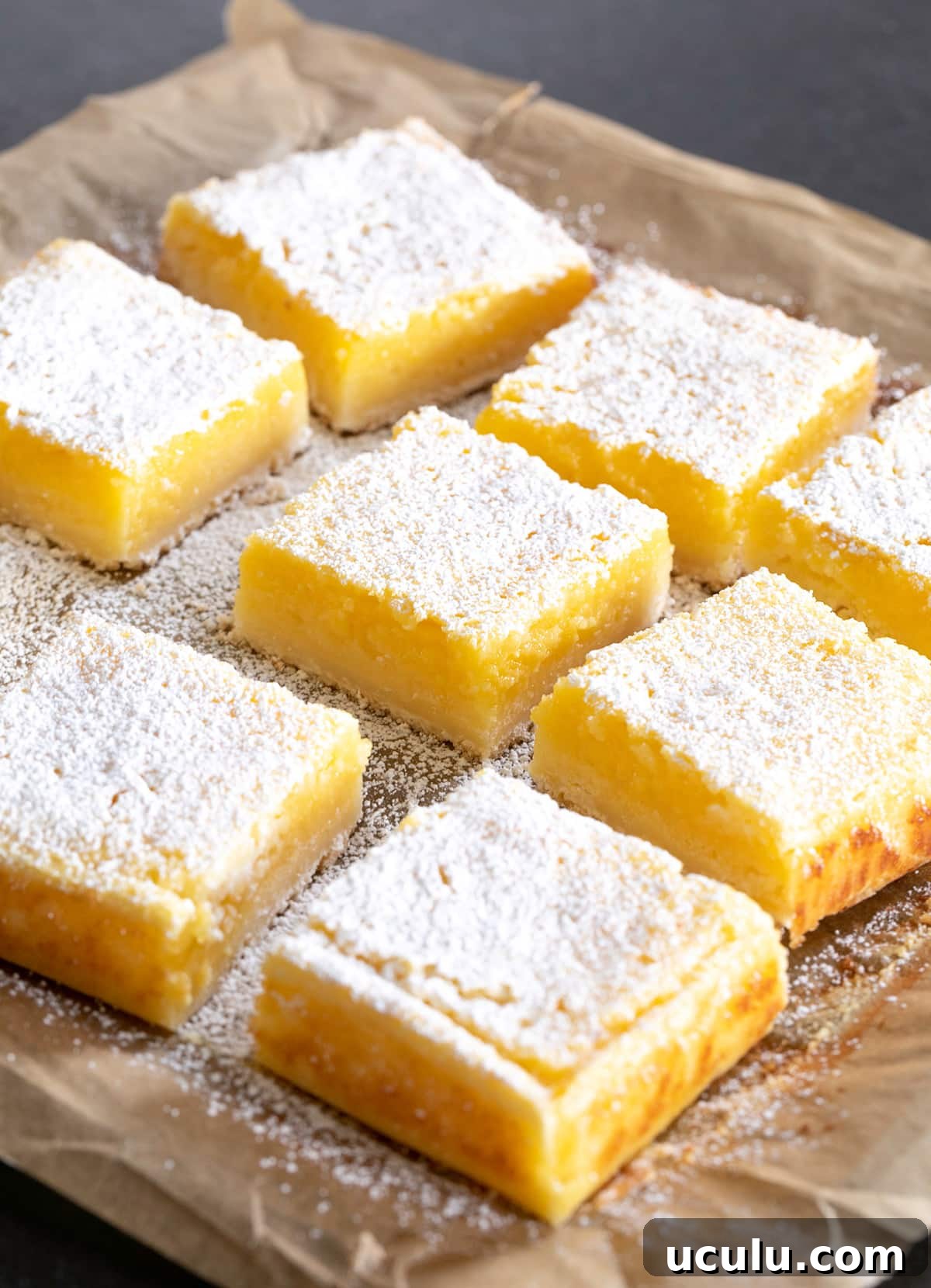
Chill the bars for at least two hours so the egg-based filling firms enough to slice neatly. Rushing this step risks a runny center and messy cuts.
Ingredient substitutions
Here are a few substitution ideas and limits so you can adapt the recipe.
Dairy-free
For a dairy-free crust, use a mix of half nonhydrogenated vegetable shortening and half block-style vegan butter to replicate the flavor and moisture of butter. Brands such as Melt or Miyoko’s work well for texture and taste.
Egg-free
There are four eggs in this recipe. Replacing all four with an egg substitute will dramatically change the texture; the bars rely on eggs to set into a smooth, creamy custard, so an egg-free version is unlikely to achieve the same result.
Lemon alternatives
Swap lemon for lime or orange juice and matching zest if you prefer a different citrus flavor. Keep the same technique and chilling time.
Storage suggestions
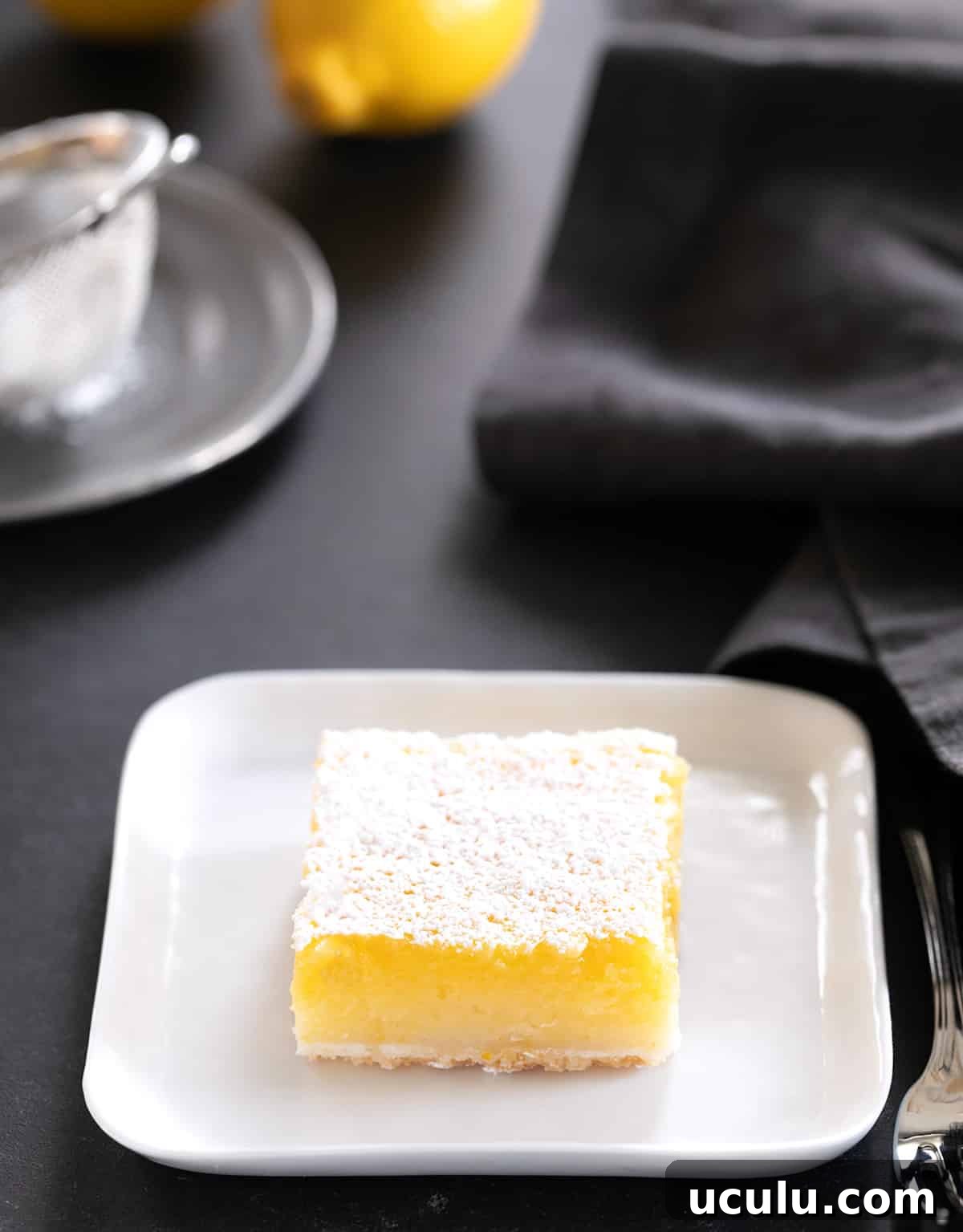
Store bars in a sealed container in the refrigerator for 3–5 days. If dusted with confectioners’ sugar, the topping may absorb into the bars; dust again just before serving.
To freeze, set the cut bars uncovered in the freezer until just firm (about 1 hour), then wrap individually and freeze up to 3 months. They defrost quickly in the refrigerator; dust with confectioners’ sugar before serving.
Gluten Free Lemon Bars Recipe
Ingredients
For the crust
- 1 cup gum-free gluten-free flour blend (140 g)
- ½ cup confectioners’ sugar (58 g), plus more for dusting
- ½ teaspoon kosher salt
- 1 tablespoon finely grated lemon zest (from 1 large lemon)
- 9 tablespoons unsalted butter (126 g), melted and cooled
For the filling
- ⅔ cup gum-free gluten-free flour blend (93 g)
- 1 cup granulated sugar (200 g)
- ¾ teaspoon baking powder
- ⅔ cup freshly squeezed lemon juice (about 4–5 lemons, strained)
- 4 eggs (200 g out of shell), at room temperature
Instructions
-
Preheat oven to 325°F. Grease an 8-inch square pan, line it with parchment that overhangs the sides, and grease the parchment. Set aside.
Make the crust
-
Combine 1 cup (140 g) flour blend, confectioners’ sugar, salt, and lemon zest in a medium bowl and whisk to combine.
-
Add melted butter and mix with a fork until clumpy.
-
Scatter clumps in the prepared pan and press into an even layer with an offset spatula or knife.
-
Bake in center of oven for about 15 minutes until the crust looks matte and pale. Cool briefly.
Make the filling
-
Whisk 2/3 cup (93 g) flour blend, granulated sugar, and baking powder in a large bowl.
-
Add 2/3 cup lemon juice and 4 eggs; whisk until smooth. The mixture will be thin.
-
Pour filling into the parbaked crust.
Bake
-
Return pan to oven and bake until just set, about 25–30 minutes.
-
The filling is set when it only jiggles slightly in the center and may have pulled away from the pan sides.
-
Remove and cool on a wire rack for about 20 minutes while still in the pan.
Chill the bars
-
Cover and chill in the refrigerator until firm, at least 2 hours.
-
Run a knife around the pan, lift the bars out using the parchment, pull the paper away from the sides, and slice into 9 squares with a very sharp knife.
-
Dust with confectioners’ sugar and serve chilled.
Notes
To make 1 2/3 cups (233 g) gum-free blend for both crust and filling, combine 154 g superfine white rice flour + 51 g potato starch + 28 g tapioca starch. You can also use a trusted gum-free commercial blend.
Nutrition
Nutrition information is automatically calculated and should be used as an approximation.
FAQs
An average lemon yields about 3 tablespoons of juice. This recipe needs 2/3 cup (just over 10 tablespoons), so plan on about 4 lemons.
Bottled juice can taste bitter and baking may intensify that. If you prefer bottled and enjoy its flavor, use it; otherwise fresh-squeezed is recommended.
Yes. You can substitute a graham cracker crust if you prefer; follow your preferred gluten-free graham-cracker crust recipe.
More lemon dessert recipes
Here are a few more gluten-free lemon desserts to try.
- Gluten Free Lemon Cookies – Buttery and light, these melt-in-your-mouth cookies take about 15 minutes of prep.
- Gluten Free Lemon Brownies – Chewy brownie texture with bright citrus flavor.
- Gluten Free Lemon Cake – A tender, lemon-rich cake inspired by a popular restaurant favorite.