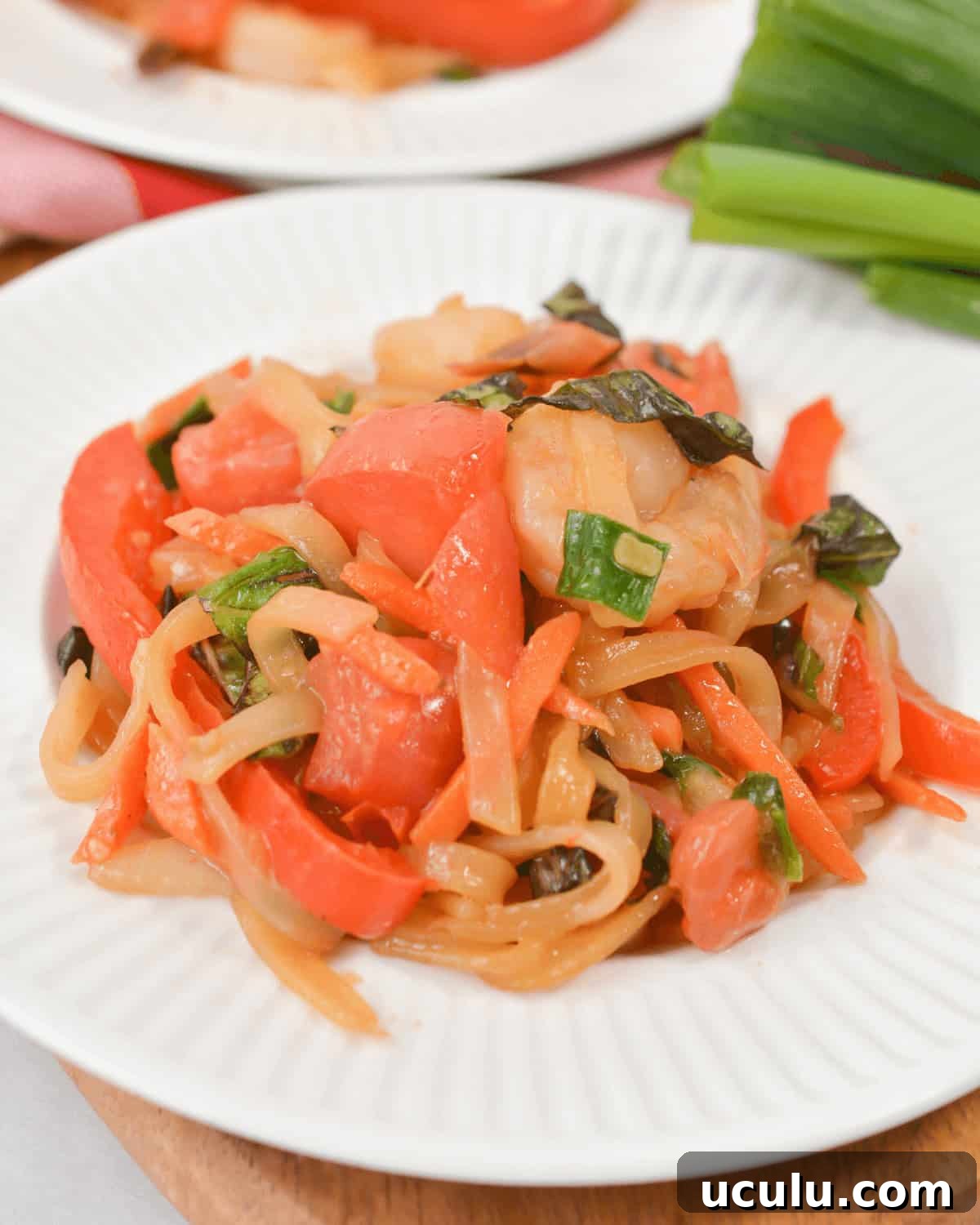
Shrimp Drunken Noodles is a quick, flavorful dinner that’s ready in about 30 minutes. Aromatic spices, tender shrimp and wide rice noodles combine with a savory sauce and fresh herbs to create a balanced, satisfying meal the whole family will enjoy.
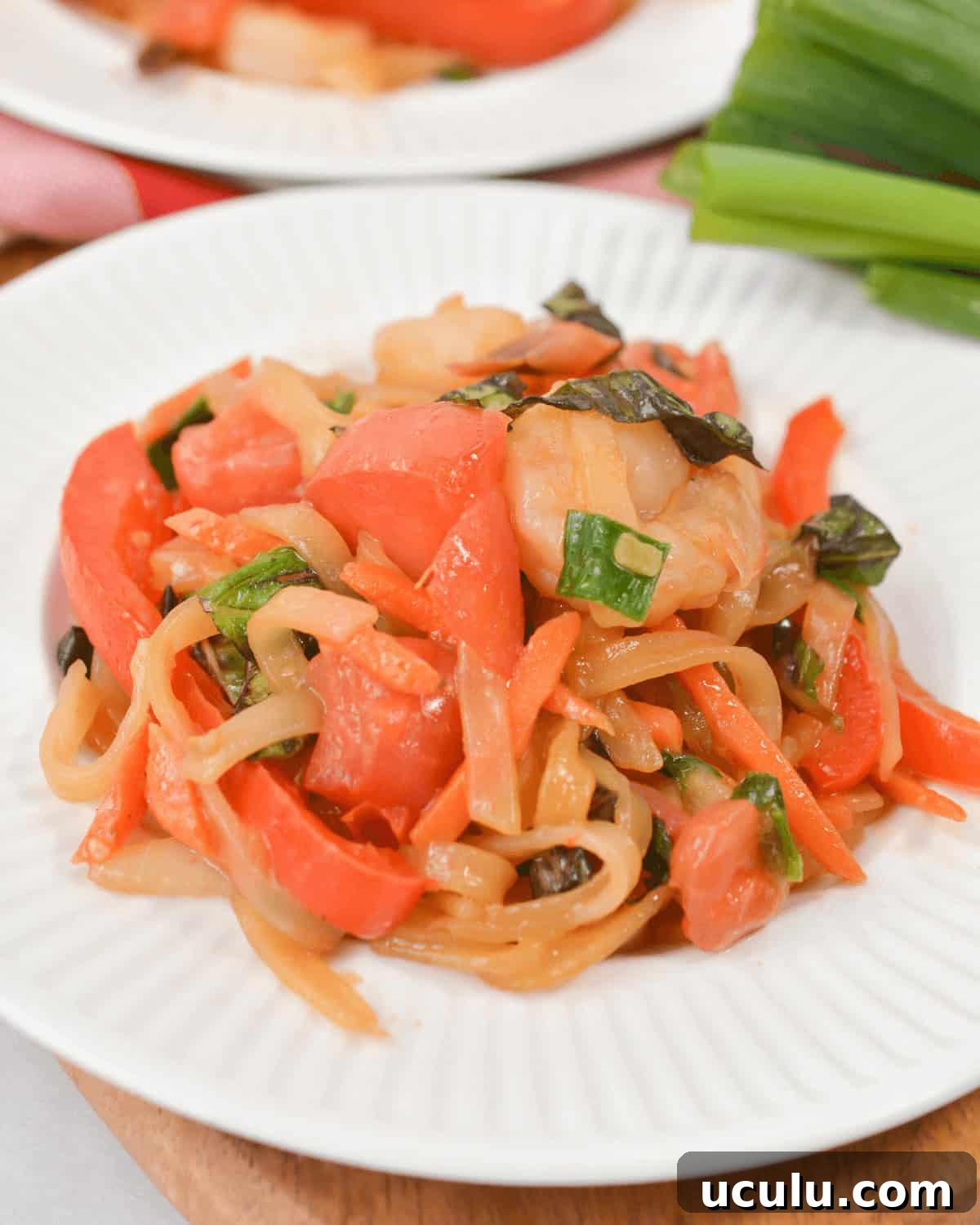
Shrimp Drunken Noodles, inspired by the Thai street food dish Pad Kee Mao, captures bold, aromatic flavors without any alcohol. This recipe pairs chewy wide rice noodles with quickly sautéed shrimp, crisp vegetables and a simple sauce made from soy and oyster sauce for an umami-rich, spicy-tangy finish.
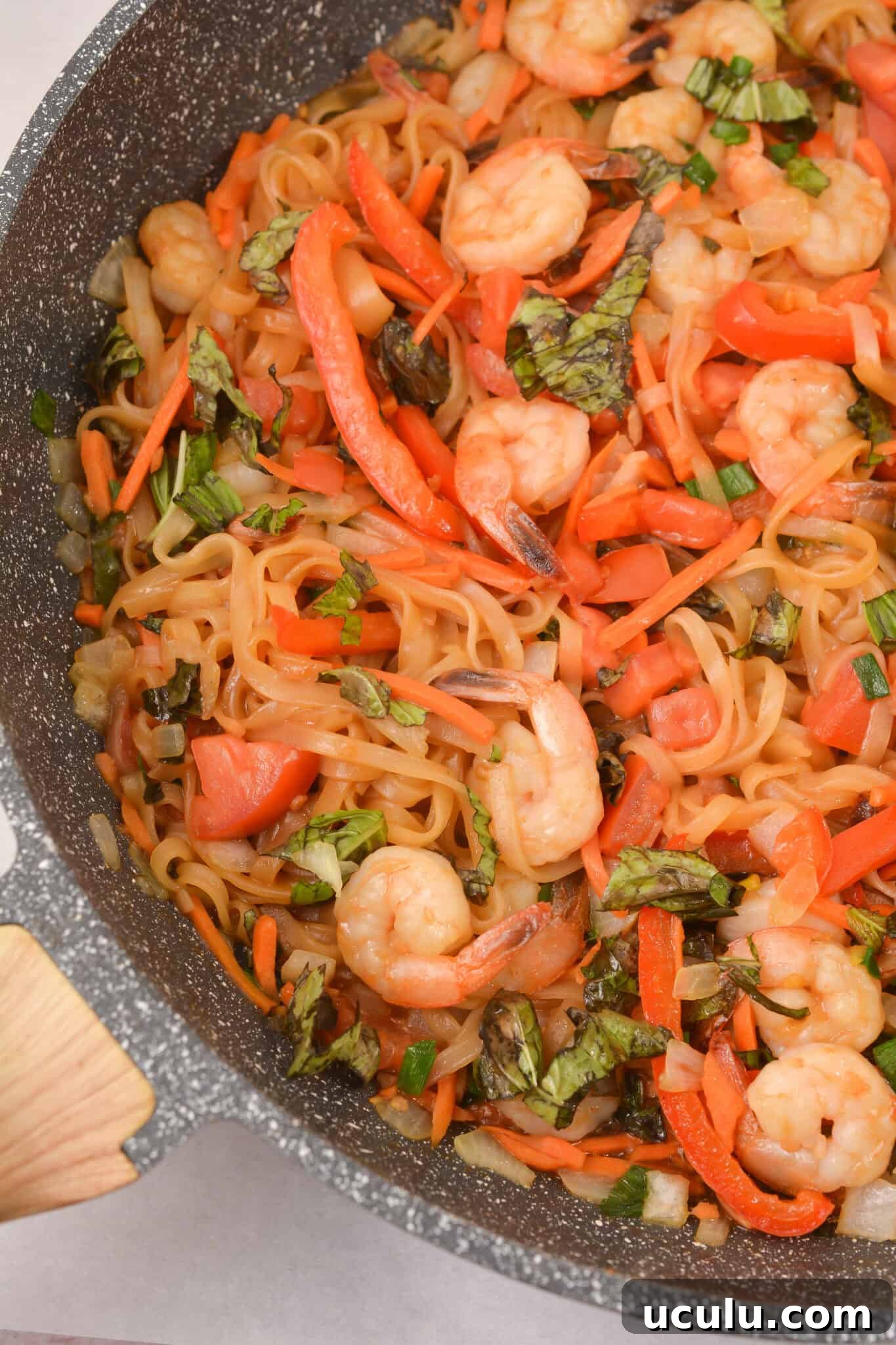
Why We Love This Thai Drunken Noodles with Shrimp Recipe
This dish is fast, flexible and family-friendly. It’s ideal for weeknights and easy to adapt to different dietary needs.
- 30-Minute Meal: Quick to prepare and cook, perfect for busy evenings.
- Family Friendly: The combination of tender shrimp, noodles and a well-balanced sauce appeals to a wide range of palates.
- Adaptable: Swap shrimp for tofu or vegetables for a meat-free option, or adjust noodles for a lower-carb choice.
Ingredient Notes for Pad Kee Mao Noodle Dish
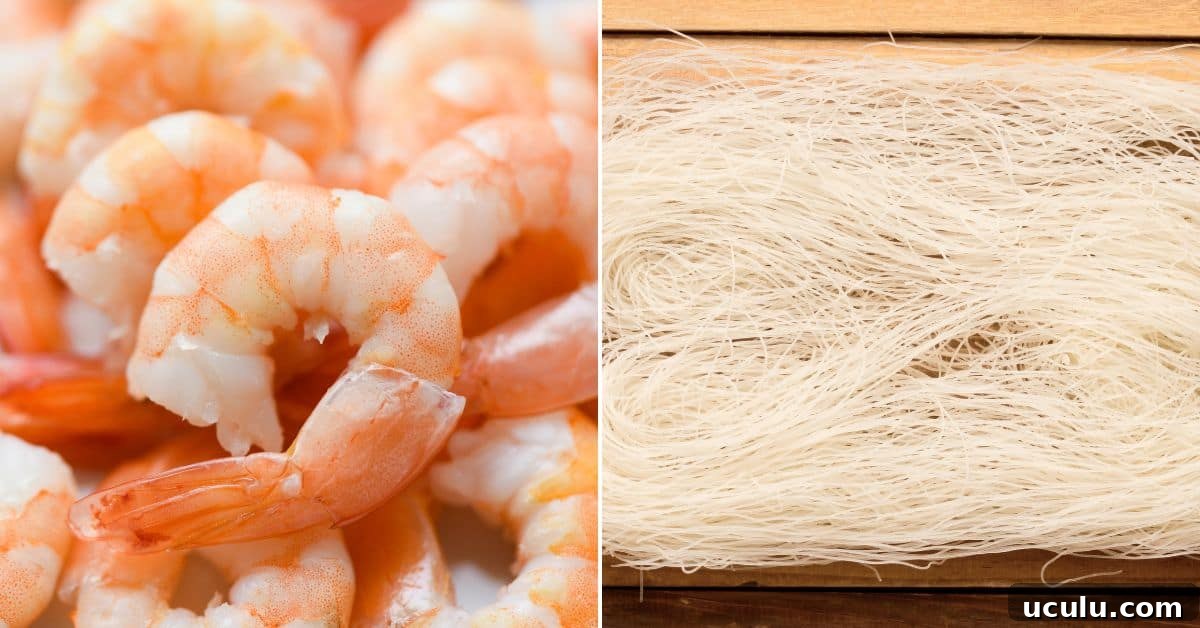
- Shrimp: Fresh shrimp work best. Peel and devein, leaving tails on or off as preferred.
- Rice Noodles: Wide rice noodles (pad Thai-style) give the classic chewy texture and soak up the sauce. Fresh or well-soaked dried noodles are recommended.
- Ginger Paste / Soy Sauce: Ginger paste adds warmth; if unavailable, use finely minced fresh ginger. Soy sauce provides essential umami—adjust saltiness to taste.
The recipe card below lists full ingredients and measurements.
Variations and Substitutions for Thai Drunken Noodles Recipe
Customize this recipe to match your preferences or pantry: add heat, switch proteins, or change cooking methods.
- Make it spicier: Increase fresh chilies, chili flakes or add a squirt of sriracha to taste.
- Protein swaps: Replace shrimp with diced chicken, pork, tofu or a mix of stir-fried vegetables for a vegetarian version.
- Cooking options: Grill the shrimp for a smoky touch or pan-sear them quickly in a hot skillet for caramelized flavor.
How to Make Drunken Noodles with Shrimp
This dish comes together in a few simple steps. Refer to the recipe card for exact quantities and timing.
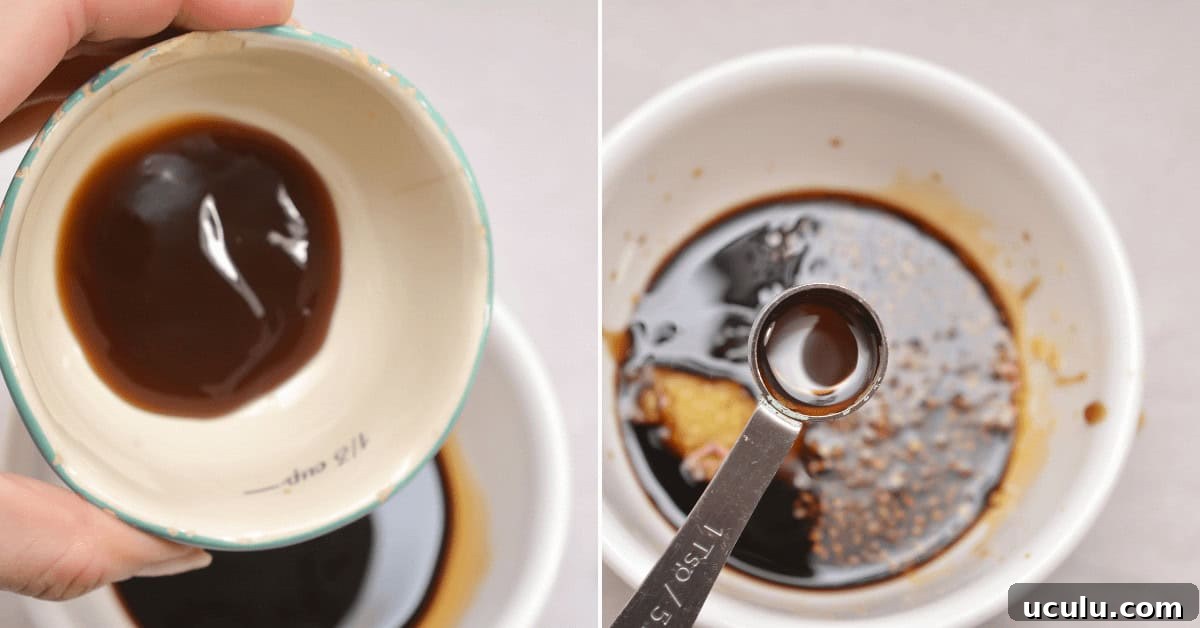
Step 1: Cook Noodles
Prepare the rice noodles according to package directions or until al dente. Rinse with cold water and drain thoroughly.
Step 2: Sauté Veggies and Shrimp
Heat oil in a skillet or wok over medium-high heat. Sauté chopped onion and bell pepper for about 2 minutes, then add shrimp and cook until opaque. Stir in tomatoes, carrots and green onions and cook another minute or two.
Step 3: Make Sauce
Whisk together soy sauce, oyster sauce, sesame oil, ginger and minced garlic in a small bowl until combined. Add red pepper flakes if you want heat.
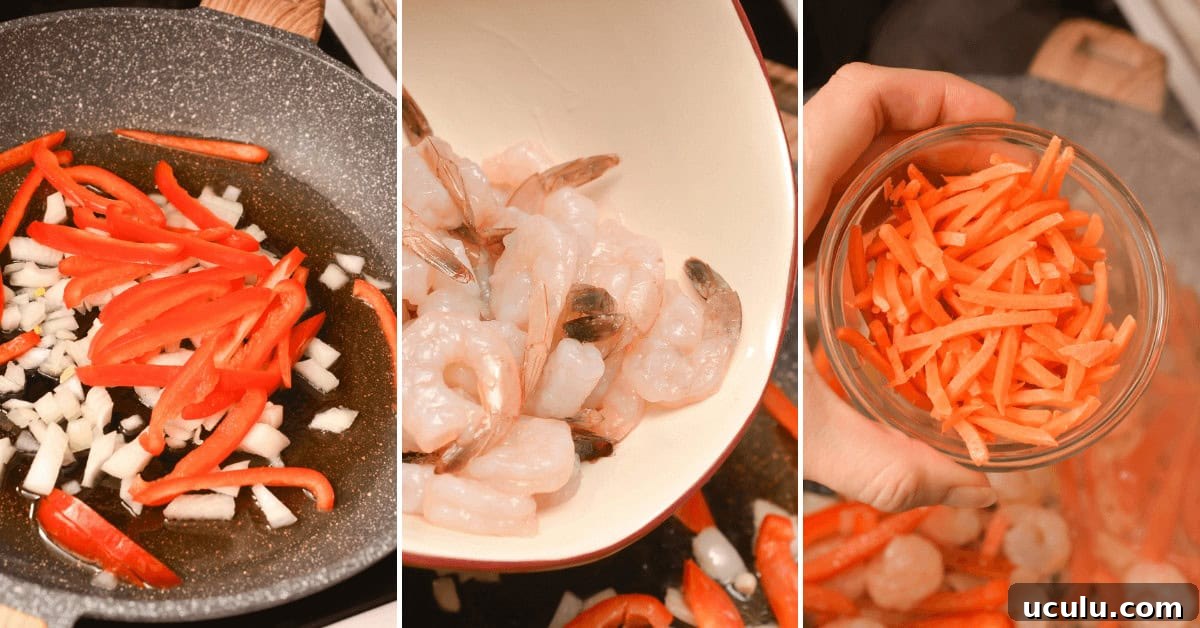
Step 4: Combine Noodles, Sauce and Veggies
Add the drained noodles to the skillet and toss to combine with the vegetables and shrimp. Pour the sauce over the noodles and toss until everything is evenly coated. Stir in chopped fresh basil right before serving and garnish with extra basil or lime wedges, if desired.
Recipe FAQs for Noodles with Shrimp
“Drunken noodles” is the English nickname for Pad Kee Mao, a spicy, aromatic Thai stir-fry. The name is traditional and the dish contains no alcohol; it’s known for bold, peppery flavors.
Yes—add more fresh chilies, red pepper flakes, or a dash of hot sauce while cooking or at the table.
No. Swap in tofu, chicken, pork or extra vegetables to suit dietary preferences.
Make a shallow cut along the back of the shrimp and lift out the dark vein with the tip of a knife or a deveining tool, then rinse under cold water.
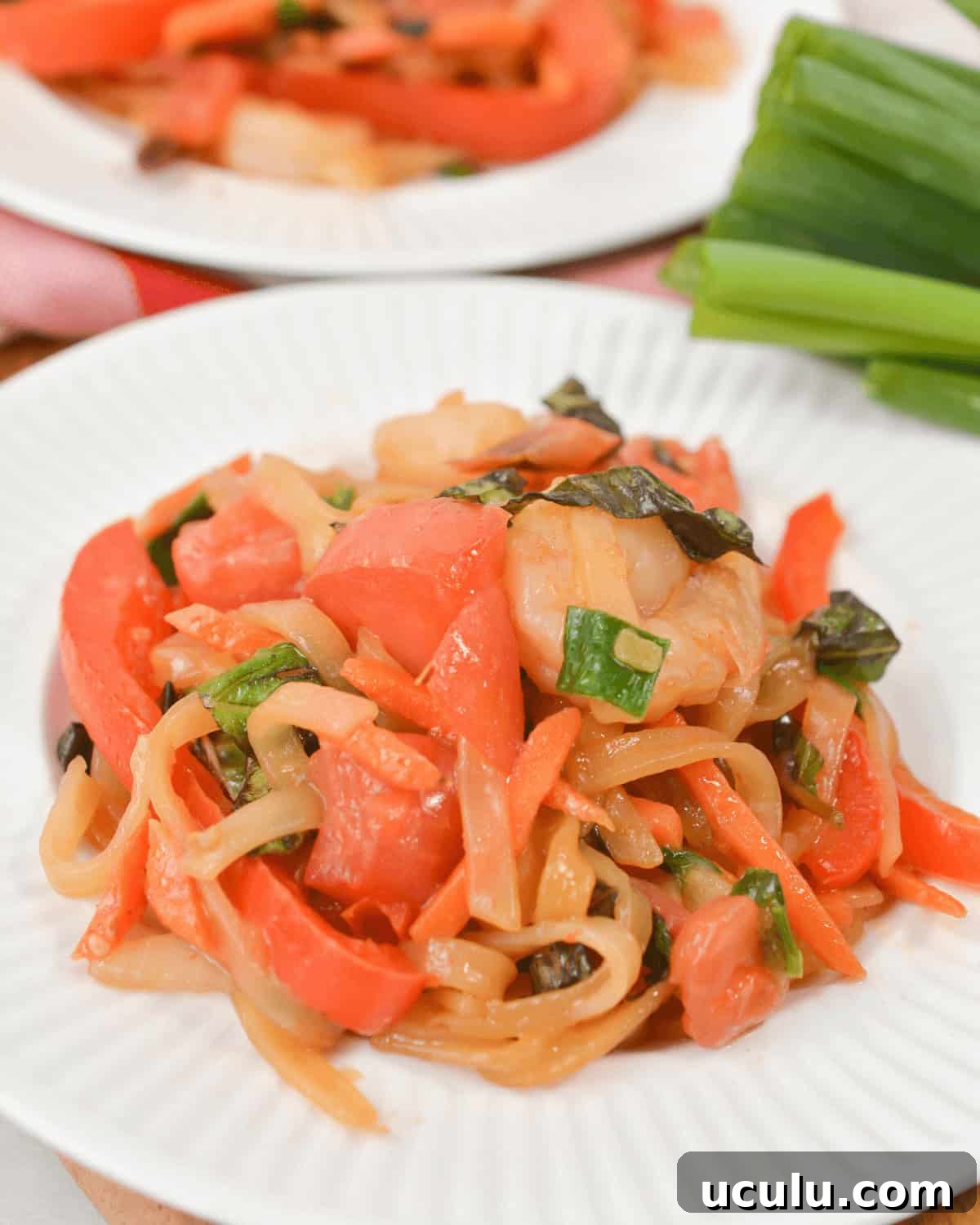
Expert Tips for Making This Spicy Thai Noodles Recipe
A few simple tips will help you get great results every time.
- Crispy pork or bacon: For extra richness, top the finished dish with crisp bacon or pan-seared pork belly.
- Lime wedges: A squeeze of fresh lime brightens and balances the flavors—serve on the side.
- Veggie variations: Add broccoli, snap peas, mushrooms or baby corn for more texture and color.
- Key flavors: Fish sauce, Thai basil and a touch of dark soy sauce deepen the authentic profile.
What to Serve with Shrimp Drunken Noodles
- Light, crunchy salads or pickled vegetables
- Steamed or stir-fried greens such as bok choy or Chinese broccoli
- Simple appetizers like spring rolls or shrimp skewers
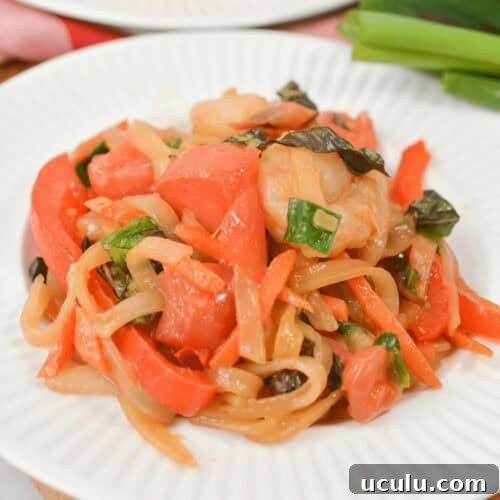
Shrimp Drunken Noodles
Equipment
- Skillet or wok
- Small bowl
- Shrimp deveiner or small knife
- Chef’s knife and cutting board
- Measuring spoons and cups
Ingredients
- 8 ounces wide rice noodles
- 12 ounces shrimp, peeled and deveined
- 2 tablespoons olive oil
- 1/2 cup chopped onion
- 1 red bell pepper, sliced
- 1 Roma tomato, chopped
- 1/2 cup matchstick carrots
- 1/4 cup chopped green onions
- 1/2 cup fresh basil, chopped
Sauce
- 2 teaspoons minced garlic
- 1 teaspoon ginger paste (or minced fresh ginger)
- 1 teaspoon sesame oil
- 1/4 cup soy sauce
- 2 tablespoons oyster sauce
- Red pepper flakes, optional
Instructions
- Prepare the rice noodles according to package directions, rinse with cold water and drain well.
- Heat oil in a skillet over medium-high heat.
- Sauté chopped onion and bell pepper for about 2 minutes.
- Add shrimp and cook until opaque and just cooked through.
- Add tomatoes, carrots and green onions and cook another minute or two.
- Whisk together minced garlic, ginger paste, sesame oil, soy sauce and oyster sauce in a small bowl.
- Add drained noodles to the skillet and toss with the vegetables and shrimp.
- Pour the sauce over the noodles, toss to coat evenly, then stir in chopped basil.
- Serve immediately with extra basil or lime wedges, if desired.
Notes
- Add bacon or pork belly: Crisped and crumbled over the finished dish adds richness.
- Lime wedges: A squeeze of fresh lime brightens the flavors.
- Vegetable swaps: Broccoli, snap peas, mushrooms or baby corn make great additions.
Nutrition
Carbohydrates: 53 g
Protein: 7 g
Fat: 9 g
Sodium: 1083 mg
The nutritional information is an estimate. Verify with your own trusted resource if needed.
This recipe is an adapted, accessible version inspired by Thai flavors rather than an attempt at strict authenticity. It’s designed to be approachable while encouraging experimentation with ingredients and techniques.