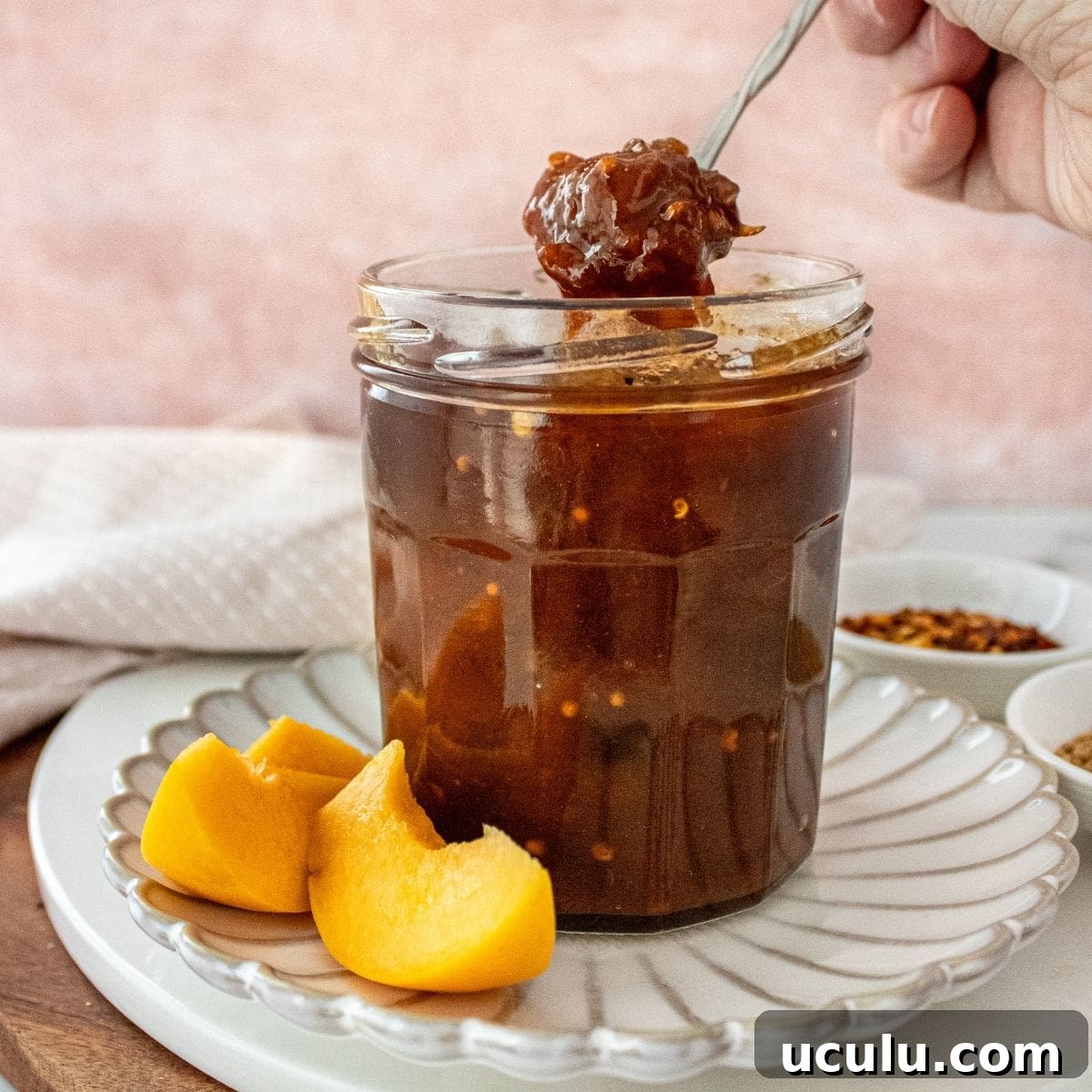
You’ll be pleased to find how simple it is to make your own Apricot Chutney. This is one of my favourite ways to preserve the sweet, fragrant flavour of apricots so you can enjoy it after the season ends. If you haven’t made chutney before, give this easy-to-follow recipe a try. The result is tangy and fruity, with the apricot sweetness balanced by warming spices.
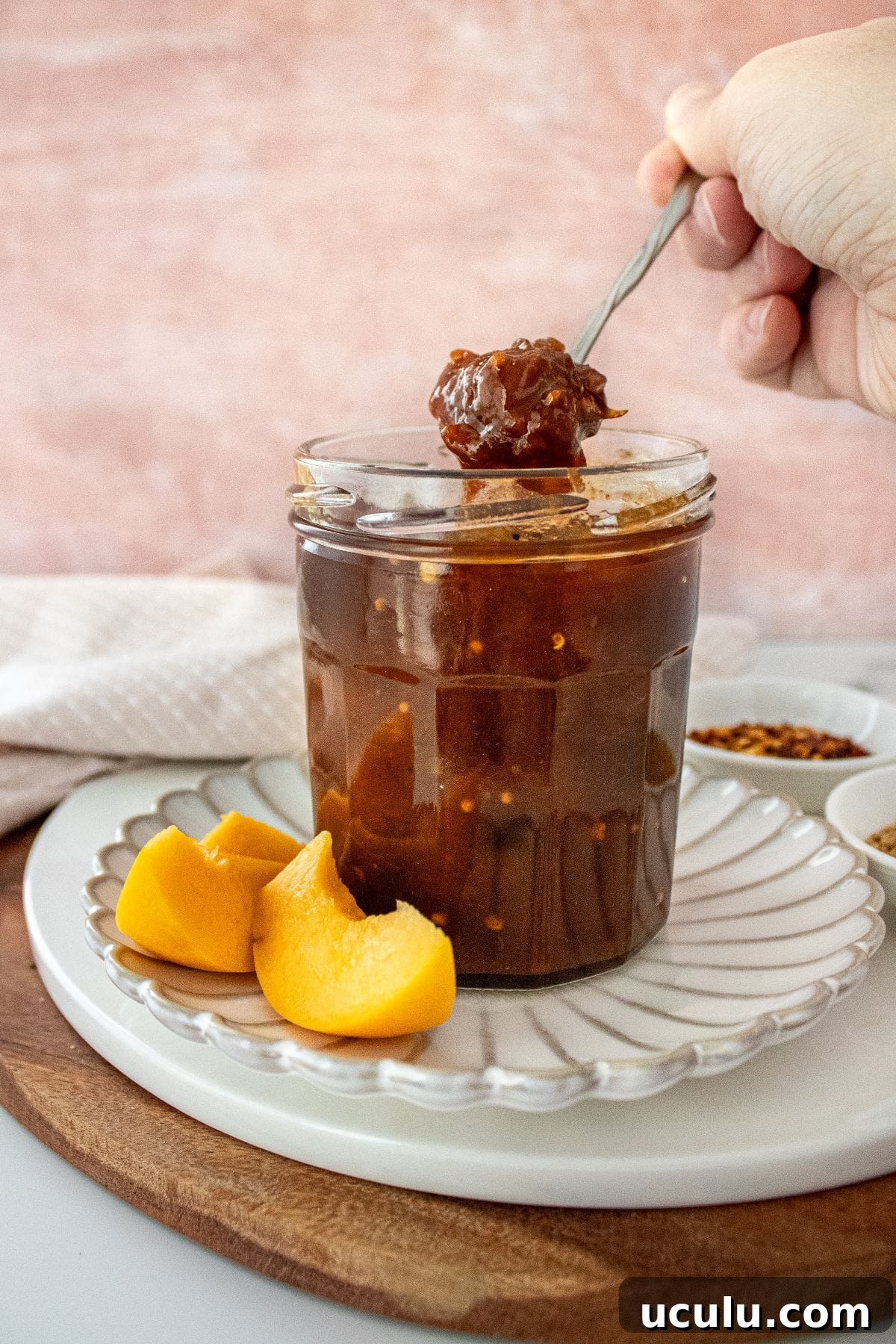
Why You’ll Love This Recipe:
- Very easy to make: combine the ingredients in a saucepan, bring to the boil and simmer, stirring occasionally — it really is that simple.
- Full control of ingredients: homemade chutney avoids artificial colours, flavours and preservatives — just natural ingredients you choose yourself.
- A great way to use fresh produce: preserves like this become a favourite method for enjoying seasonal fruit later in the year.
- Shelf stable when prepared correctly: if jars are sterilised and sealed properly, the chutney will remain shelf-stable for up to nine months.
- Versatile condiment: chutney enhances many dishes, adding sweet, spicy and tangy notes.
Recipe Inspiration: this apricot chutney is adapted from a peach chutney I love and is a delicious alternative to my apricot jam — a different way to enjoy the fruit while it’s abundant.
Ingredients and Substitutions:
See the recipe card below for exact quantities and the full method.
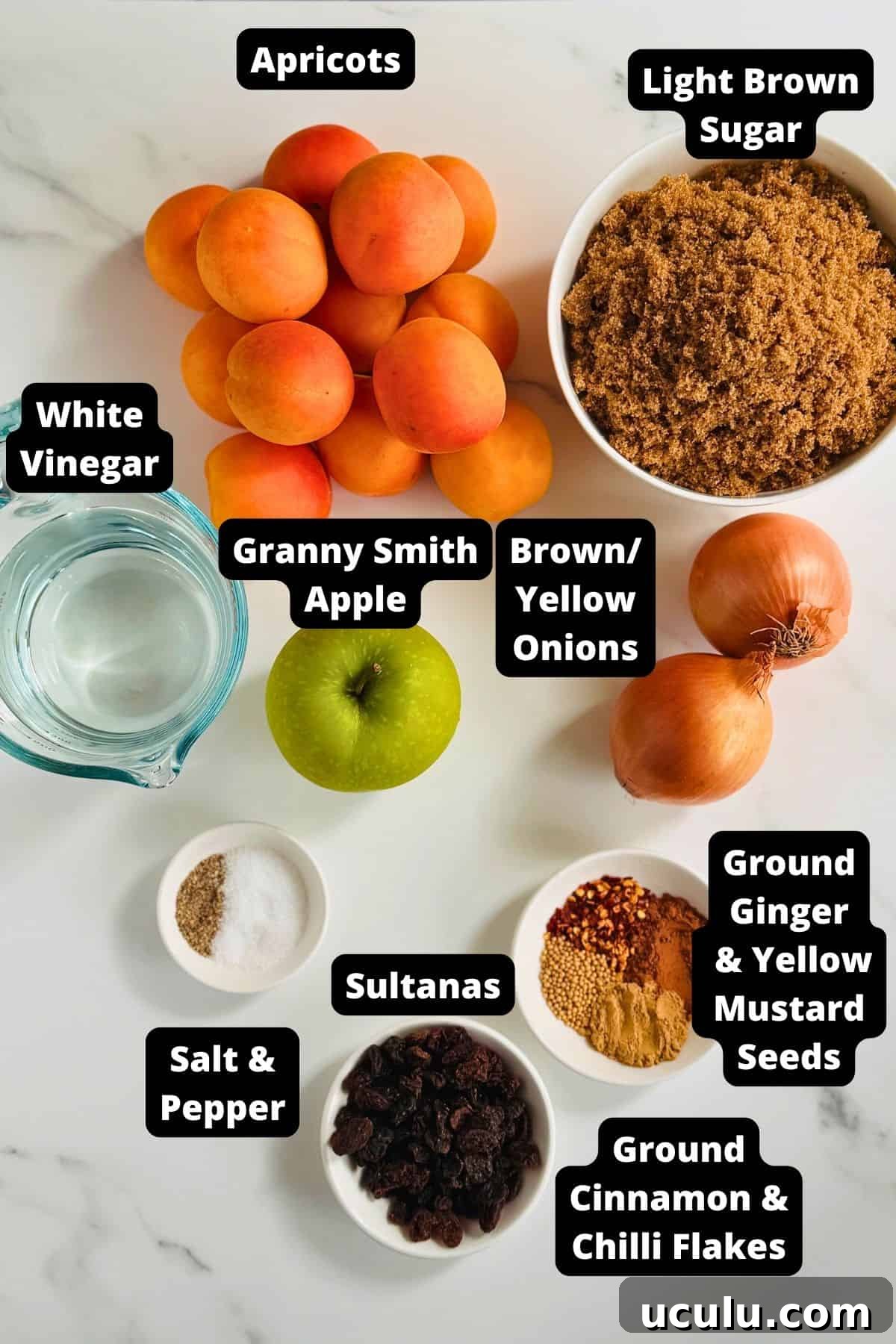
- Apricots: choose ripe, fragrant, plump fruit that yields slightly to pressure. Apricots are freestone, so the stone should come away easily.
- Brown/yellow onions: the usual choice, but white or red onions work too. They add both sweet and savoury notes.
- Apple: a tart cooking apple such as Granny Smith works well, but use another variety if you prefer.
- Vinegar: white vinegar at 5% acidity is used here; it’s the main preserving agent.
- Light brown sugar: adds sweetness and a gentle caramel depth.
- Ground black pepper: adds warmth and complexity.
- Yellow mustard seeds: these provide a bright, tangy note; swap for brown seeds if you like extra heat.
- Sea salt: use coarse kitchen salt to lift flavours; avoid fine table salt that often contains additives.
- Dried chilli flakes: for a touch of heat — increase if you prefer a spicier chutney.
- Ground cinnamon and ginger: these spices add warmth, aroma and balance.
Variations:
Mustard seeds: use brown mustard seeds for a spicier note.
Fruit mix: if you don’t have quite enough apricots, add peaches or nectarines to make up the weight. Plums also work well in a similar chutney.
Spices: consider adding star anise, a pinch of ground cloves, or fresh chilli for a different flavour profile.
How To Make Apricot Chutney:
See the recipe card below for exact quantities and the full cooking method.
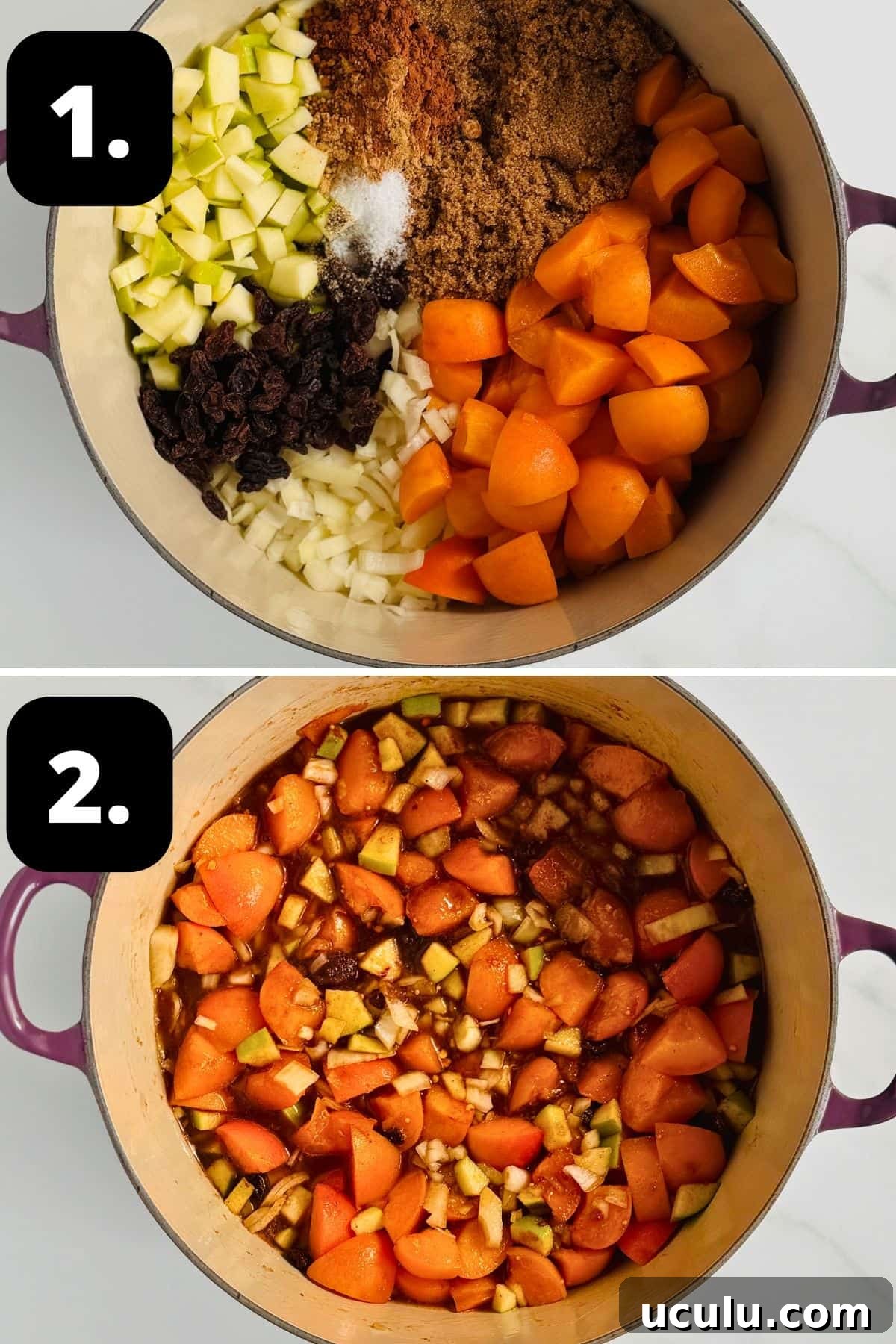
1 – Add the ingredients to a large pot:
Place all prepared ingredients into a large, non-reactive saucepan.
2 – Stir to combine:
Stir over medium-high heat until the sugar dissolves and the mixture comes to the boil.
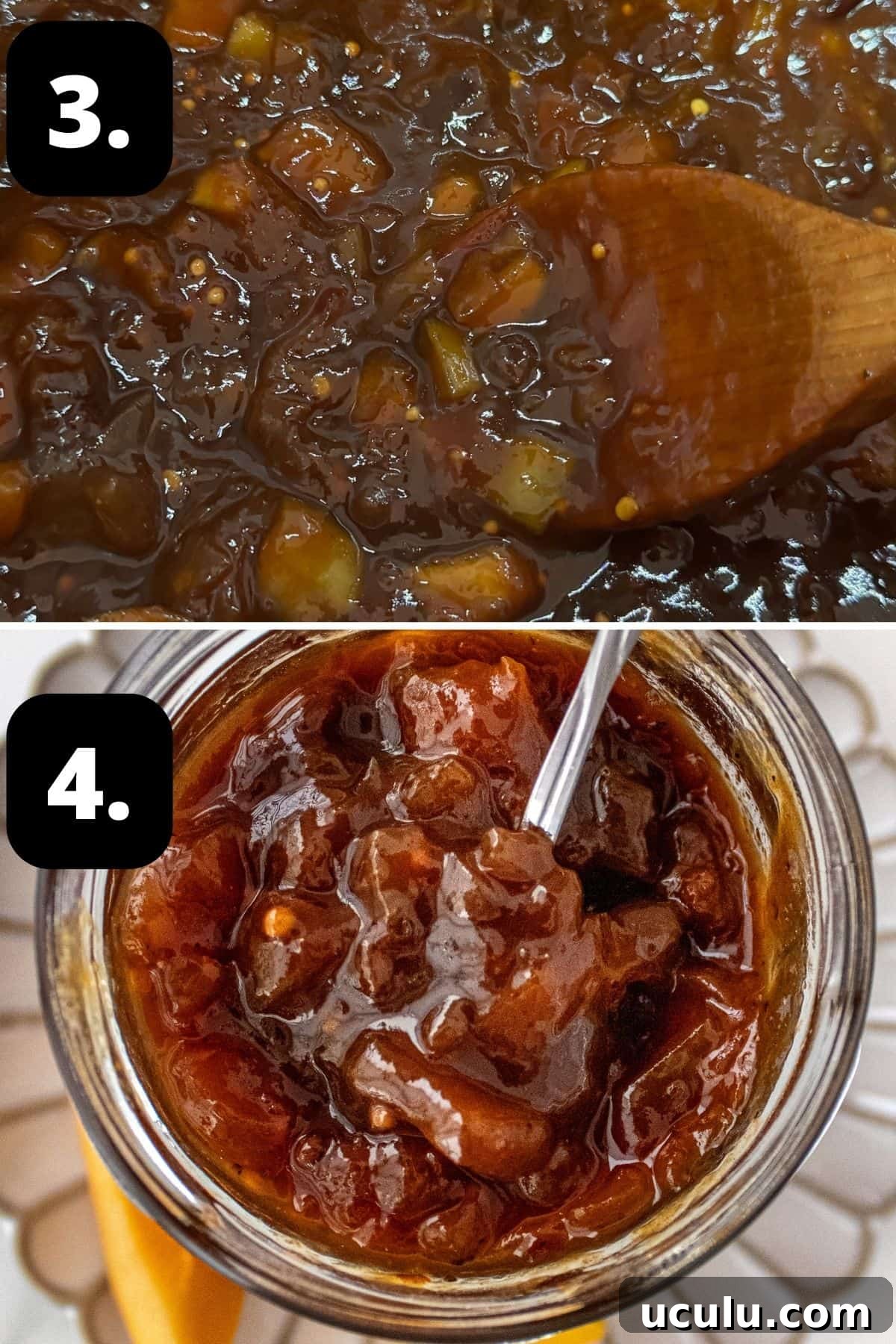
3 – Cook the chutney:
After boiling, reduce to a simmer and cook for about 40–45 minutes, stirring regularly to prevent sticking. The mixture should reduce and thicken; test readiness by drawing a wooden spoon across the surface — if the gap doesn’t immediately fill, the chutney is ready.
4 – Jar while hot:
Remove from the heat and let stand for 10 minutes before spooning into hot sterilised jars. Seal immediately while jars are still warm.
Hint: once jars have cooled, label them with the name and date — this helps when you make multiple preserves.
Tips for Success, Storage and FAQs:
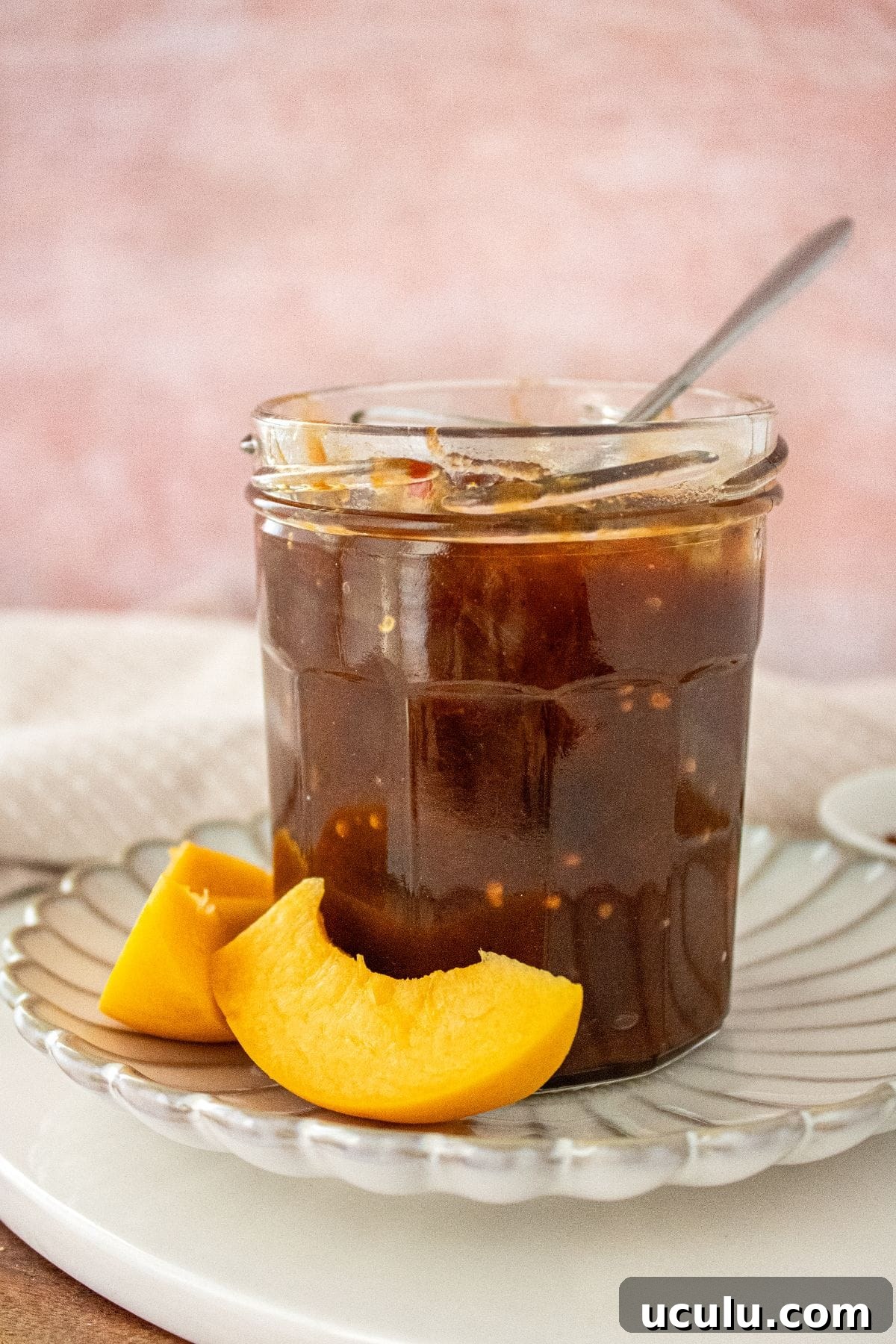
When prepared and sealed correctly in sterilised jars, the chutney is shelf-stable for up to nine months.
Unopened jars should be kept in a cool, dark, dry place. Once opened, refrigerate and always use a clean spoon to avoid contamination.
No, peeling is unnecessary — the skins break down during cooking.
You can taste it once cool, but the chutney improves if left at least one week — ideally two to four weeks — so the flavours meld and the vinegar softens.
Top Tip:
Stir regularly while simmering to prevent the chutney from catching and burning on the bottom of the pan. Use a long-handled wooden spoon and take care as the mixture can bubble and spit as it thickens.
Serving Suggestions:
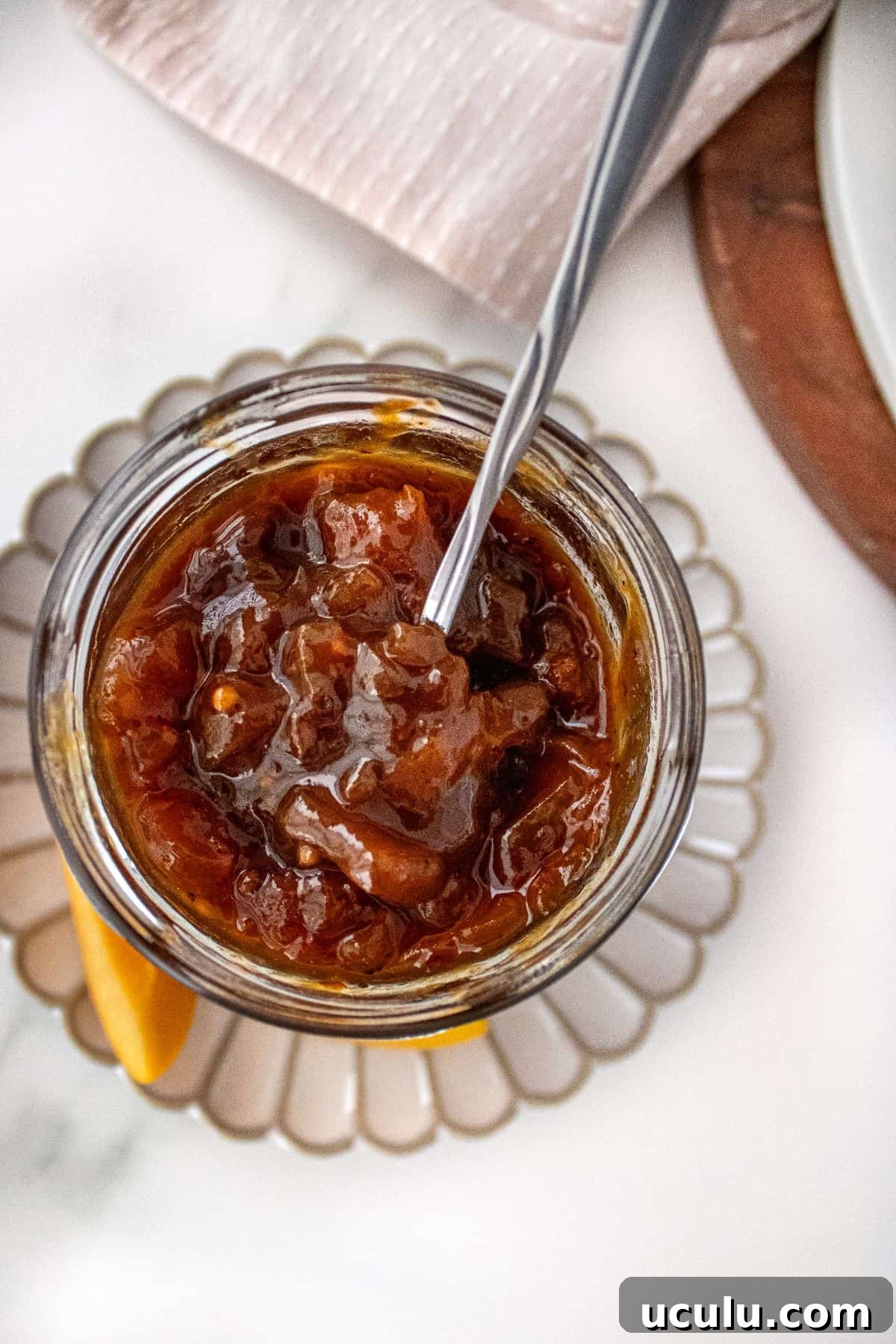
This vibrant, tangy chutney is very versatile. Popular pairings include:
- With chicken — works beautifully as a condiment alongside roasted or grilled chicken.
- On a cheeseboard — pairs well with strong cheddar or soft goat cheese.
- As a sandwich spread — mix into mayonnaise for a tasty ham or chicken sandwich filling.
- At barbecues — a great accompaniment to a variety of grilled meats.
- As a glaze — use to finish a meatloaf or roast for added sweetness and tang.
- Gifts — jarred and tied with a ribbon makes a thoughtful homemade present.
I hope this family favourite inspires you to try making chutney — it’s simple, rewarding and delicious. I’d love to hear how you enjoy it.
Alex xx
More Delicious Recipes For You To Try:
-
Nectarine Chutney
-
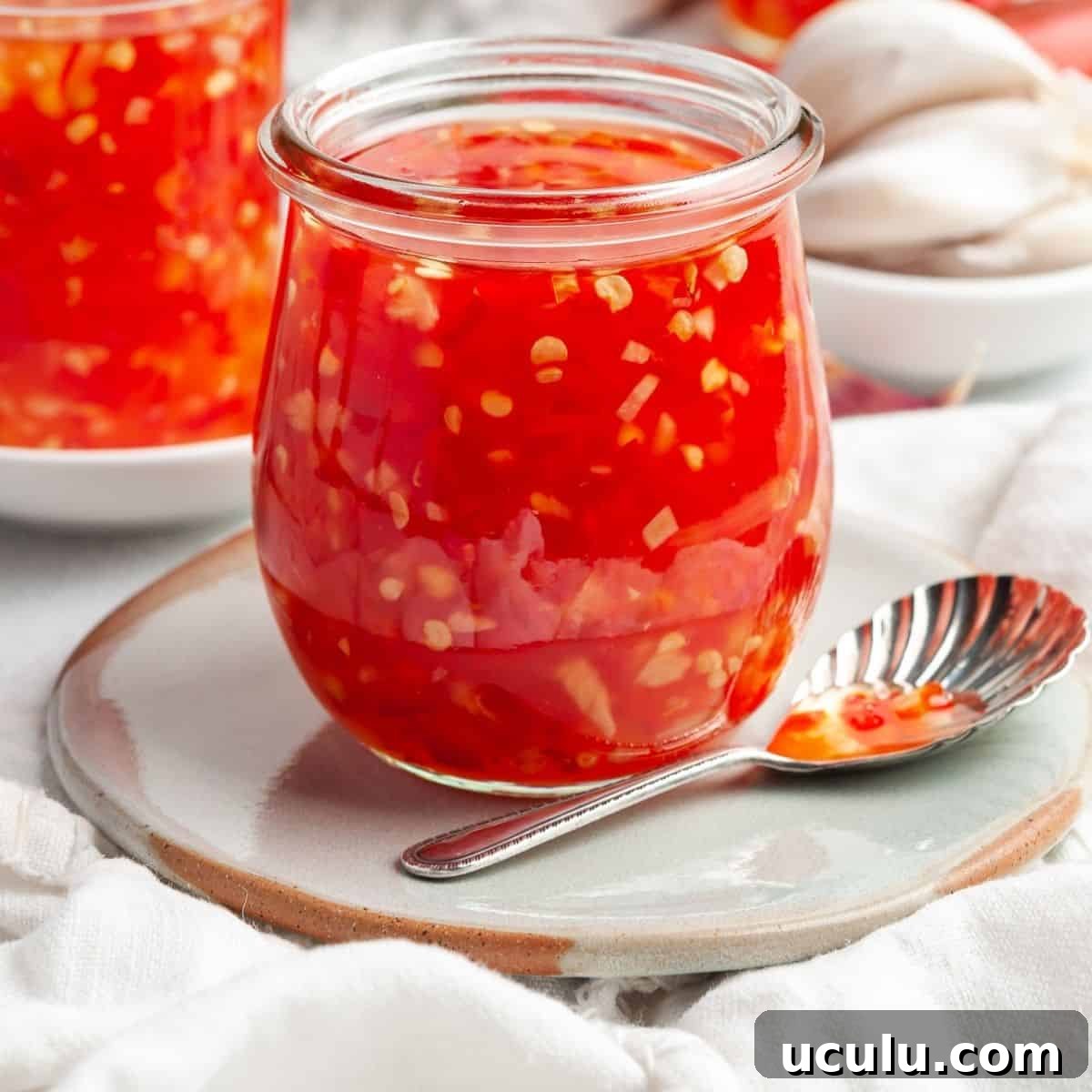
Sweet Chilli Sauce
-
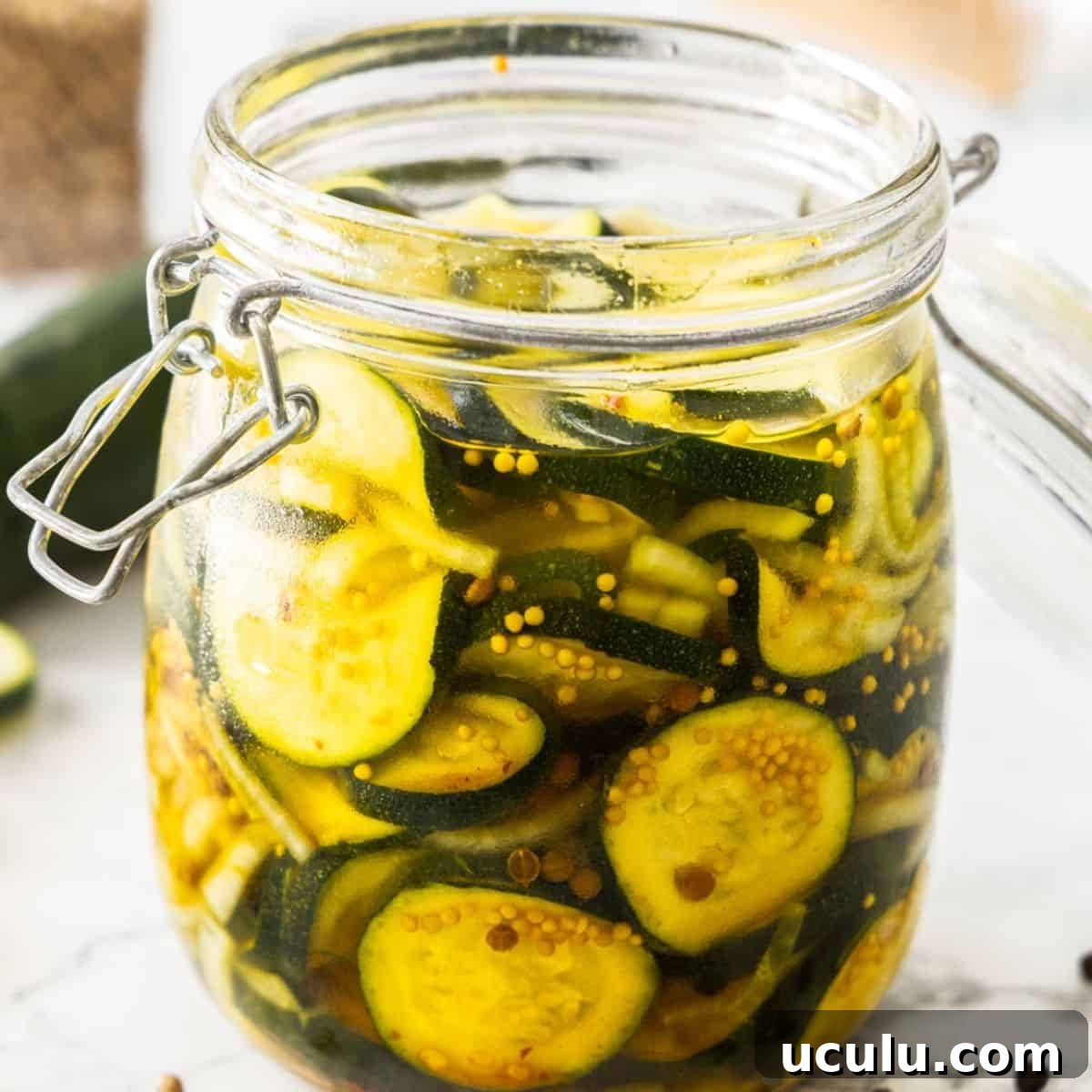
Pickled Zucchini
-
Easy Peach Jam
Stay in touch!
Subscribe to the newsletter or follow on social channels to get more recipes and updates.
Apricot Chutney
Print
Pin
Review
Remove Ads
Please note:
For accuracy, when weights are provided, we recommend weighing ingredients. This produces the best results.
Ingredients
- 1 kg (2.2 lb) apricots – prepared weight, stones removed
- 500 g (2 ½ cups) light brown sugar
- 450 ml (1 ¾ cups + 2 tsp) white vinegar – 5% acidity
- 2 medium brown/yellow onions – finely chopped
- 1 large Granny Smith apple – unpeeled and diced
- 60 g (⅓ cup) sultanas/golden raisins
- 1 teaspoon ground black pepper
- 1 ½ teaspoon sea salt
- 1 teaspoon yellow mustard seeds
- ½ teaspoon red chilli flakes
- 1 ½ teaspoon ground cinnamon
- 1 ½ teaspoon ground ginger
Instructions
To Sterilise the Jars:
-
Wash jars and metal lids in hot soapy water and rinse well. If lids have rubber inserts, allow them to air dry rather than using the oven. Preheat the oven to 130°C (270°F), place jars inside for 15–20 minutes and keep them warm until ready to fill.
For the Apricot Chutney:
-
Halve the apricots, remove pits and trim any blemishes. Cut each half into quarters or smaller pieces if needed.
-
Place the prepared apricots and all remaining ingredients into a large non-reactive saucepan. Stir over medium-high heat until the sugar dissolves.
-
Bring to the boil, then reduce to a simmer and cook for 40–45 minutes, stirring regularly. The chutney is ready when the mixture has thickened and a gap left by a wooden spoon does not immediately fill.
-
Take care as the mixture reduces — it can bubble and spit. Wear long sleeves and use a long-handled wooden spoon for safety.
-
Remove from heat and let stand 10 minutes, then spoon the chutney into hot sterilised jars and seal immediately.
-
When jars are cool, clean any spills, label with name and date, and store in a cool, dark place. Allow the chutney to mature for at least one week (two to four weeks is ideal) before regular use. Refrigerate after opening and always use a clean spoon.
Notes
- Apricots: weigh the fruit after removing stones and blemishes for accurate quantities. Choose ripe, plump fruit without excessive green colour or shrivelling.
- Non-reactive pans: use stainless steel, enamel, ceramic or glass cookware. Avoid copper, iron or aluminium with acidic foods to prevent off-flavours and discolouration.
- Maturing: chutney made with vinegar benefits from resting one to four weeks so flavours blend and the vinegar mellows.
- Storage: when jars are properly sterilised and sealed this chutney will keep up to nine months in a cool, dark place. Refrigerate after opening. This recipe was not designed as a tested canning method; consult official canning guidelines if you require long-term shelf-stable canning procedures.
- Nutritional information: nutritional figures are estimates based on the recipe and provided as a guide only.
Leave a comment and rating
Nutrition Estimate:
Nutritional Disclaimer:
The nutritional information is an estimate only and is derived from online calculators. For precise results, calculate nutrition based on the specific ingredients and brands you use.