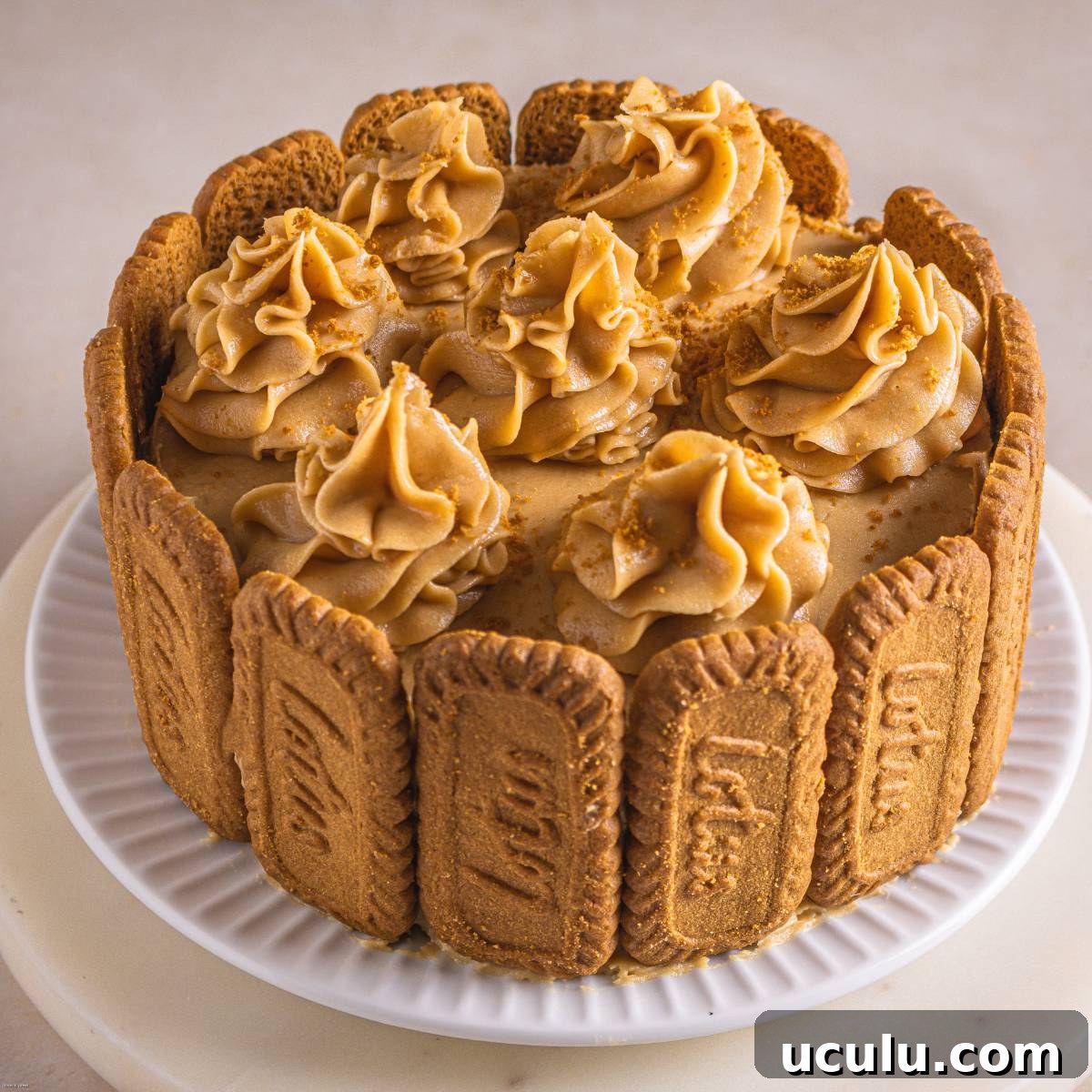
Craving something sweet? Indulge in this decadent Lotus Biscoff cake finished with a silky buttercream frosting. Each bite combines caramelized, nutty cookie butter with a light sponge and creamy frosting for a dessert that’s hard to resist.
The cake features an aromatic sponge and a smooth, pipeable buttercream—perfect for birthdays, gatherings, or a special treat. Serve a slice with a Biscoff milkshake for an extra indulgence.
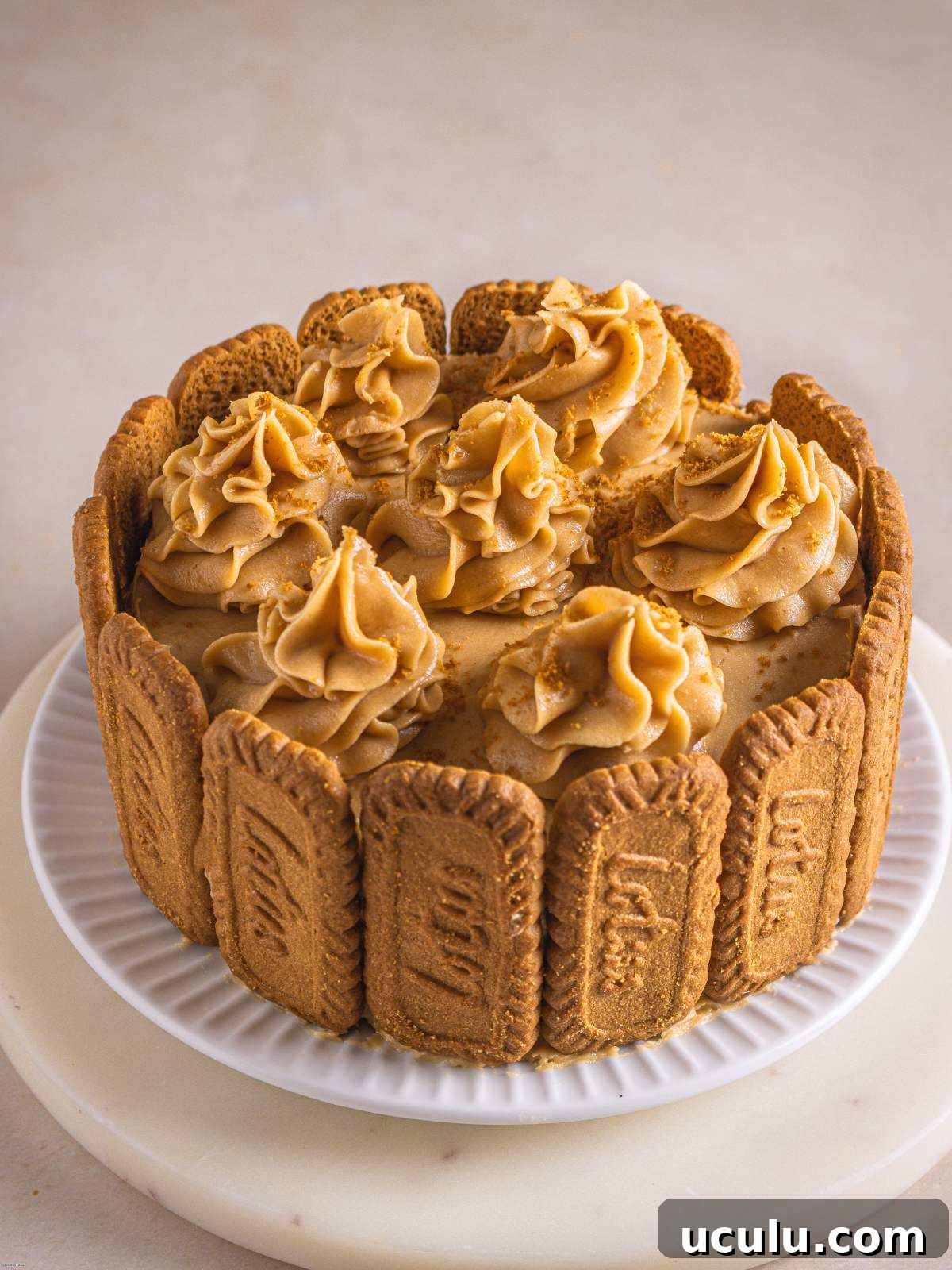
Reasons to Love This Lotus Biscoff Cake
Easy to make: Clear, step-by-step directions make this recipe approachable for beginners and rewarding for experienced bakers.
Versatile: Bake it as rounds, a sheet, or in mini pans—use the pan size you prefer and adjust baking time accordingly.
Balanced sweetness: The buttercream is lightly sweetened so the cookie butter’s caramel notes shine through.
Simple assembly: While shown as a layered cake, you can skip layers and spread the frosting on top for a quick finish.
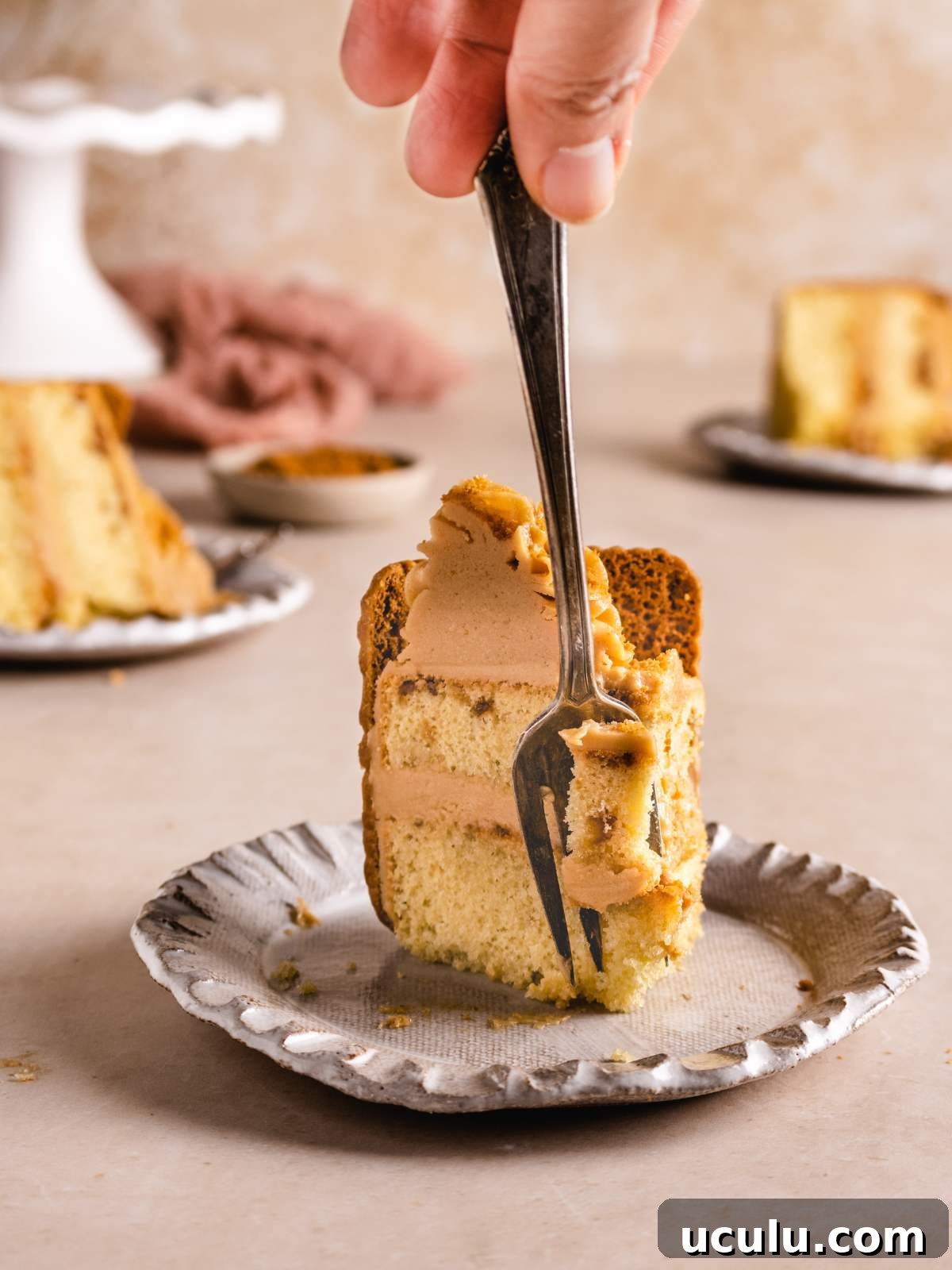
If cookie butter is new to you, beware—you may become hooked. If you enjoy this cake, try cookie butter in ice cream or milkshakes next.
Ingredient Notes
Key ingredients that make this cake special:
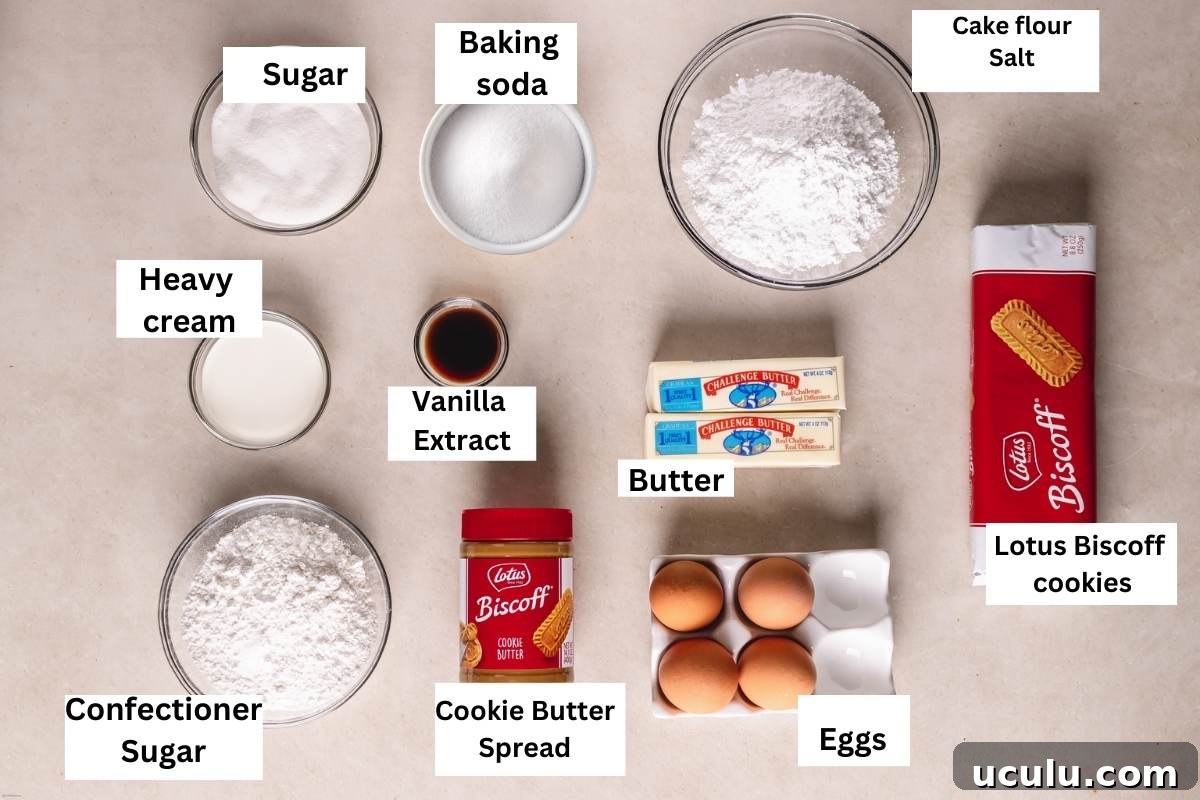
Cake flour: Produces a lighter, more tender sponge than all-purpose flour.
Eggs: Room-temperature eggs whip better, trapping air that gives the sponge its lift and light texture.
Sugar: Fine granulated sugar dissolves easily and helps create an airy batter when beaten with eggs.
Butter: Adds richness, moisture, and structure to the buttercream.
Cookie butter: Brings the signature caramelized, spiced flavor and helps create a silky, easily piped frosting.
See the recipe card below for the full ingredients list and exact measurements.
Step-by-Step Instructions
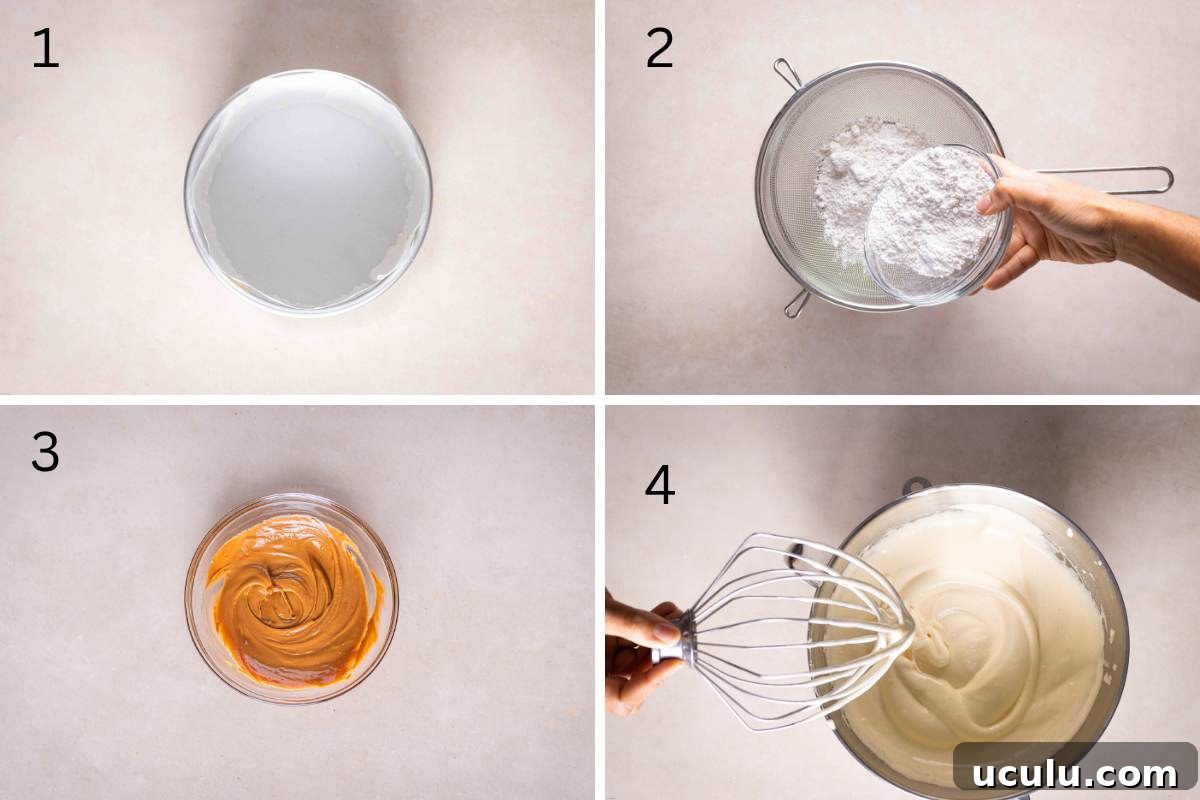
Step 1: Preheat oven to 350°F. Spray a 6″ round pan with baking spray and line with parchment.
Step 2: Sift cake flour, baking soda, and salt into a bowl and set aside.
Step 3: Warm the cookie butter in the microwave for about 30 seconds, stir, and let cool slightly.
Step 4: In a stand mixer fitted with the whisk, beat the room-temperature eggs on high. Gradually add sugar and continue beating until pale, thick, and ribbon-like (about 8–9 minutes).
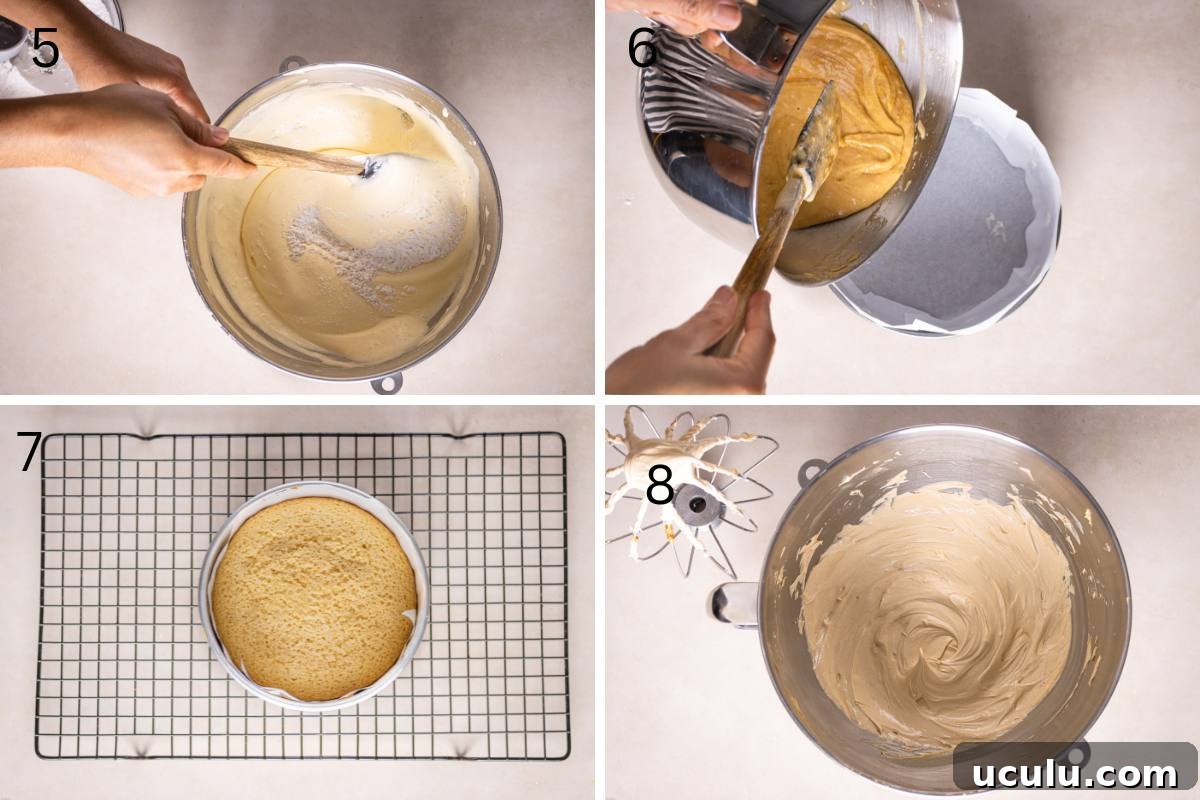
Step 5: Fold the sifted flour into the whipped eggs in three additions using a spatula. Cut through the center, lift, scrape the sides, and fold until just combined.
Step 6: Fold in the cooled cookie butter until evenly incorporated. Pour batter into the prepared pan and bake for 25–30 minutes or until a toothpick comes out clean.
Step 7: Cool the cake in the pan on a wire rack for 10 minutes, then remove and cool completely before slicing and frosting.
For the buttercream:
Step 8: Beat softened butter and cookie butter in a stand mixer until light and fluffy.
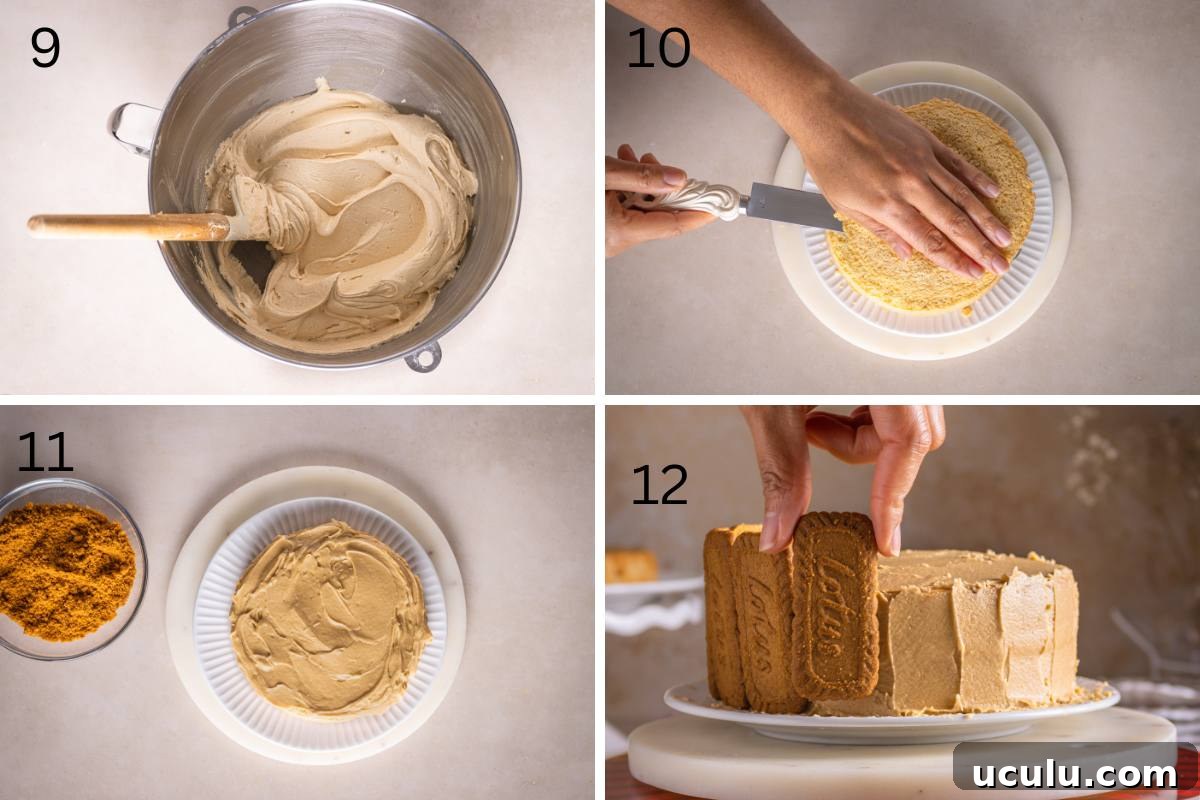
Step 9: Gradually add confectioners’ sugar while mixing on medium-low. Add milk or cream a tablespoon at a time until you reach the desired consistency, then add a pinch of salt.
Step 10: Level the cake and cut it horizontally into two equal layers.
Step 11: Spread about 1/2 cup of buttercream on the bottom layer, top with the second layer (crumb side down), and frost the outside.
Step 12: Press whole Biscoff cookies around the cake’s sides so they sit snugly together.
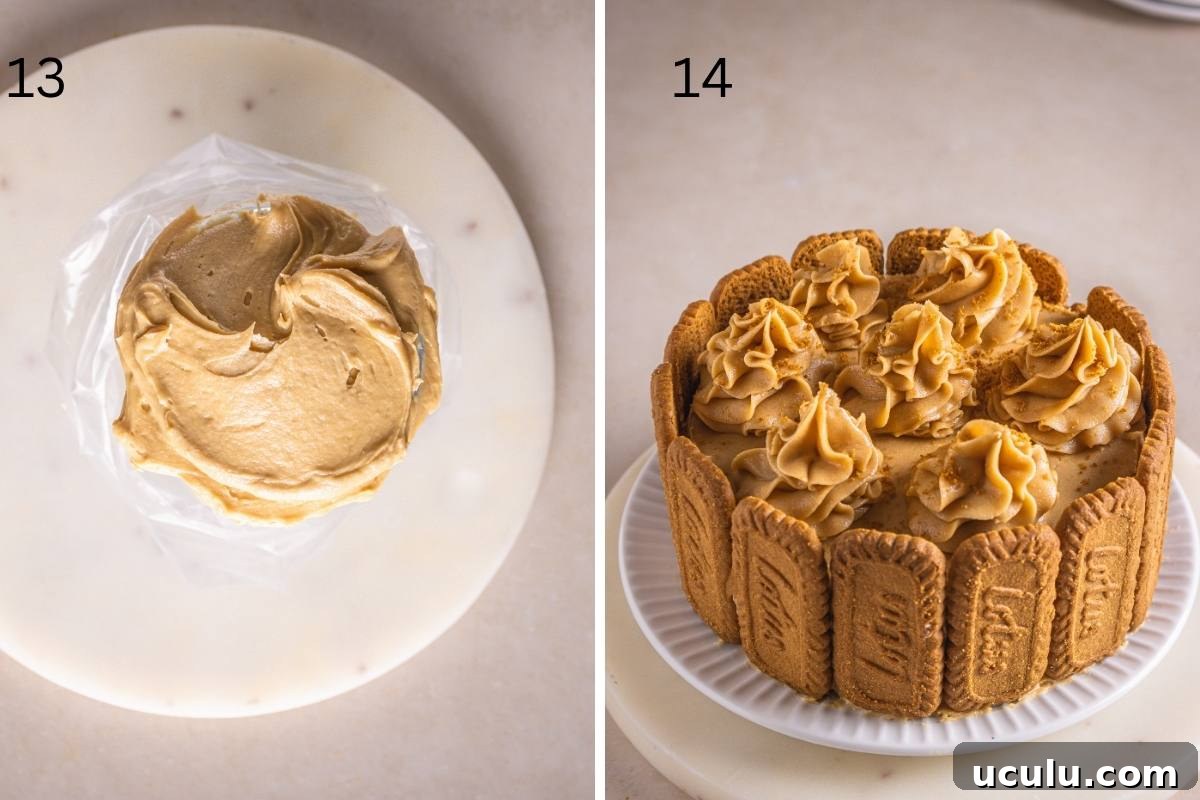
Step 13: Fit your piping tip and fill a piping bag with buttercream.
Step 14: Pipe decorative swirls or rosettes on top and finish with Biscoff crumbles.
Expert Tips
- Warm the cookie butter briefly to make it more blendable into the buttercream for a smoother texture.
- Bake the batter as soon as it’s mixed; letting it sit can reduce rise.
- A stand mixer whips the eggs faster and more consistently than a hand mixer.
- Fold gently—overmixing deflates the batter and yields a dense cake.
- Don’t open the oven during the first 20 minutes to avoid sinking the cake.
- If you want a firmer frosting for piping, add an extra ¾–1 cup of confectioners’ sugar.
- If the buttercream becomes airy or bubbly, stir it gently with a spatula to smooth it out.
- For a simpler finish, create swirls with a spatula instead of adding cookie edges.
- Add crumbled cookies into the frosting or incorporate crushed cookies into the dry ingredients for extra texture and flavor.
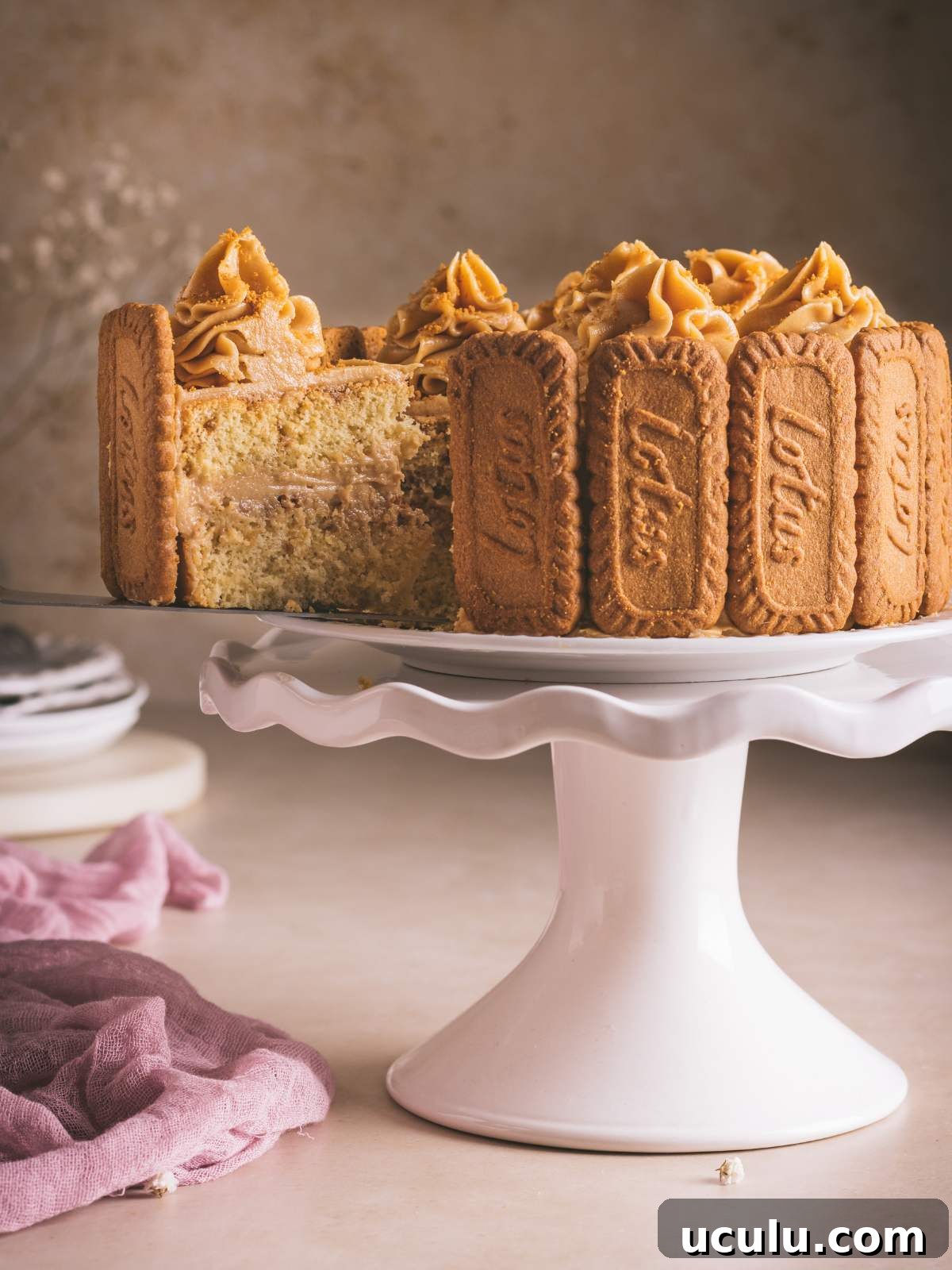
How to Store
Store the cake in the refrigerator covered to keep the sponge from drying out. For longer storage, wrap tightly in plastic or foil and place in an airtight container. Before serving, bring slices to room temperature for 30–60 minutes so the frosting softens. Individual slices can be wrapped and frozen for up to three months; thaw in the fridge or at room temperature overnight.
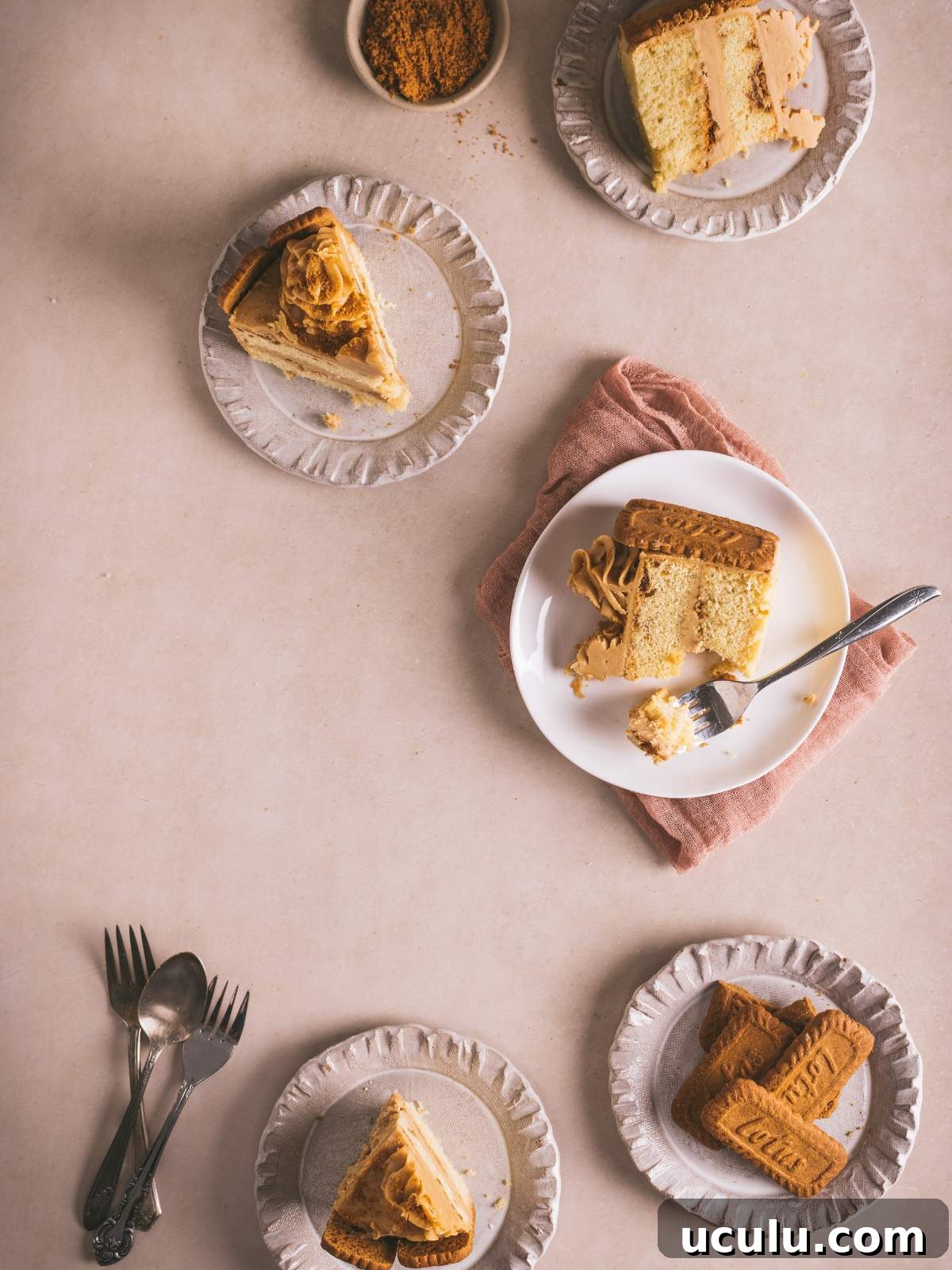
Recipe FAQs
Yes. Store the buttercream in an airtight container, pressing plastic wrap onto the surface to prevent a crust. Refrigerate up to one week or freeze up to one month. Thaw in the refrigerator and re-whip or stir before using; adjust with a little milk or powdered sugar if needed.
Absolutely. Add cocoa, chocolate chips, or a hint of espresso to complement the Biscoff flavor, or swap the frosting for vanilla or cream cheese variations.
Yes. Two 6″ pans work well for even layers. Use two 8″ pans for a wider, shorter cake but expect different baking time and slightly reduced height.
A Lotus Biscoff cake incorporates Lotus Biscoff spread or cookies into the batter and/or frosting, delivering caramelized, spiced flavor and a tender crumb.
Other Desserts to Try
-
Blueberry Cottage Cheese Muffins
-
Apple Pie With Canned Filling
-
Cinnamon Roll With Apple Filling
-
Pineapple Coconut Popsicles
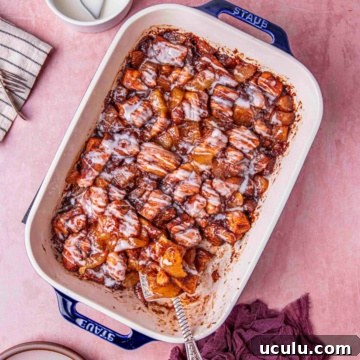
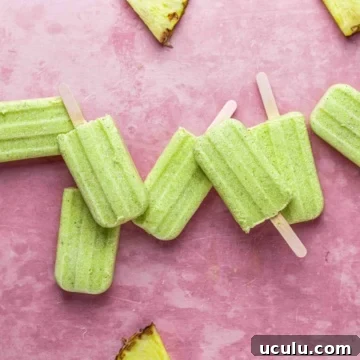
I hope you’ll try this Biscoff cake soon—share a photo if you make it and enjoy a sweet slice!
PEACE & LOVE
Maureen
📖 Recipe
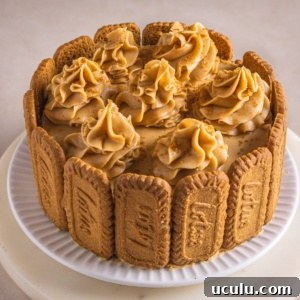
Lotus Biscoff Cake with Buttercream
Equipment
- 6″ cake pan
- Offset spatula
- Stand mixer (or hand mixer)
- Piping bag and tips (optional)
Ingredients
- 1 cup cake flour, sifted
- ¼ teaspoon salt
- ½ teaspoon baking soda
- 4 large eggs, room temperature
- ½ cup fine granulated sugar
- 2 tablespoons Lotus Biscoff spread (or any cookie butter)
For the Buttercream Frosting
- 1 cup (2 sticks) butter, softened
- ½ cup Lotus Biscoff spread, room temperature
- 3½ cups confectioners’ sugar (start with 2 cups and add to taste)
- 3 tablespoons heavy cream or whole milk
- 1 teaspoon vanilla extract (optional)
- Pinch of salt
To Decorate
- 14 whole Biscoff cookies
- Biscoff crumbles
Instructions
For the Cake
- Preheat oven to 350°F. Prepare a 6″ round pan with baking spray and parchment.
- Sift cake flour, baking soda, and salt; set aside.
- Microwave cookie butter for 30 seconds until slightly melted, stir, and cool.
- Whisk eggs in a stand mixer on high; slowly add sugar and beat until pale and thick (about 8–9 minutes).
- Fold sifted flour into the egg mixture in three additions until just combined.
- Fold in cooled cookie butter, pour into the pan, and bake 25–30 minutes or until a toothpick is clean.
- Cool in the pan for 10 minutes, then transfer to a rack to cool completely before slicing and frosting.
For the Buttercream
- Cream butter and cookie butter until light and fluffy.
- On medium-low speed, add confectioners’ sugar a cup at a time, mixing after each addition.
- Add vanilla and cream a tablespoon at a time until desired consistency is reached. Add a pinch of salt and mix well.
Assemble the Cake
- Level the cake and slice into two equal layers.
- Spread about ½ cup buttercream on the bottom layer, place the second layer on top, and frost the outside.
- Press Biscoff cookies around the cake sides snugly together.
- Pipe decorative swirls on top, sprinkle with crumbles, and slice to serve.
Notes
- Beat ample air into the eggs to help the sponge rise well.
- Warm the cookie butter briefly to help it blend smoothly into the frosting.
- Bake the cake right after mixing; letting batter sit reduces rise.
- Fold gently to avoid deflating the batter.
- Avoid opening the oven during the first 20 minutes to prevent sinking.
- For stiffer frosting, add an extra ¾–1 cup confectioners’ sugar.
Nutrition
Calories: 594 kcal |
Carbs: 122 g |
Protein: 8 g