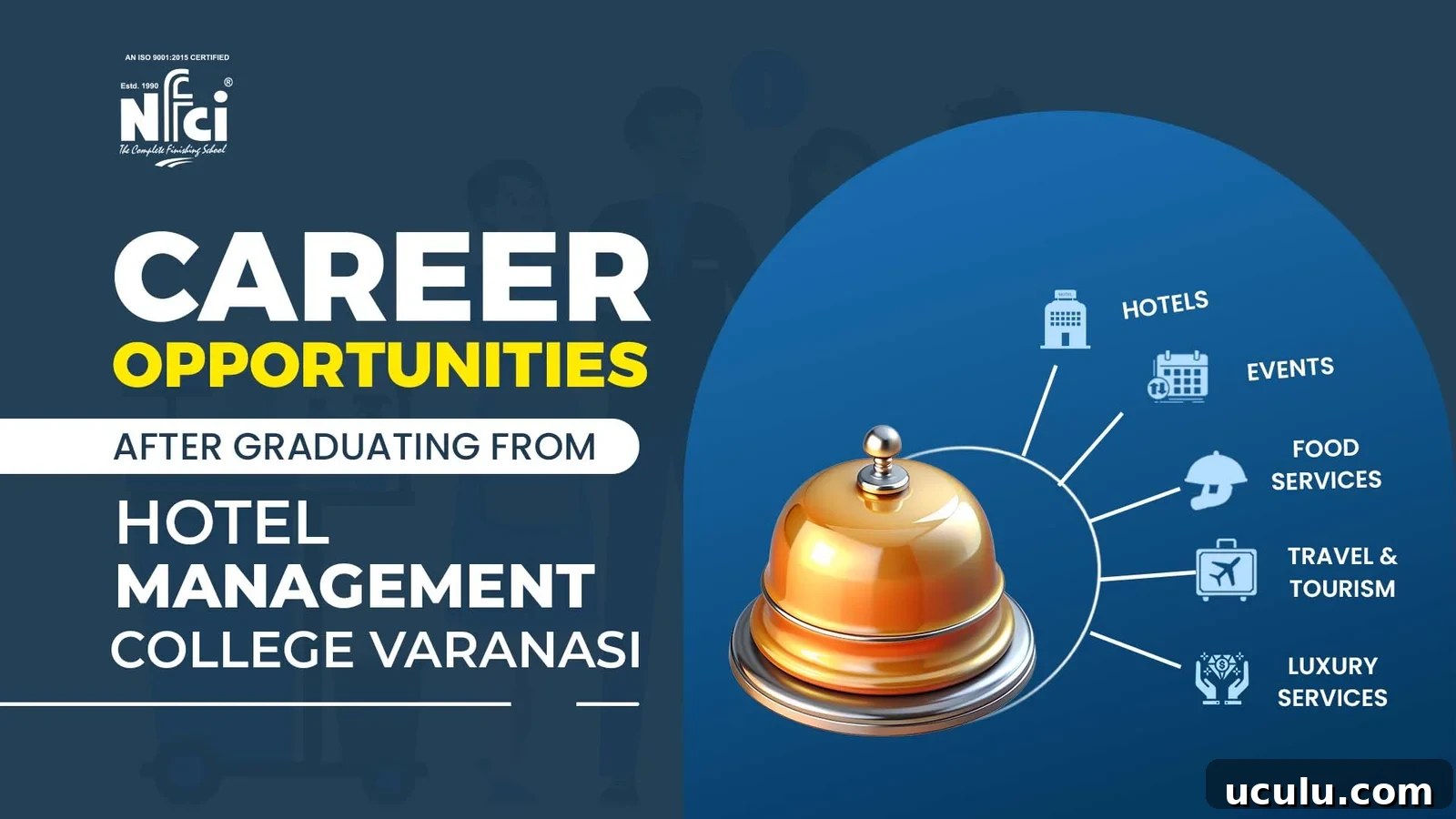
What makes Varanasi special? Known as India’s spiritual capital, Varanasi has seen significant growth in tourism and hospitality in recent years. This expansion has created many opportunities for graduates, and hotel management colleges in Varanasi prepare students with the knowledge and skills needed for today’s job market. This article outlines the main career paths available to hotel management graduates in the city.
THE BOOMING HOSPITALITY INDUSTRY IN VARANASI
VARANASI HOTEL MANAGEMENT JOBS

Varanasi attracts millions of visitors each year—from pilgrims and cultural tourists to international travelers. Because of this steady flow of guests, hotel management graduates in Varanasi can find a variety of career options tailored to different interests and strengths. Key roles include:
Hotel Manager: A hotel manager oversees daily operations, coordinates staff, ensures guest satisfaction, and safeguards the business’s smooth functioning. Recruitment for this role often evaluates both interpersonal and technical skills through interviews and assessments.
Front Office Manager: Responsible for guest check-in and check-out processes and for resolving guest issues quickly and professionally. Strong communication skills and the ability to handle diverse situations are essential for success in this position.
Food and Beverage Manager: Given Varanasi’s rich culinary and cultural scene, food and beverage management can be a rewarding career. Opportunities exist in hotel restaurants, standalone dining venues, and event catering businesses.
Housekeeping Manager: Cleanliness and maintenance are vital to a hotel’s reputation. Housekeeping managers lead teams that maintain guest rooms and public spaces, ensuring standards are met and guest expectations are satisfied.
Event Manager: Varanasi hosts numerous religious, cultural, and private events throughout the year. Event managers organize weddings, corporate functions, and festivals. The role demands excellent multitasking, time management, and the ability to work under pressure.
Hotel management graduates can also explore careers beyond traditional hotel roles. Options include tourism and travel management, cruise management, hospitality entrepreneurship, training and education, and corporate hospitality. These paths can be equally rewarding and provide diverse professional prospects.
To advance in any of these careers after graduating from a hotel management institute in Varanasi, graduates should focus on networking, securing internships, earning relevant certifications, and staying current with industry trends and technologies.
CONCLUSION
If you are a hotel management graduate or planning to study hotel management in Varanasi and are unsure which path to choose, there is no shortage of options. You can begin your career in hotels, branch into related industries, or launch your own business. Varanasi’s tourism growth includes both heritage visitors and modern luxury travelers, which increases demand for skilled hospitality professionals.
Institutes that combine traditional hospitality education with advanced skills—such as guest engagement and revenue optimization—help graduates stand out in the job market and prepare them for leadership roles across the city’s expanding hospitality sector.
FAQs (Frequently Asked Questions)
How has Varanasi’s tourism industry impacted job opportunities for hotel management graduates?
Varanasi’s status as a major tourist destination has driven growth in the tourism sector and created a wide range of job opportunities. The city’s cultural significance and the development of modern hotels have increased demand for trained hospitality professionals, making it easier for graduates to secure meaningful careers.
What skills are necessary for success in the hotel management industry?
Key skills for hospitality professionals include:
Effective Communication: Essential for front office roles and event management.
Multitasking and Time Management: Important for managing diverse responsibilities under pressure.
Leadership and Team Management: Critical for roles such as hotel manager and housekeeping manager.
Customer Service Orientation: Central to all hospitality roles to ensure guest satisfaction.
Adaptability to New Trends: Keeping up with industry trends and technology helps professionals grow and remain competitive.